Tracing the two-decade journey of India’s first professional symphony orchestra/ Westward Ho!
The Hindu
Beethoven’s symphonies highlighted SOI’s 20th-year celebrations with Martyn Brabbins as its chief conductor
For the finale of the 2026 spring season of the Symphony Orchestra of India (SOI), Italian maestro Carlo Rizzi conducted one of the most popular pieces written in Western classical music — Ludwig van Beethoven’s ‘Symphony No. 5’. Best recognised for its opening sequence symbolising ‘fate knocking at the door’, it was played to perfection.
Held last month at Mumbai’s Jamshed Bhabha Theatre, the season was significant as it marked 20 years of the SOI, formed in 2006 by Khushroo N. Suntook, chairman of the National Centre for the Performing Arts (NCPA), and Kazakh conductor Marat Bisengaliev, who joined as music director. Another crucial development this year is the appointment of British maestro Martyn Brabbins as chief conductor. Brabbins conducted two shows last month.
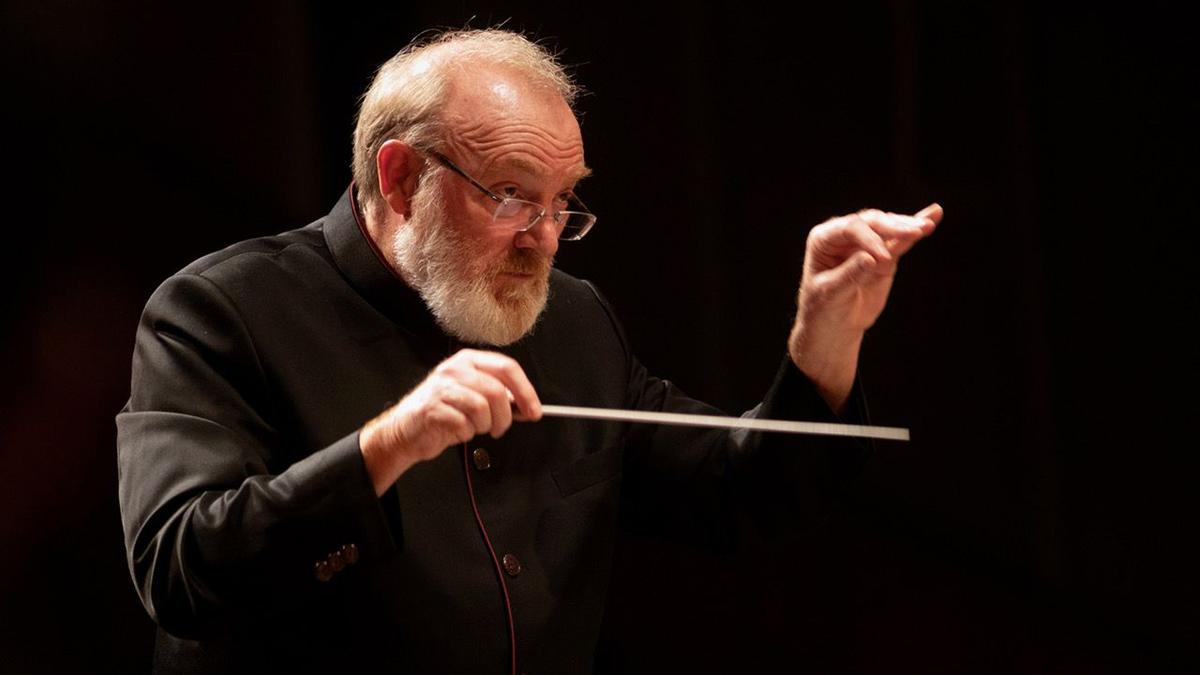
Brabbins conducting at Jamshed Bhabha Theatre. | Photo Credit: Courtesy: NCPA
As India’s only full professional symphony orchestra, the SOI has come a long way since its inception. Reflecting on its role, Suntook says, “Those who have watched and helped it grow as supporters, patrons, advisors and listeners will perhaps agree that the SOI is not just an ensemble but a culmination of the endeavours of many passionate individuals and groups before us, who contributed towards giving Western classical music its due in India. Twenty years later, the SOI, with an increasing number of Indian players in it, continues to present some of the finest concerts in the genre.”
Besides numerous guest conductors, SOI earlier had Zane Dalal as associate music director, and Evgeny Bushkov, Piotr Borkowski and Mikel Toms as resident conductors. Apart from the spring season in February and autumn season in August-September, it has many symphonic and chamber performances through the year.
The idea of forming the orchestra germinated almost 22 years ago, when Suntook was at a concert in London. After the event, he asked conductor Bisengaliev, whether he would like to set up India’s first professional Western classical orchestra. classical orchestra. The Kazakh musician was initially not convinced, but after some thought, decided to take up the challenge.


BSF team of 36 arrives in Perambalur for election duty, ensuring security for the upcoming Assembly elections.

Two men were killed in an accidental encounter with a wild elephant in Nilgiris, prompting community protests and increased monitoring.

The first phase of the Mananchira-Vellimadukunnu road project in Kozhikode is now open, easing traffic congestion significantly.

BESCOM calls on Bengaluru RWAs to promote rooftop solar adoption under the PM Surya Ghar scheme, boosting local installations.

Opposition leaders consider impeachment motion against Chief Election Commissioner Gyanesh Kumar, following protests over electoral roll issues.

Kerala's daily power consumption exceeds 100 million units for the first time this summer, driven by rising temperatures and imports.

CPI(M) calls for single-phase assembly polls in West Bengal and inclusion of all genuine voters in the electoral rolls.

A 70-year-old man died in Bagepalli after his car caught fire, likely due to a short circuit, trapping him inside.

Bengaluru realtor abducted and murdered near Anekal; investigation reveals contract killing linked to business rivalry.

India today manufactures almost every type of railway rolling stock — locomotives, coaches, wagons, metro cars and modern trainsets — in large numbers and at competitive cost. Over decades, the railway manufacturing ecosystem has matured through dedicated Production Units of Indian Railways, PSUs and a large vendor base. Yet, despite this capacity and experience, India remains largely absent from the global market for railway vehicles.

T.N. physiotherapists welcome salary hike, urging timely payments and benefits for improved home-based care and support services.

Eminent historian K.N. Panikkar, a defender of secular historiography, has passed away, leaving a profound academic legacy.

Protesters demand the arrest of a marriage hall owner for denying venue access to a Scheduled Caste family in Erode.