Top police official’s accident a sign of growing crisis in North Chennai’s arterial roads
The Hindu
Persistent traffic and safety issues plague North Chennai, with heavy vehicles causing accidents on vital GNT Road.
In a shocking reminder of the persistent traffic and safety concerns plaguing North Chennai, the official car of Avadi City Police Commissioner K. Shankar was severely damaged in a collision involving two heavy vehicles on the busy Grand Northern Trunk (GNT) Road near Sholavaram on Monday morning. The accident occurred during peak hours when a maxi truck and a container lorry collided, crushing the Commissioner’s vehicle in the process. Mr. Shankar, however, was safely rescued from the rear of the car as the vehicle doors were jammed.
GNT Road, a vital link connecting Chennai to Kolkata via the National Highway, has increasingly become a hotspot for road accidents, especially involving heavy commercial vehicles.
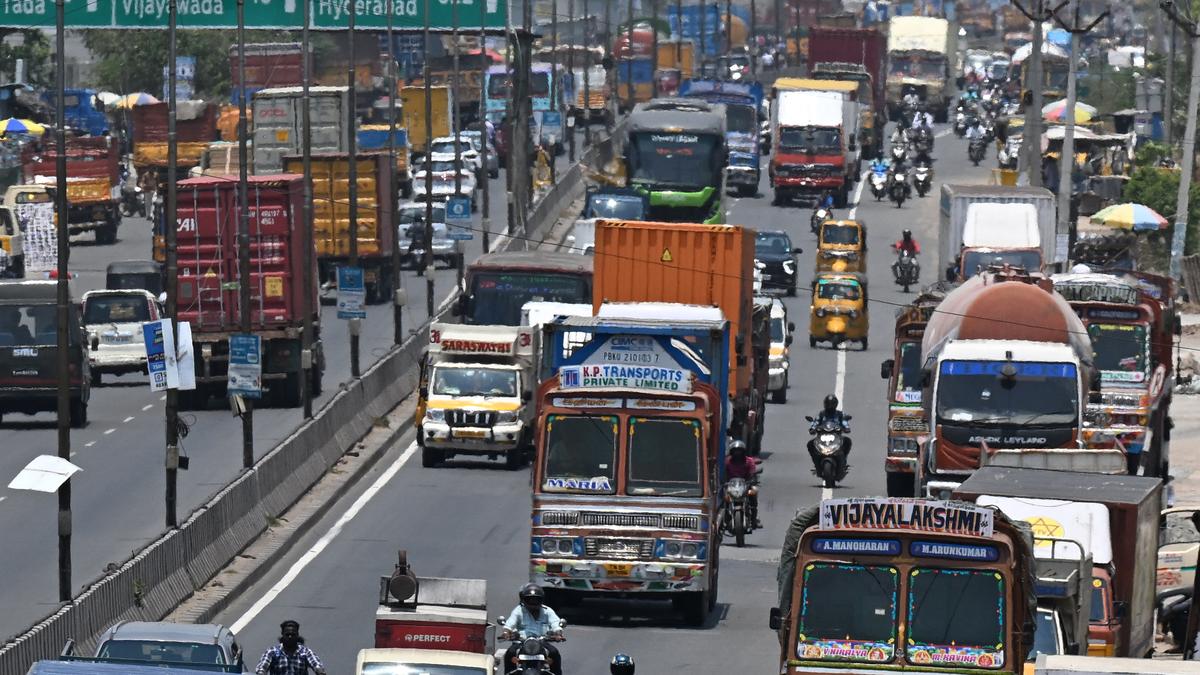
Both from the commuters’ experience and from a record of incidents on the road, it is clear that there is a growing risk to motorists on the roads of northern Chennai. This is primarily because these arterial roads serve as transit corridors for container trucks, tankers, and trailers heading to and from the region’s industrial and port hubs. With the Ennore Expressway, Manali Oil Refinery Road, and the Thiruvottiyur–Ponneri–Panchetti (TPP) Road handling the bulk of this traffic, residents and regular commuters on the stretch have raised alarm over deteriorating road conditions and poor traffic management.
The heavy movement of trucks servicing Kattupalli Adani Port, Kamarajar Port in Ennore, and over 45 Container Freight Stations (CFS) in the vicinity has progressed faster than the area’s road infrastructure. TPP and adjoining roads have become severely congested, with 7,000 to 9,000 commercial vehicles reportedly passing through daily.
Commuters in localities including Manali, Madhavaram, Ponneri, Ernavur, Ennore, and Thiruvottiyur are particularly affected. N. Sridhar, a motorist from Ponneri, said: “Accidents are common here. Most victims are two-wheeler riders who either collide with container trucks or are hit by them. Drivers often speed and occupy the entire carriageway, leaving little room for others.”
S. Suresh Babu, an advocate and an activist based in Gummidipoondi, noted: “Most two-wheeler deaths occur when trailers either hit or are hit by bikes. The sheer weight of these vehicles and their constant movement damages the roads quickly, and authorities are slow to repair potholes.” M. Dinakaran, Joint Secretary of the Merchants Welfare Association in Thiruvalluvar district, highlighted that additionally, dust and pollution from the traffic exacerbate health and safety risks. “Crossing roads near the Madhavaram junction is a nightmare. Dust clouds, coupled with constant truck movement, make it hazardous for commuters,” he said.
A retired traffic police officer points out that driver behavious is also an issue here. He explained further: “ The drivers of trucks are rash and careless. Some of them don’t bother to look into the side mirror while turning the vehicle. Many drivers operate long vehicles—up to 60 feet—without adequate sleep or rest. They often ignore rearview and side mirrors, turn recklessly, and block the carriageway while racing for load assignments.”


All the three major political fronts appear to be drowned in indecision when it comes to officially declaring their candidates for the prestigious Thiruvananthapuram Assembly constituency.

BJP protests for MCC council elections, claiming mismanagement and corruption, threatens to escalate protests if demands are unmet.

Hyderabad Collector assures no LPG shortage, urges residents to avoid panic booking and trust available supplies.

Telangana to soon set up nodal agency for flood plain zoning: Irrigation Minister

Patronage on Chennai's MRTS doubles post-extension to St. Thomas Mount, despite complaints about missing amenities at Puzhithivakkam station.

Over ₹44 lakh in cash and valuables seized in Coimbatore during election surveillance under the Model Code of Conduct.

Thunderstorms with lightning and gusty winds are forecasted in 24 Telangana districts on March 19, warns IMD.

Tirumala offers 80 luggage deposit and delivery centres, ensuring a hassle-free pilgrimage experience for millions of devotees.

BJP leaders request an extension for GBA electoral roll verification deadline due to technical issues and upcoming festival holidays.

U. Nirmala Rani, AIDWA leader and advocate, passes away at 60, leaving a legacy in women's rights and justice.

Chief Secretary K. Ramakrishna Rao's service extended by three months, ensuring continuity in Telangana's administration during crucial planning.

Meta challenges Delhi HC ruling on CCPA fine for walkie-talkie sales, arguing Facebook is not an e-commerce platform.

In a bid to boost domestic manufacturing of solar ingots and wafers - the constituents of solar cells that are then fitted on solar panels - the Ministry for New and Renewable Energy (MNRE) has said that from June 2028, only ingots and wafers made in India would be eligible for domestic projects.