Red-faced Pak reaches out to US to remove 'incorrect' India map in trade deal post
India Today
Pakistan said it contacted the United States after a US Trade Representative map incorrectly showed Pakistan-occupied Kashmir and Aksai Chin within Indian territory, after which Washington deleted the post.
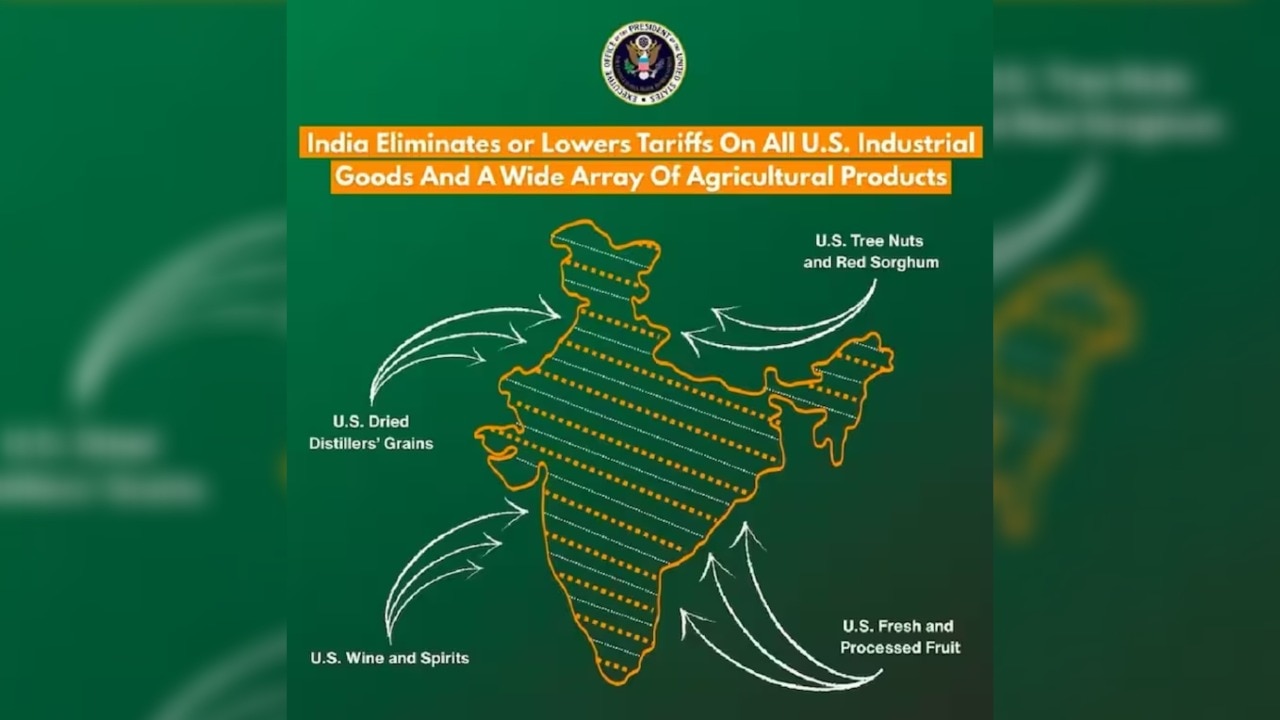
Pakistan’s Foreign Ministry said that Islamabad had contacted Washington after a map posted by the US Trade Representative showed Pakistan-occupied Kashmir (PoK) and Aksai Chin within Indian territory, a move that has caused considerable embarrassment for the country. The map, which marked a clear departure from Washington’s earlier depictions of the region, was deleted later.
Red-faced over the India map shared in a social media post by the top US official’s office, the ministry said Pakistan had taken up the matter with US officials, pointing out that the depiction was inaccurate and did not conform to the UN-recognised representation of the region.
“The map was put up by certain handles. We contacted US authorities. They realised that the map was incorrect. The international map on J&K, which delineates Pakistani and Indian territories, is legally sanctioned by the UN. If you go to the UN website, you will see the actual map,” the Ministry’s spokesperson Tahir Andrabi said in a briefing.
He added that Pakistan “notes with satisfaction that the US side made the requisite corrections to highlight the legal UN-sanctioned map of our region, which clearly delineates J&K as a disputed territory, whose settlement is to be done through a UN-administered plebiscite in accordance with UNSC resolutions”.
India and the United States announced a framework for a trade deal last week, resetting tariffs to lower levels and opening access to an economy worth over USD 30 trillion. While releasing details of the agreement, the Office of the US Trade Representative also published a map of India depicting the entire Jammu and Kashmir region, including Pakistan-occupied Kashmir (PoK), as part of the country. The map also included Aksai Chin, which China claims to be part of its territory.
Though India’s territorial sovereignty does not require validation from the United States, the move marked a departure from Washington’s long-standing practice.


Ashu Ghai recreated the striking scene from Dhurandhar 2, where Ranveer Singh is introduced as Jaskirat Singh Rangi amid a cascade of fiery sparks.

Pakistan Army chief Asim Munir said Shias who "love Iran so much" should "go to Iran". His remarks triggered a row with prominent Shia clerics of Pakistan accusing Munir of insulting the community and the military establishment of serving America and Israel as a "servant".

Treasury Secretary Scott Bessent said the US may need to intensify strikes on Iran to end the conflict. This came soon after Trump threatened to hit Iran's energy plants amid soaring oil prices and Strait of Hormuz tensions.

The scooter rider rode into the pedestrian zone, collided with the car, and fell down. The man driving the car, however, did not react with anger and handled the situation with composure.

A minute-long ATC recording lays bare the confusion and urgency before a runway collision in New York. Controllers issued frantic warnings as a plane struck a vehicle, forcing a complete airport shutdown.

Tucker Carlson says he might cry listening to him. Millions call him a prophet. But who exactly is "Professor Jiang" — and what is he not telling you?

In a symbolic act of wartime messaging, Iran placed stickers carrying anti-war remarks by Spanish Prime Minister Pedro Sanchez on ballistic missiles bound for Israel as the Middle East conflict enters it fourth week.

The announcement was made a day after North Korea convened the first session of its Supreme People's Assembly. The assembly, the isolated nation's rubber-stamp legislature, formally approves state policy.


Indian Railway staff's swift action turned a medical emergency involving a toddler into relief aboard a train from Bengaluru to Gujarat.

Leon Panetta said Iran war was not an unexpected risk. He pointed out that for years, US security officials have known Iran could disrupt global oil supplies by blocking the Strait of Hormuz. According to him, this was a well-known danger, but one that appears to have been overlooked in the current conflict.

Sri Lanka raised fuel prices by about 25% for the second time in a week as the Gulf conflict disrupts global oil supplies via the Strait of Hormuz.

Iran has warned it is ready to respond. Parliament Speaker Mohammad Baqer Qalibaf warned that if Iran's infrastructure is targeted, then key facilities across the region could be "irreversibly destroyed."