Trump threatens Iran energy sites over Hormuz, Tehran warns of strikes in Gulf
India Today
Iran has warned it is ready to respond. Parliament Speaker Mohammad Baqer Qalibaf warned that if Iran's infrastructure is targeted, then key facilities across the region could be "irreversibly destroyed."
The Middle East conflict has entered a more volatile phase as US President Donald Trump issued a direct threat to strike Iran’s power plants if Tehran does not fully reopen the Strait of Hormuz within 48 hours. Iran’s Revolutionary Guards responded by warning that any such move would trigger retaliation against the US and its allies' infrastructure across the Gulf. Iran’s Revolutionary Guards also said that if Trump follows through on his threat, energy sites in countries hosting US bases would become "lawful" targets, and warned that the Strait of Hormuz could be completely closed.
The US President's had warned: "If Iran doesn't FULLY OPEN, WITHOUT THREAT, the Strait of Hormuz, within 48 HOURS from this exact point in time, the United States of America will hit and obliterate their various POWER PLANTS, STARTING WITH THE BIGGEST ONE FIRST!"
Iran has warned it is ready to respond. Parliament Speaker Mohammad Baqer Qalibaf warned that if Iran’s infrastructure is targeted, then key facilities across the region could be "irreversibly destroyed." Iranian military officials also said they could target US-linked energy, technology and water infrastructure in the Gulf. However, Ali Mousavi, the Iranian representative to the International Maritime Organisation, said that ships not linked to "Iran's enemies" could pass the strait by coordinating with Tehran.
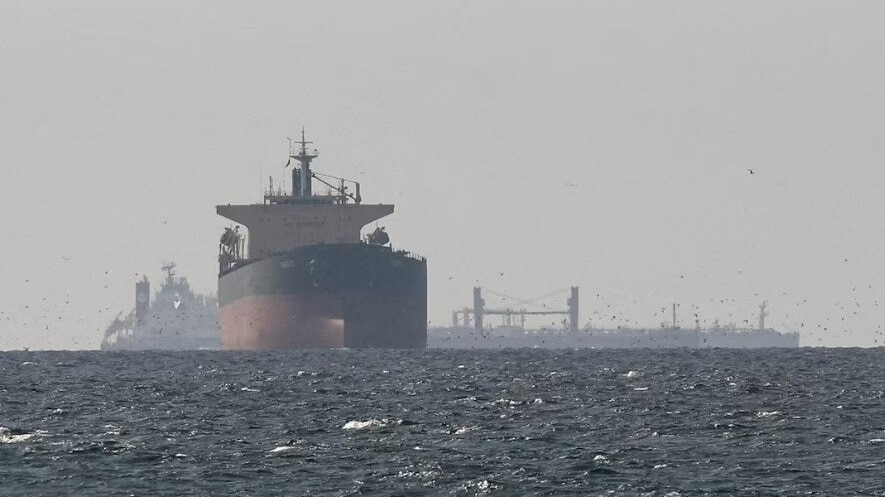
The Strait of Hormuz is one of the world’s most important shipping routes, carrying a large share of global oil and gas supplies. Iran shut the vital energy supply route on February 28. Disruptions in this narrow waterway have already choked tanker movement, pushed up fuel prices and shaken global markets.
The situation on the ground remains volatile. Air raid sirens sounded across parts of Israel after the fresh missile's launch. Strikes surged on March 21, with US-Israeli attacks heavily concentrated around Tehran and spread across central and southern Iran, including areas near the Strait of Hormuz. Iran responded with strikes on Israel and parts of the Gulf. Iran responded with strikes on Israel and parts of the Gulf.
According to the IDF, Iran launched more than 400 ballistic missiles at the country since the war began, but most of them have been stopped midair by its defence systems. According to officials, about 92 per cent of these missiles were intercepted before they could hit their targets.


The clip, shared by a user on X, captures a Lamborghini repeatedly doing donuts at a public junction under a flyover in Bengaluru, even as other vehicles pass by.

Tokyo has no immediate plans to seek arrangements to allow passage through the Strait of Hormuz for stranded Japanese vessels, Motegi said, adding it was "extremely important" to create conditions that allow all ships to navigate through the narrow waterway.


The continued absence of Mojtaba, according to an Axios report, has been a matter of discussion during President Donald Trump's intelligence briefings. The report also quoted an official as saying that the US national security team is still assessing who is in charge in Tehran.


If true, the deployment will give Britain the capability to launch strikes on Iran in case the regional conflict escalates drastically. Earlier, on Friday, the British government had authorised the US military to use military bases in Britain to carry out strikes on Iranian missile sites that are attacking ships in the Strait of Hormuz.

Muddy floodwaters smothered vast stretches of Oahu's North Shore, a community world-renowned for its big-wave surfing. Raging waters lifted homes and cars and prompted evacuation orders for 5,500 people north of Honolulu. Authorities cautioned that a 120-year-old dam could fail.

The agency, along with Customs and Border Protection, has deployed agents over the past few months to multiple areas as part of the crackdown, most recently to Minnesota in an operation that resulted in agents fatally shooting American citizens Renee Good and Alex Pretti.

An Iranian missile struck Jerusalem near the Al-Aqsa Mosque on Eid al-Fitr, with Israel condemning the attack near key religious sites.

An Indian man in London spotted an auto rickshaw on one of the roads in the city, and shared it in a now-viral video on social media.

Ashraf Wani's firsthand account from the frontlines amid the conflict between Israel and Hezbollah in Lebanon. He narrates the relentless challenges amid heavy shelling in Lebanon, which has already registered over 1,000 deaths.

A son found his mother secretly gaming late at night on Spider-Man 2, flipping the usual parent-child dynamic and delighting the internet.

An Emirates flight attendant made her graduation unforgettable by walking the stage with her daughter in matching uniforms, with the wholesome moment winning hearts online.