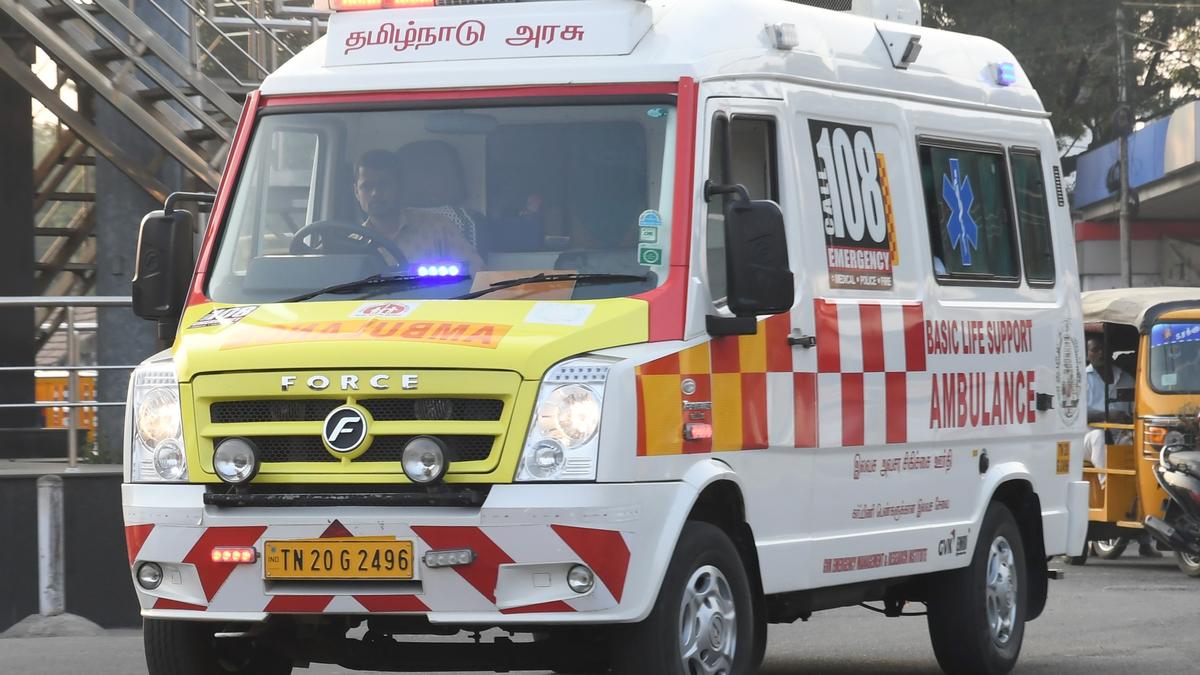
Reclaiming the Golden Hour: how technology can help beat urban traffic and save lives Premium
The Hindu
Urban traffic delays impact emergency medical care, leading to preventable deaths; technology and public awareness are crucial for improvement
The difference between life and death during a medical emergency often hinges on a single factor: time. In cities such as Bengaluru, Mumbai and Delhi, traffic congestion routinely swallows precious minutes, undermining even the best medical interventions.
Urban traffic delays are a critical, often overlooked cause of preventable mortality. Multiple studies and audits confirm that delays in ambulance response times are directly linked to increased trauma fatalities and deteriorating patient outcomes. For example: in Delhi, the average ambulance response time has risen to over 17 minutes, up from 13 minutes in 2014, despite an increase in fleet size. A 2021 Comptroller and Auditor General report on Karnataka found that nearly 90,000 crash victims did not receive timely care due to ambulance unavailability and delays, and in 6,000 cases, dispatch itself was delayed by over 30 minutes.
Nationally, the average ambulance response time ranges from 25 to 30 minutes, with rural areas faring even worse. According to the National Crime Records Bureau, a significant proportion of accident deaths in Indian cities occur in transit, before patients reach a hospital.
The ‘Golden Hour’ - the first 60 minutes after trauma or acute medical events is critical for survival, particularly in cases of stroke, cardiac arrest, or severe injuries. Yet, in India’s congested metros, this window is often lost to traffic
To address these systemic delays, hospitals and civic authorities are increasingly turning to technology to optimise emergency medical logistics.
One example of this is GPS-based ambulance tracking: real-time GPS integration allows for dynamic route optimisation, live tracking, and early hospital alerts. In cities where such systems are implemented, response times have improved. In Chennai and Kolkata, GPS-enabled fleets have reduced response times by 12–15%. Door-to-CT times for stroke patients have also improved, enabling quicker thrombolysis and better outcomes.
Another intervention is traffic signal pre-emption: pilot projects have demonstrated that traffic signal override systems—where ambulances automatically trigger green lights—can reduce journey times. However, only a few urban intersections in India are currently equipped for such digital interventions.


Perundurai's industrial growth faces challenges of pollution, water scarcity, and healthcare, impacting residents ahead of the 2026 elections.

The Travancore Devaswom Board asserts that courts should respect community beliefs in its Supreme Court submission on Sabarimala's entry issue.

Karnataka cancels Deendayal Upadhyay event at KSOU due to protocol violations, citing inconsistency with university objectives.

Illegal pickle unit busted in Hyderabad, one arrested; unhygienic stock worth ₹3 lakh seized

Karnataka has entered a state of demographic transition where a large working-age population will no longer be enough to drive economic growth, and future gains will depend on how productively people are employed, the ‘State of Working India 2026’ report said.

Key demands in Sulur Assembly constituency include reviving the powerloom sector, addressing farmers' needs, and protecting River Noyyal.

Kodihalli urges Karnataka CM to allocate ₹10,000 crore revolving fund for seamless procurement of farm products under MSP scheme.

Kerala's political parties continue to marginalize women candidates, highlighting a troubling disconnect between gender demographics and representation.

The High Court of Karnataka on Tuesday ordered the issue of a notice to the State government on a PIL petition, which had complained about disturbances caused to people residing in the localities around the National Public School situated in Rajajinagar 5th block due to use of loudspeakers with high volume in the school and parking of school buses in residential areas.

China is extensively mapping ocean floors to enhance submarine warfare capabilities against the U.S. and allies across key oceans.

AIADMK's 2026 manifesto promises free rations, women's benefits, education reforms, and economic growth initiatives for Tamil Nadu.

The vehicle towing drive will soon resume in the city to ease traffic congestion. The Bengaluru Traffic Police (BTP), in coordination with the Greater Bengaluru Authority (GBA), is set to relaunch the vehicle towing drive across the city shortly to tackle traffic congestion and illegal parking.

Panic buying, not shortage, is leading to long queues at Hyderabad petrol pumps.