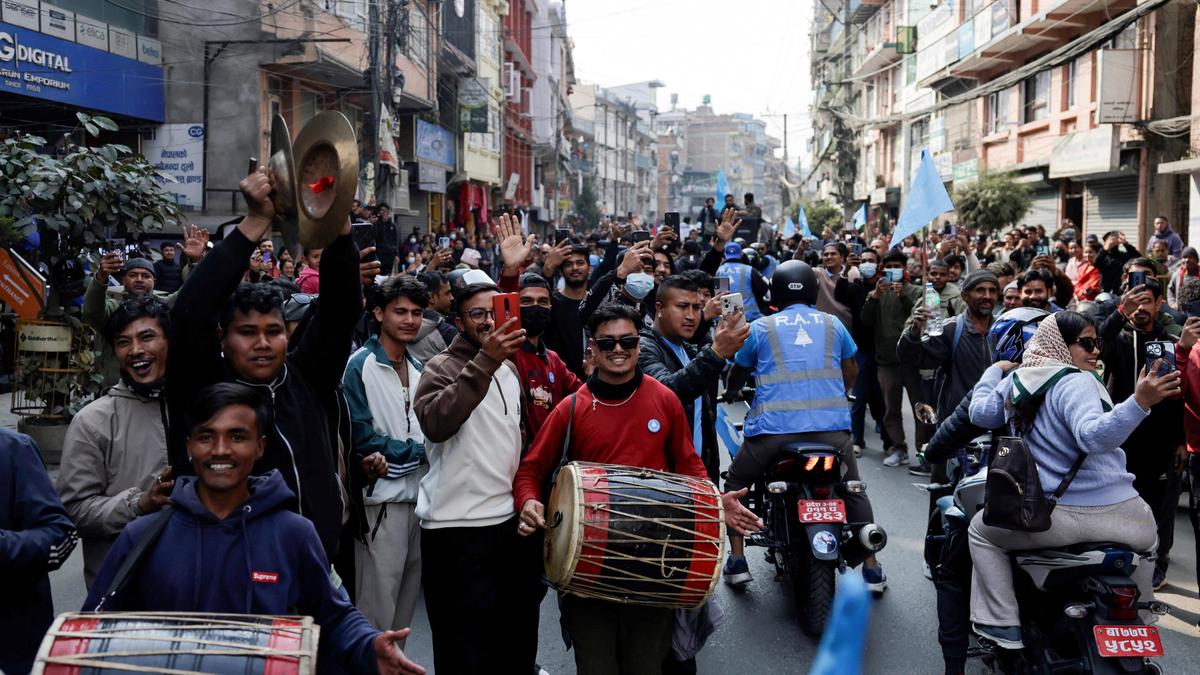
Nepali parties promise big ahead of polls; however, concerns remain
The Hindu
Nepali parties unveil ambitious election promises, but skepticism remains regarding their ability to deliver real change and governance.
From promising to increase the size of the economy to NRs 10 trillion (about $77 billion) and raising per capita income to $2,500-3,000, to creating more than one million jobs a year and tripling or even quadrupling electricity generation, Nepali parties have promised the moon as Nepal is set to vote in a landmark election on March 5.
Parties have already unveiled their manifestos and are now on campaign trails, pledging not only development but also an end to corruption and good governance — the rallying cry of the Gen Z protests of September last year, which necessitated the election.
Analysts, however, are cautious. While they are sceptical of the parties’ overambitious plans, they point to the risk of this election turning into another regular vote that may not offer solutions to some core political problems plaguing Nepal.
Tara Nath Dahal, a civic rights activist and campaigner for open government, says a hung Parliament is almost certain, which could revive the same revolving-door politics, albeit with new actors and faces.
“None of the parties seems to have paid attention to crucial Bills, including those related to media and social media, that need to be passed,” Mr. Dahal said. “It’s strange that parties have forgotten that the Gen Z protests had their roots in the then-government’s move to ban social media platforms.”
More than 60 parties and over 3,000 candidates are in the fray for the 275-member House of Representatives, which is composed of 165 directly elected members and 110 elected under the proportional representation system.


Canada and India aim to double trade by 2030 through a new economic partnership, says PM Carney in Mumbai.

Nepali parties unveil ambitious election promises, but skepticism remains regarding their ability to deliver real change and governance.

Kapil Sibal advocates for a purposive interpretation of the Constitution to achieve justice and address societal needs at a law conclave.

AAP leader Arvind Kejriwal to address a public rally at Jantar Mantar, outlining AAP's future direction and addressing recent controversies.

MCEME Secunderabad's seminar focuses on robotics and autonomous systems to enhance India's future-ready defense capabilities.

Shorts News:Watch: Donald Trump says U.S. launches major combat operations in Iran targeting missiles and navy

Chief Minister Naidu announces ₹20 lakh ex gratia for firecracker blast victims, suspends officials, and plans safety reforms.

Explore the traditional "pazhancher" method for effective weed control in organic farming, enhancing soil fertility and reducing costs.

Bihar police implement enhanced security measures for Holi, deploying additional forces and warning against hooliganism and communal disturbances.

Karnataka launches a HPV vaccination drive for 1.15 crore girls to prevent cervical cancer, enhancing health protection for adolescents.

SLBC tunnel work resumes at Devarakonda, with 20 meters excavated in a week, aiming for completion by June 2028.

Karnataka women’s groups express concerns over disenfranchisement risks from the Special Intensive Revision of electoral rolls.

Cyberabad Police unveil tech-driven student mobility plan to ease congestion