Iran war: Congress taking first votes as debate rages about U.S. goals
The Hindu
Congress debates war powers as lawmakers vote on President Trump's Iran conflict, impacting U.S. military strategy and midterm elections.
The U.S. Senate is headed towards a vote on Wednesday (March 4, 2026) on President Donald Trump's decision to embark on a war against Iran, an extraordinary test in Congress for a conflict that has rapidly spread across West Asia with no clear U.S. exit strategy.
The legislation, known as a war powers resolution, gives lawmakers an opportunity to demand congressional approval before any further attacks are carried out. The Senate resolution and a similar Bill being voted on in the House later this week face unlikely paths through the Republican-controlled Congress and would almost certainly be vetoed by Mr. Trump even if they were to pass.
Israel targets Iran’s security forces, leadership as Iran presses attacks across region | LIVE
Nonetheless, the votes marked a weighty moment for lawmakers. Their decisions on the five-day-old war — which Mr. Trump entered without congressional approval — could determine the fates of U.S. military members, countless other lives and the future of the region.
“Wars without clear objectives do not remain small. They get bigger, bloodier, longer and more expensive,” said Senate Democratic leader Chuck Schumer at a news conference on Tuesday (March 3, 2026). “This is not a necessary war. It's a war of choice.”
After launching a surprise attack against Iran on Saturday (February 28, 2026), Mr. Trump has scrambled to win support for a conflict that Americans of all political persuasions were already wary of entering. Trump administration officials have been a frequent presence on Capitol Hill this week as they try to reassure lawmakers that they have the situation under control.


Airline ticket prices rise sharply on Asia-Europe routes due to Gulf airport closures amid escalating regional tensions.

Wang Dong discusses Beijing's perspective on the U.S. and Israel's military actions in Iran and their regional implications.

Billy Leon Kearse was executed in Florida for the 1991 murder of police officer Danny Parrish during a traffic stop.

Shorts News:Watch: ‘Worst case is replacing Iranian leaders with someone no better!’ - Trump

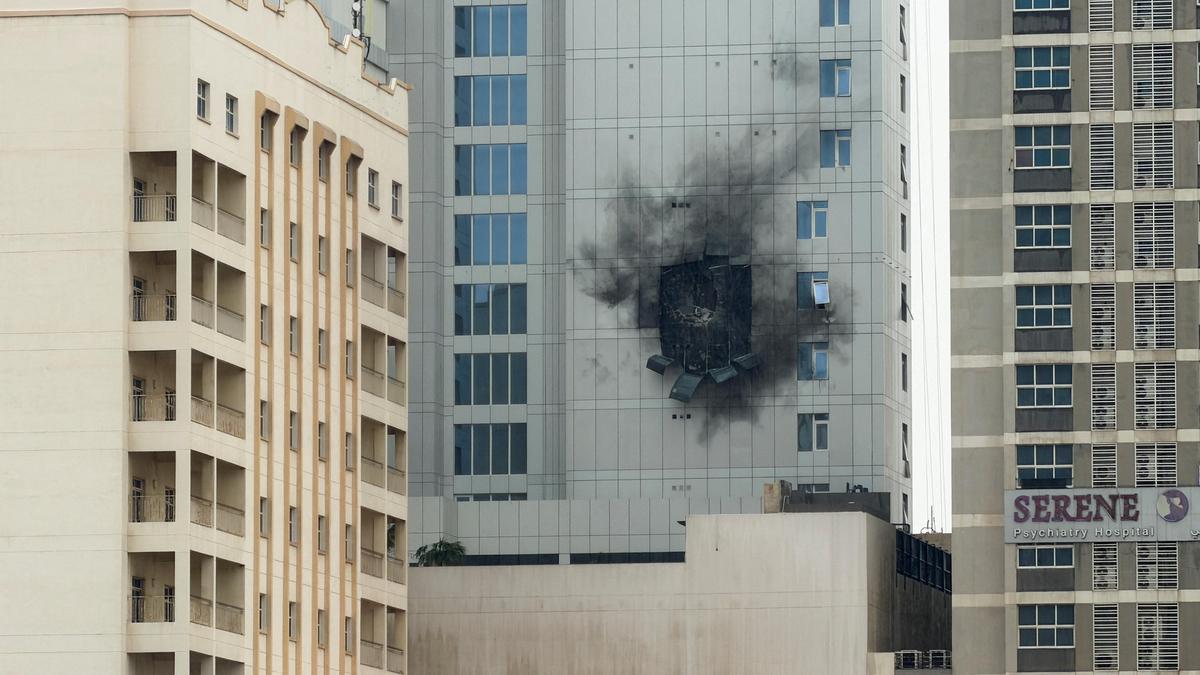
With Iran targeting U.S. bases in other countries in the West Asian region, the U.S.-Israel attack has created a massive ripple effect extending well beyond the region, threatening global energy security.

Iran-Israel war: Follow the latest updates on the West Asia war, on March 4, 2026

Iranian missile strikes U.S. base in Qatar as Doha dismantles spy cells linked to Revolutionary Guards, escalating regional tensions.

Putin and Orban discuss Hungarian POWs in Ukraine, highlighting tensions over military recruitment and energy supplies amid the ongoing conflict.

U.N. Human Rights chief ‘deeply shocked’, urges all sides in West Asia war to ‘come to their senses’
U.N. Human Rights chief urges all sides in West Asia conflict to end violence and protect civilians amid growing crisis.

Nepal's March 5 elections see veteran leaders challenged by youth-driven coalitions, with the Rastriya Swatantra Party poised for a breakthrough.

Newly released deposition videos from the House Oversight Committee show former President Bill Clinton and former Secretary of State Hillary Clinton responding to questions about Jeffrey Epstein and Ghislaine Maxwell. The footage captures tense exchanges, sharp denials, and political accusations that have reignited debate over the so-called Epstein files.

A warning from Iran’s Revolutionary Guard to ships passing through the Strait of Hormuz has triggered global market anxiety. After joint U.S.–Israel strikes on Iran, Tehran signaled that navigation through one of the world’s most critical oil routes could be restricted. Nearly 20% of the world’s crude oil supply passes through the Strait of Hormuz every day. Countries like Saudi Arabia, UAE, Iraq, Kuwait and Iran rely on it for exports, with major buyers including China, India, Japan and South Korea. Even without a formal blockade, disruptions, rerouting and rising insurance costs are already slowing tanker traffic. Analysts warn that a serious disruption could push crude oil prices above $90 — or even $100 per barrel. For India, which imports nearly 85–90% of its oil and depends heavily on Hormuz-linked supplies, the economic stakes are high. Higher crude prices could mean rising fuel costs, inflation pressures and a larger import bill.

Explore India's silence on Khamenei's assassination, analyzing five geopolitical factors influencing its response amid escalating tensions.