Khamenei killing: Five geopolitical factors behind India’s silence Premium
The Hindu
Explore India's silence on Khamenei's assassination, analyzing five geopolitical factors influencing its response amid escalating tensions.
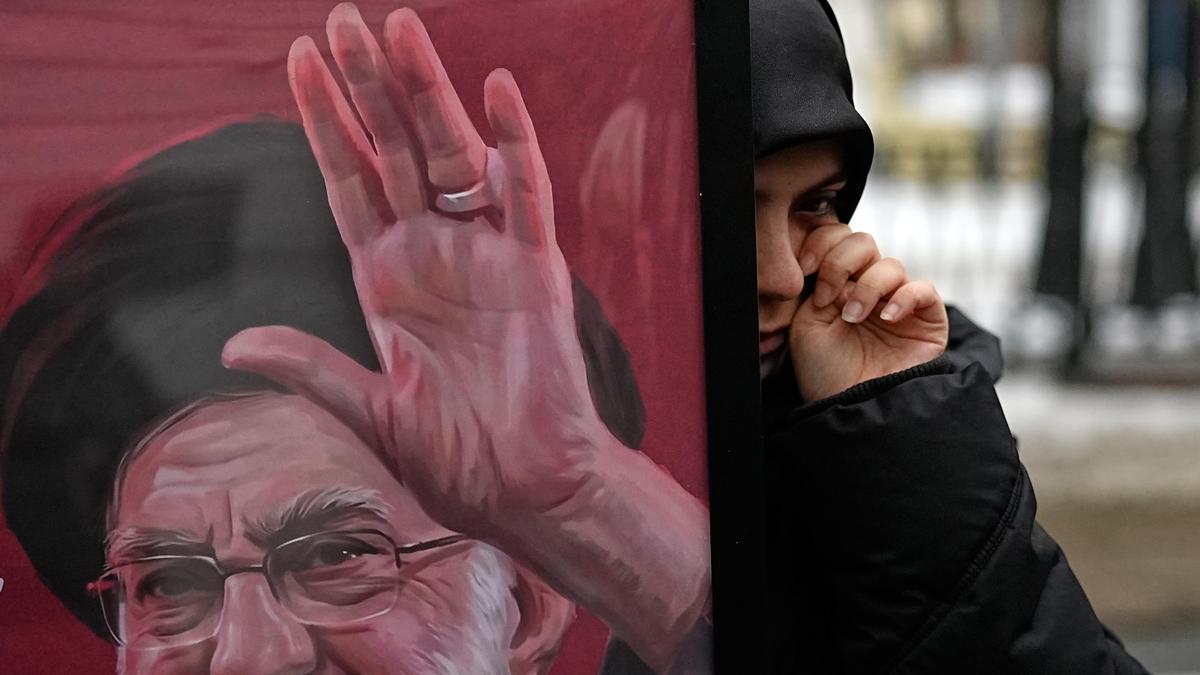
The Union government has come under attack from Opposition parties for its silence on the killing of Iran’s Supreme Leader Khamenei and five of his family members, including his infant granddaughter, as well as his top advisors, at the start of the conflict on February 28. Although External Affairs Minister (EAM) S. Jaishankar did speak with his Iranian counterpart Syed Abbas Araghchi on that day, there was no mention in any of the readouts of a condolence message or the condemnation of the U.S.-Israeli strikes in the heart of Tehran.
Iran-Israel war LIVE
Joint U.S.-Israeli missile attacks bombed a girls’ primary school in Minab, southern Iran, killing around 150 and injuring about 100, according to UN estimates. On Sunday (March 1, 2026), the strikes damaged hospitals, including the Gandhi Hospital in northern Tehran, housed on Gandhi Street. In a media tour, officials showed blown out glass windows of the hospital, just across from a State TV tower, in a series of such attacks that the World Health Organization chief Tedros Adhanom Ghebreyesus called “deeply concerning”. Yet, New Delhi made no comment on the issue, leading to questions from even former Indian diplomats.
“The trend towards killing or abducting leaders of sovereign countries needs to be countered if we are to live in a civilised world, and not in the jungle. If countries do not come together to oppose this trend, they themselves may be ‘on the menu’ next,” one former Ambassador well-versed in international law, who asked not to be named, said.
Opposition parties have criticised the Narendra Modi government for the lack of comment, comparing the silence to India’s historical positions against the violation of territorial sovereignty and unilateral actions. However, New Delhi’s position is in contrast even to far more recent events in Iran. In January 2020, when the U.S. carried out a targeted assassination strike on Iran’s top General Qasem Soleimani, India called the tensions “alarming”.
“We have noted that a senior Iranian leader has been killed by the U.S.,” the Ministry of External Affairs (MEA) had said in a statement. “The increase in tension has alarmed the world. Peace, stability and security in this region are of utmost importance to India. It is vital that the situation does not escalate further,” the statement added. Days later, Iranian Foreign Minister Javad Zarif travelled to Delhi to attend the Raisina Dialogue, and openly slammed U.S. President Donald Trump for ordering the killing.


Urgent progress on lethal autonomous weapons regulations is needed as 128 states meet in Geneva for crucial discussions.

Israeli military prepares for a weeks-long campaign against Iran but rules out deploying ground forces, says spokesperson.

Drone strikes attributed to Iran target Kurdish camp in northern Iraq, injuring one amid ongoing tensions with Iranian opposition groups.

Slick AI-generated disinformation has flooded election campaigns in Nepal, which votes Thursday in the first polls since deadly protests triggered by a brief ban on social media overthrew the government.

Israeli military confirms operations in southern Lebanon amid Hezbollah's drone strikes on Israeli bases in retaliation.

Two killed and three injured in a helicopter emergency landing near Manila, Philippines; cause under investigation.

Trump expresses concern over U.S. high-end weapon stockpiles, stating it's not where the country wants to be.

Thai court issues arrest warrants for businessman and wife accused of $31 million money-laundering and investment fraud.

U.S. forces destroy Iranian command facilities, while Iran claims to have targeted a U.S. air base in Bahrain.

West Indies cricket team remains stranded in India due to international airspace restrictions following the T20 World Cup exit.

China's economic growth faces challenges as the National Congress convenes, highlighting tensions between technological ambitions and domestic demand.

Sam Altman said on Monday that OpenAI is working with the U.S. Department of Defense to make some changes in their agreement

A Texas mass shooting leaves Indian-American student Savitha Shan dead; FBI investigates possible extremist connections amid community mourning.