Iran’s relationship with the United States: An estranged friend to an ‘arrogant’ power Premium
The Hindu
As recently as November 2025, Iran’s Supreme National Security Council Secretary, Ali Larijiani, stated that Iran is open to “real negotiations” with the United States but not “fake talks” with “pre-determined outcomes”.
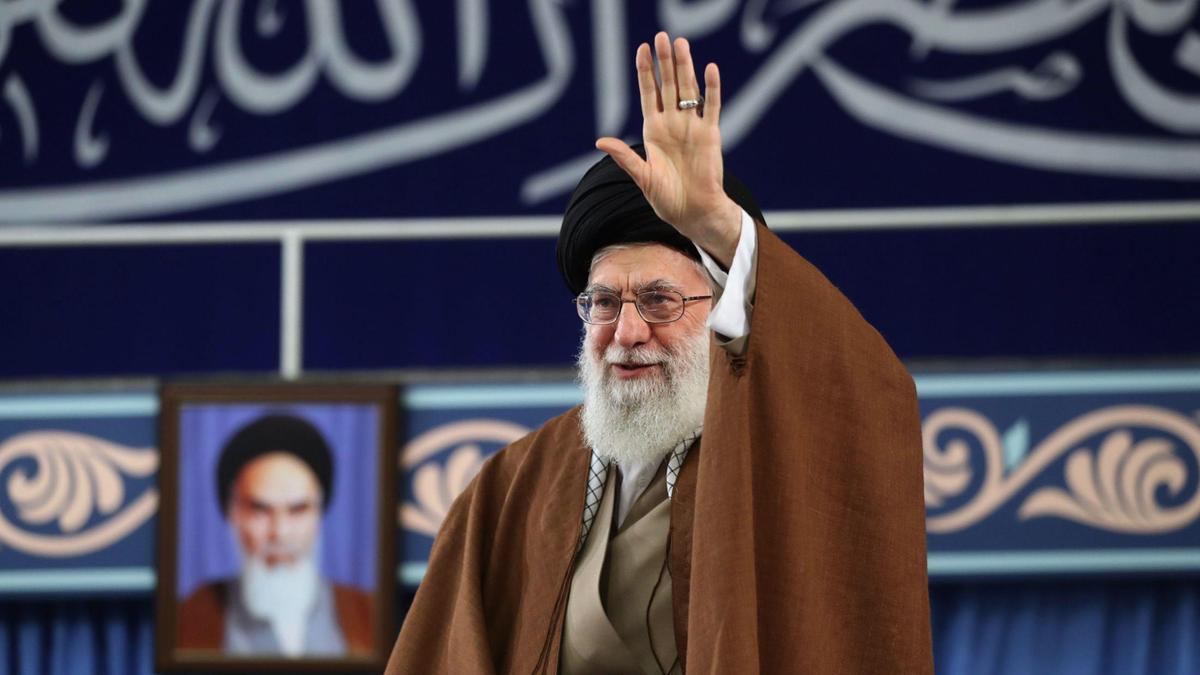
In November 3, 2025, Iran’s Supreme Leader Ayatollah Ali Khamenei delivered his annual address on the eve of what Iran terms the ‘National Day of Fighting Global Arrogance’, which marks three important junctures in Iran’s history – Ayatollah Khomeini’s exile by Reza Shah Pahlavi in 1964, the Pahlavi forces’ killing of student protestors at the University of Tehran in 1978, and (most importantly) the seizure of the U.S. Embassy in Tehran by students proclaiming loyalty to Khomeini in 1979. Mr. Khamenei’s address focused on an old effort — to consistently re-legitimise the Embassy takeover and reinforce a revisionist history of the event in the Iranian popular imagination. However, a key feature of Mr. Khamenei’s 2025 address is his description of arrogance or ‘istikbar’ in government. He put forth a two-pillared description:
“‘Istikbar’ (is) self-perceived superiority is of two kinds. One is when a person or a government considers itself to be superior to others but doesn’t interfere with them. This still isn’t a good characteristic. Conceit isn’t a good thing, but it doesn’t create enmity or hostility. It’s simply a bad trait to have. However, there may be a time when a government, a person, a group, or an aggressor considers itself to be superior to others and grants itself the right to push others around, to encroach upon the vital interests of others, and to dictate terms to others. Arrogance in this form is bad.
A government — for instance, it was the British government in one era, and it’s the U.S. today — grants itself the right to establish, for example, ten military bases in a certain country that lacks a strong government or an aware populace, to create facilities for itself, to take their oil, to seize their interests, and to plunder their underground resources. This is ‘Istikbar’. This is the Arrogance we object to, the Arrogance we speak about, and the Arrogance we chant slogans against.”
This article is from The Hindu e-book. Iran: Revolution in retreat
Mr. Khamenei’s immediate intent is arguably to ensure national unity in a nation still reeling from an unprecedented joint U.S.-Israeli bombardment for 12 days in June. However, his description of ‘istikbar’ can be appropriated for a more objective reading of Iran’s rivalry with the United States and one that is far less convenient for a Supreme Leader to admit from the pulpit. This pertains to the fact Iran’s real grievance with the U.S. is not Iran’s aversion to the U.S.’s inherent arrogance (in Tehran’s view), but rather Washington’s stark inconsistency in its approach to Tehran, swinging between cooperation and engagement to hostility and confrontation.
For an Islamic Republic that publicly lambasts the U.S. as the ‘Great Satan’, whenever the U.S. pendulum has swung towards engagement, Tehran has never categorically refused but cautiously reciprocated. Arguably, for Iran, periods of U.S. engagement reflect Tehran’s success in making an arrogant power step down from a disrespectful pedestal. Hence, engagement is part of (and not an exception to) Tehran’s efforts at preventing the United States from threatening the regime.


Airline ticket prices rise sharply on Asia-Europe routes due to Gulf airport closures amid escalating regional tensions.

Wang Dong discusses Beijing's perspective on the U.S. and Israel's military actions in Iran and their regional implications.

Billy Leon Kearse was executed in Florida for the 1991 murder of police officer Danny Parrish during a traffic stop.

Shorts News:Watch: ‘Worst case is replacing Iranian leaders with someone no better!’ - Trump

With Iran targeting U.S. bases in other countries in the West Asian region, the U.S.-Israel attack has created a massive ripple effect extending well beyond the region, threatening global energy security.

Iran-Israel war: Follow the latest updates on the West Asia war, on March 4, 2026

Iranian missile strikes U.S. base in Qatar as Doha dismantles spy cells linked to Revolutionary Guards, escalating regional tensions.

Putin and Orban discuss Hungarian POWs in Ukraine, highlighting tensions over military recruitment and energy supplies amid the ongoing conflict.

U.N. Human Rights chief ‘deeply shocked’, urges all sides in West Asia war to ‘come to their senses’
U.N. Human Rights chief urges all sides in West Asia conflict to end violence and protect civilians amid growing crisis.

Nepal's March 5 elections see veteran leaders challenged by youth-driven coalitions, with the Rastriya Swatantra Party poised for a breakthrough.

Newly released deposition videos from the House Oversight Committee show former President Bill Clinton and former Secretary of State Hillary Clinton responding to questions about Jeffrey Epstein and Ghislaine Maxwell. The footage captures tense exchanges, sharp denials, and political accusations that have reignited debate over the so-called Epstein files.

A warning from Iran’s Revolutionary Guard to ships passing through the Strait of Hormuz has triggered global market anxiety. After joint U.S.–Israel strikes on Iran, Tehran signaled that navigation through one of the world’s most critical oil routes could be restricted. Nearly 20% of the world’s crude oil supply passes through the Strait of Hormuz every day. Countries like Saudi Arabia, UAE, Iraq, Kuwait and Iran rely on it for exports, with major buyers including China, India, Japan and South Korea. Even without a formal blockade, disruptions, rerouting and rising insurance costs are already slowing tanker traffic. Analysts warn that a serious disruption could push crude oil prices above $90 — or even $100 per barrel. For India, which imports nearly 85–90% of its oil and depends heavily on Hormuz-linked supplies, the economic stakes are high. Higher crude prices could mean rising fuel costs, inflation pressures and a larger import bill.

Explore India's silence on Khamenei's assassination, analyzing five geopolitical factors influencing its response amid escalating tensions.