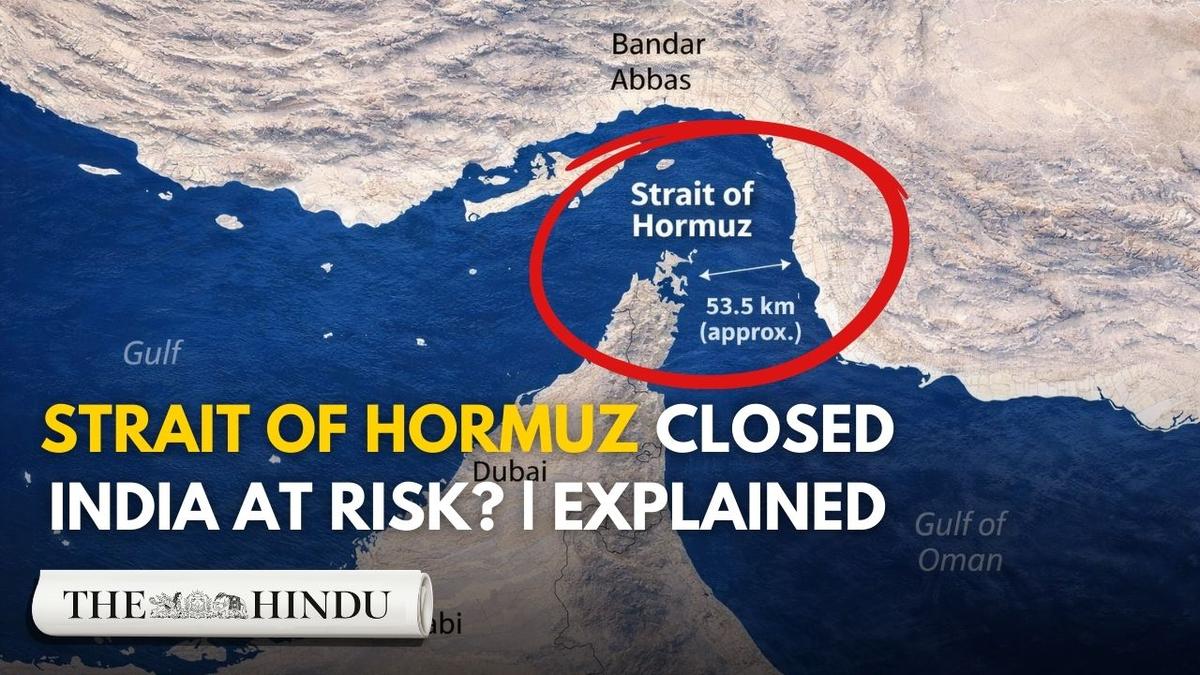
Watch: Iran-Israel conflict: Why the closure of the Strait of Hormuz matters?
The Hindu
A warning from Iran’s Revolutionary Guard to ships passing through the Strait of Hormuz has triggered global market anxiety. After joint U.S.–Israel strikes on Iran, Tehran signaled that navigation through one of the world’s most critical oil routes could be restricted. Nearly 20% of the world’s crude oil supply passes through the Strait of Hormuz every day. Countries like Saudi Arabia, UAE, Iraq, Kuwait and Iran rely on it for exports, with major buyers including China, India, Japan and South Korea. Even without a formal blockade, disruptions, rerouting and rising insurance costs are already slowing tanker traffic. Analysts warn that a serious disruption could push crude oil prices above $90 — or even $100 per barrel. For India, which imports nearly 85–90% of its oil and depends heavily on Hormuz-linked supplies, the economic stakes are high. Higher crude prices could mean rising fuel costs, inflation pressures and a larger import bill.


Urgent progress on lethal autonomous weapons regulations is needed as 128 states meet in Geneva for crucial discussions.

Israeli military prepares for a weeks-long campaign against Iran but rules out deploying ground forces, says spokesperson.

Drone strikes attributed to Iran target Kurdish camp in northern Iraq, injuring one amid ongoing tensions with Iranian opposition groups.

Slick AI-generated disinformation has flooded election campaigns in Nepal, which votes Thursday in the first polls since deadly protests triggered by a brief ban on social media overthrew the government.

Israeli military confirms operations in southern Lebanon amid Hezbollah's drone strikes on Israeli bases in retaliation.

Two killed and three injured in a helicopter emergency landing near Manila, Philippines; cause under investigation.

Trump expresses concern over U.S. high-end weapon stockpiles, stating it's not where the country wants to be.

Thai court issues arrest warrants for businessman and wife accused of $31 million money-laundering and investment fraud.

U.S. forces destroy Iranian command facilities, while Iran claims to have targeted a U.S. air base in Bahrain.

West Indies cricket team remains stranded in India due to international airspace restrictions following the T20 World Cup exit.

China's economic growth faces challenges as the National Congress convenes, highlighting tensions between technological ambitions and domestic demand.

Sam Altman said on Monday that OpenAI is working with the U.S. Department of Defense to make some changes in their agreement

A Texas mass shooting leaves Indian-American student Savitha Shan dead; FBI investigates possible extremist connections amid community mourning.