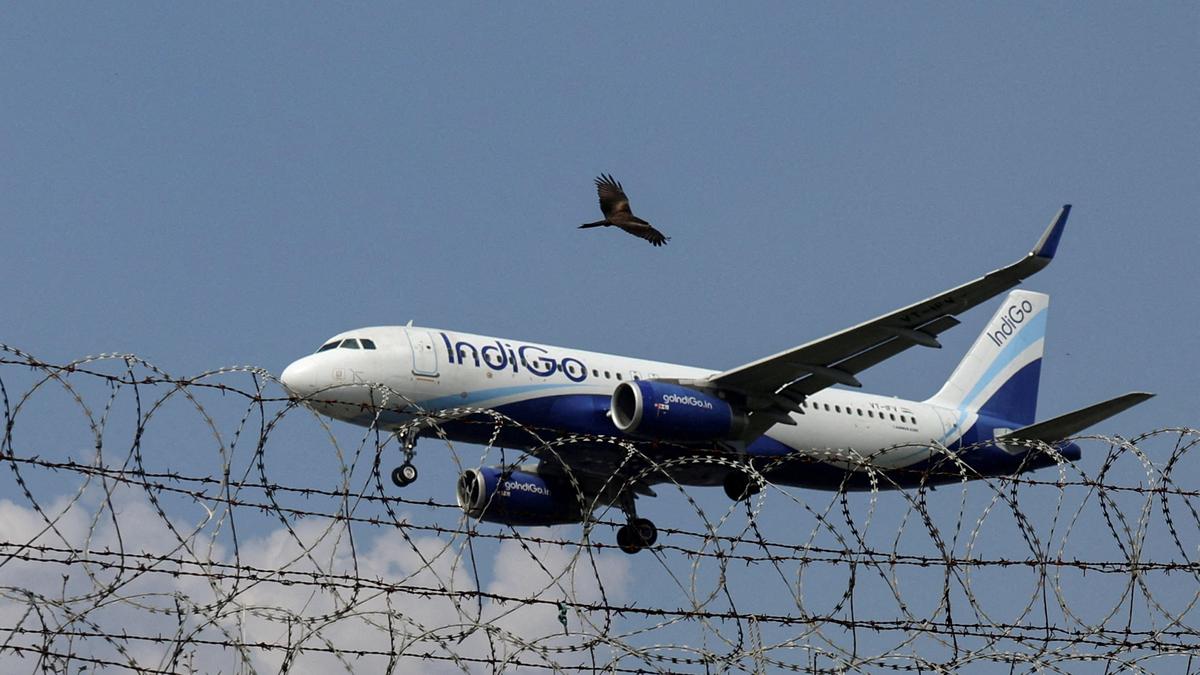
Airline ticket prices soar on Asia-Europe routes after Gulf airport closures
The Hindu
Airline ticket prices rise sharply on Asia-Europe routes due to Gulf airport closures amid escalating regional tensions.
The price of flights between Asia and Europe has soared after the closure of key West Asian hubs due to the U.S.-Israel war against Iran, with airline websites showing tickets on many popular routes booked out for days. Major Gulf hubs, including the world's busiest international airport Dubai - which normally handles over 1,000 flights a day - remained closed for a fourth day on Tuesday (March 3, 2026), slashing capacity on popular routes like Australia to Europe, where Emirates and Qatar Airways normally have a high market share.
Australia's Flight Centre Travel Group has experienced a 75% increase in calls to its stores and emergency assistance lines since the crisis began, with teams having to work around the clock to help customers.
Global Managing Director Andrew Stark said Australians were rebooking flights through alternative hubs in China, Singapore and the United States.
Charlotte Kennard and her father Richard were among those affected.
They were due to fly from Birmingham to Sydney via Dubai on Emirates on Sunday (March 1, 2026) but were caught in the disruption.
Although the airline said it was "monitoring the situation" and would update them 24 hours before departure, none came and they arrived at the airport to find the flight cancelled, she said.


Shorts News:Watch: ‘Worst case is replacing Iranian leaders with someone no better!’ - Trump

With Iran targeting U.S. bases in other countries in the West Asian region, the U.S.-Israel attack has created a massive ripple effect extending well beyond the region, threatening global energy security.

Iran-Israel war: Follow the latest updates on the West Asia war, on March 4, 2026

Iranian missile strikes U.S. base in Qatar as Doha dismantles spy cells linked to Revolutionary Guards, escalating regional tensions.

Putin and Orban discuss Hungarian POWs in Ukraine, highlighting tensions over military recruitment and energy supplies amid the ongoing conflict.

U.N. Human Rights chief ‘deeply shocked’, urges all sides in West Asia war to ‘come to their senses’
U.N. Human Rights chief urges all sides in West Asia conflict to end violence and protect civilians amid growing crisis.

Nepal's March 5 elections see veteran leaders challenged by youth-driven coalitions, with the Rastriya Swatantra Party poised for a breakthrough.

Newly released deposition videos from the House Oversight Committee show former President Bill Clinton and former Secretary of State Hillary Clinton responding to questions about Jeffrey Epstein and Ghislaine Maxwell. The footage captures tense exchanges, sharp denials, and political accusations that have reignited debate over the so-called Epstein files.

A warning from Iran’s Revolutionary Guard to ships passing through the Strait of Hormuz has triggered global market anxiety. After joint U.S.–Israel strikes on Iran, Tehran signaled that navigation through one of the world’s most critical oil routes could be restricted. Nearly 20% of the world’s crude oil supply passes through the Strait of Hormuz every day. Countries like Saudi Arabia, UAE, Iraq, Kuwait and Iran rely on it for exports, with major buyers including China, India, Japan and South Korea. Even without a formal blockade, disruptions, rerouting and rising insurance costs are already slowing tanker traffic. Analysts warn that a serious disruption could push crude oil prices above $90 — or even $100 per barrel. For India, which imports nearly 85–90% of its oil and depends heavily on Hormuz-linked supplies, the economic stakes are high. Higher crude prices could mean rising fuel costs, inflation pressures and a larger import bill.

Explore India's silence on Khamenei's assassination, analyzing five geopolitical factors influencing its response amid escalating tensions.

The World Food Programme announces the imminent reopening of Gaza's Kerem Shalom crossing for vital humanitarian aid delivery.

India expresses deep concern over the escalating Iran-Israel conflict, prioritising the safety of its citizens in the Gulf.

The Israeli military targeted Iran's presidential office and security council in air strikes, escalating tensions in the region.