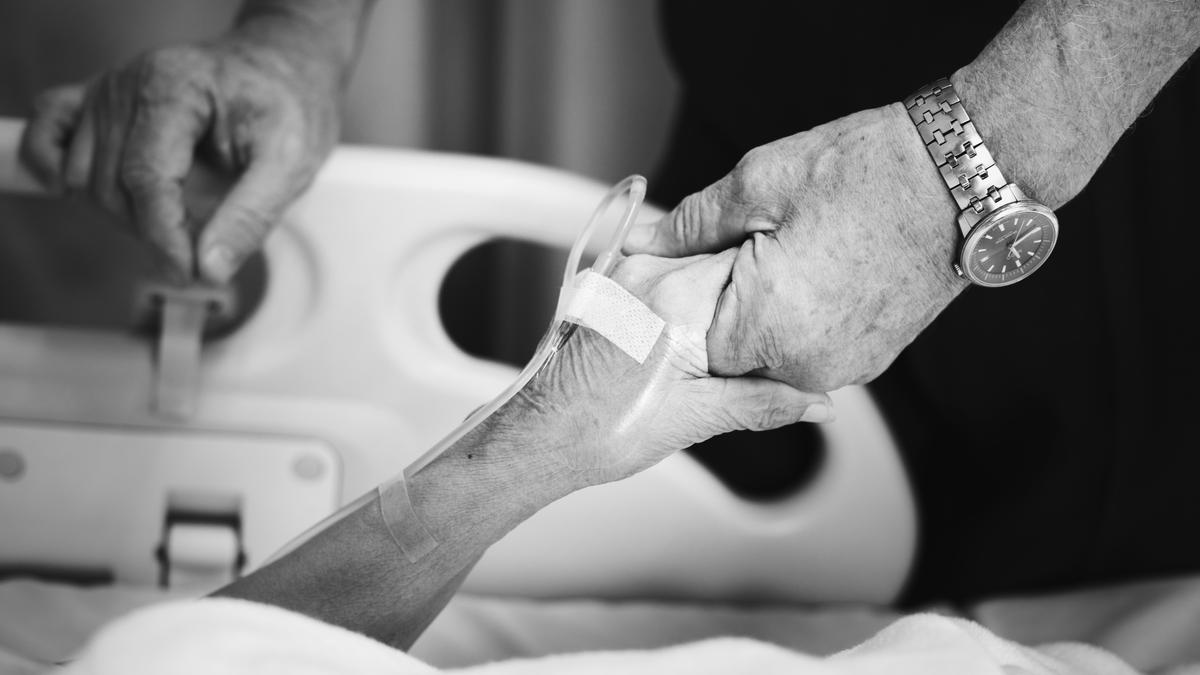
Interest of the state to preserve life cannot overpower right to dignified death: Supreme Court
The Hindu
Supreme Court rules that a patient's right to a dignified death outweighs the state's interest in preserving life.
The Supreme Court held on Wednesday (March 11, 2026) that the state’s absolute interest to preserve life must become subservient to a patient’s right to dignity at a tipping point when medical interventions become increasingly futile and invasive while the chances of recovery keep dropping.
“When the degree of bodily invasion progressively increases, and the prognosis for recovery progressively decreases, there arises a certain point when the state’s absolute interest in preserving life must become subservient to the dignity of the individual, though he is unconscious or incompetent,” Justice J.B. Pardiwala said in a judgment upholding the withdrawal of life support to a 32-year-old man in a persistent vegetative state for over 12 years.
Also read | All you need to know about: passive euthanasia
The court said that the interest of the state must not be allowed to overpower the dignity which must be equally assured to individuals in the process of life and death.
“Dignity is the most sacred possession of a human being. Its possession can neither be said to lose its sanctity in the process of death nor when death occurs,” Justice Pardiwala observed.
Temporarily keeping alive a terminally ill patient who was brain dead or in PVS, solely because doctors are able to leverage the technological advancements in medicine, and compelling such patients to endure a slow, agonising death, cannot fully be compatible with the Constitutional ideal of dignity.


PM Modi assures confidence in overcoming the energy crisis from the West Asia conflict, urging calm and unity among citizens.

Private hostels in Bengaluru turn to firewood for cooking amid ongoing LPG shortages, affecting student meal preparations.

Konkan Railway Corporation Limited (KRCL), in association with the Konkan Railway Women’s Cultural and Social Service Association celebrated International Women’s Day at Navi Mumbai on Monday.

Bengaluru's MSMEs face severe risks from the LPG supply crunch, threatening production, costs, and employment across industries.

Supreme Court rules that a patient's right to a dignified death outweighs the state's interest in preserving life.

KTR flays Speaker’s verdict on defector MLAs, terms it undemocratic, shocking

House site pattas distributed, Indiramma houses sanctioned to eligible poor people on Bhoodan lands in Velugumatla

Coimbatore District Police launches ‘Kovai Digi Cop’ WhatsApp chatbot for citizen services, enhancing accessibility and emergency support.

SVIMS' 'Pink Bus' initiative screens 42,000 rural women for cancer, promoting awareness and early detection in Naravaripalle.

Uncertainty surrounding the ongoing conflict in West Asia has begun to disrupt summer travel season, forcing many residents to cancel or rethink long-planned international holidays.

ICTPL sets a new record by loading 19,150 MT of manganese ore at Vizag Port, surpassing previous achievements.

Cuddalore launches a signature campaign to boost voter awareness and aim for 100% turnout in upcoming Assembly elections.

Two new trains connecting Nagercoil and Tirunelveli enhance travel links to Karnataka and Hyderabad, inaugurated by Prime Minister Modi.