In Kolkata, heritage enthusiasts pay tribute to Satyajit Ray through street art
The Hindu
A crowdfunded street art museum dedicated to filmmaker Satyajit Ray's life and work in Kolkata.
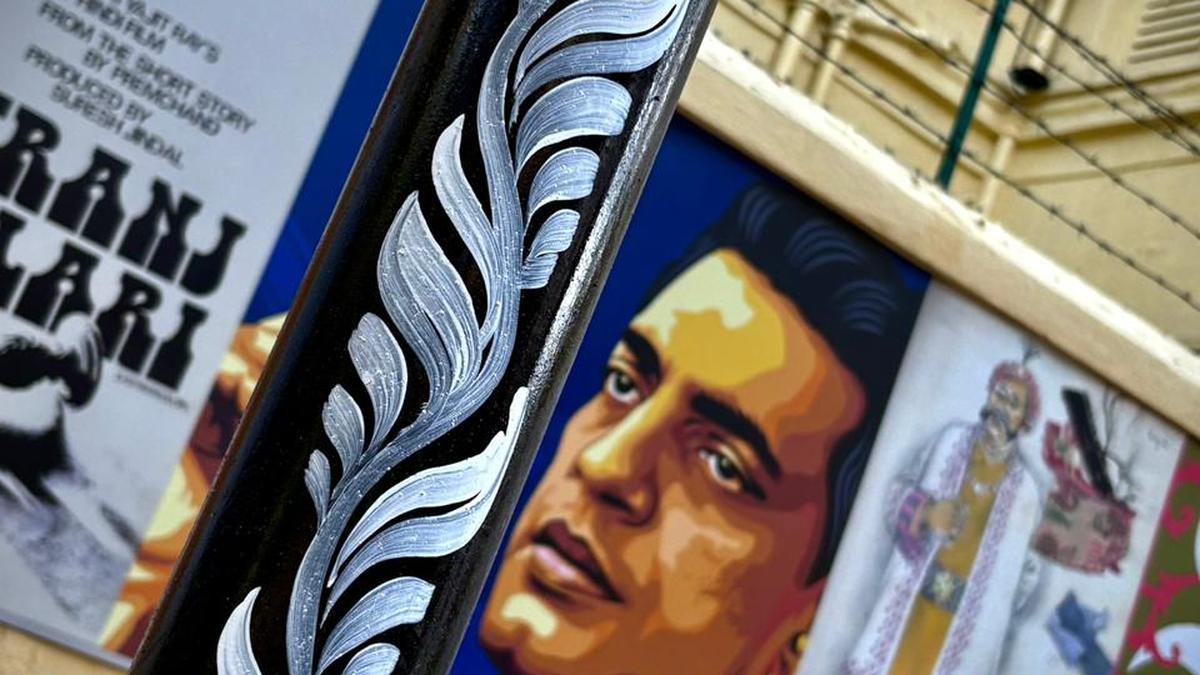
On the occasion of the 104th birth anniversary of acclaimed filmmaker Satyajit Ray, a 120-foot stretch of wall outside his residence on Bishop Lefroy Road in Kolkata has been turned into a crowdfunded street art museum dedicated to his life and work.
The wall, adjacent to the home where Ray’s son, filmmaker Sandip Ray, now lives, showcases high-resolution prints of sketches, photographs, paintings, film posters, and magazine covers - both by and of Ray. The facade is illuminated in the evenings, allowing passersby to view the open-air exhibition after dark.
“I grew up behind his house on Lake Temple Road and Lake Avenue. I believe Calcutta is a repository of nostalgia, but somewhere the city stopped telling stories. Through this street art museum, we have tried to tell a visual story of Mr. Ray as a professional,” Mudar Patherya, a Kolkata-based urban revivalist who conceptualised and executed the project, said.
He noted that the inspiration came from a similar visual transformation undertaken in his own office space. “Mr. Ray was not just a filmmaker. He was a multidimensional man - he was an artist, a writer, and he composed the music for his own films. He was many things at once. The street exhibition is thus an attempt to enhance the common people’s understanding of Mr. Ray,” Mr. Patherya added.
The exhibition, completed by April 30, was installed over ten days and includes murals painted on electricity boxes and backlit posters mounted on lamp posts. The project was supported by approximately 27 patrons, most of them based in Kolkata.
“A lot of the credit behind this goes to Sandip Ray, who vetted the images that have been put up, and Ashim Basu, the councillor who facilitated this project. It was a collaborative effort to transform and reinvent the neighbourhood. Now with the help of Mr. Basu, we are also painting alpona on the lamp posts in the area,” Mr. Patherya said.
He also expressed the hope that this model of urban rejuvenation could be adopted in other parts of the country, particularly in neighbourhoods associated with distinguished individuals.


A Sikh organisation has lodged a complaint against the makers of the film alleging that the movie’s promotional material has hurt the religious sentiments of the Sikh community

Speculation over Congress' Chief Ministerial candidate in Kerala persists despite party leaders' attempts to quell the discussions ahead of elections.

A fake dentist operating illegal clinic in Hyderabad's Old Neredmet has been arrested for endangering public health.

Explore the concept of Force Majeure and its implications amid ongoing geopolitical conflicts affecting global gas exports.

Malavika Sarukkai’s latest production Beeja explores humanity, Nature and healing through the language of dance.

Hindustani expert N Rajam and Mandolin Rajesh are among the National Awardees of the Sree Ramaseva Mandali’s Chamarajpet Ramanavami this year

Explore exclusive interviews with Tamil Nadu political leaders ahead of the 2026 Assembly election to aid informed voter decisions.

Explore North East India with South Star Rail's three unique 14-day train tour packages from Mangaluru, starting April 25.

A woman and her son sustained burn injuries in a gas cylinder fire in Bagalkot, Karnataka, and were hospitalised.

Directed by Nicholas Kharkongor, the show also stars Angira Dhar, and Ranveer Brar in pivotal roles

T.N. CM Stalin blames Centre's delimitation focus for diverting attention from the cooking gas shortage crisis.

UDF plans to challenge Kerala BJP chief Rajeev Chandrasekhar over alleged asset concealment and criticizes CPI(M) for corruption.

Telangana's Civil Supplies Commissioner assures no fuel shortage, with 20,000 kilolitres of petrol available