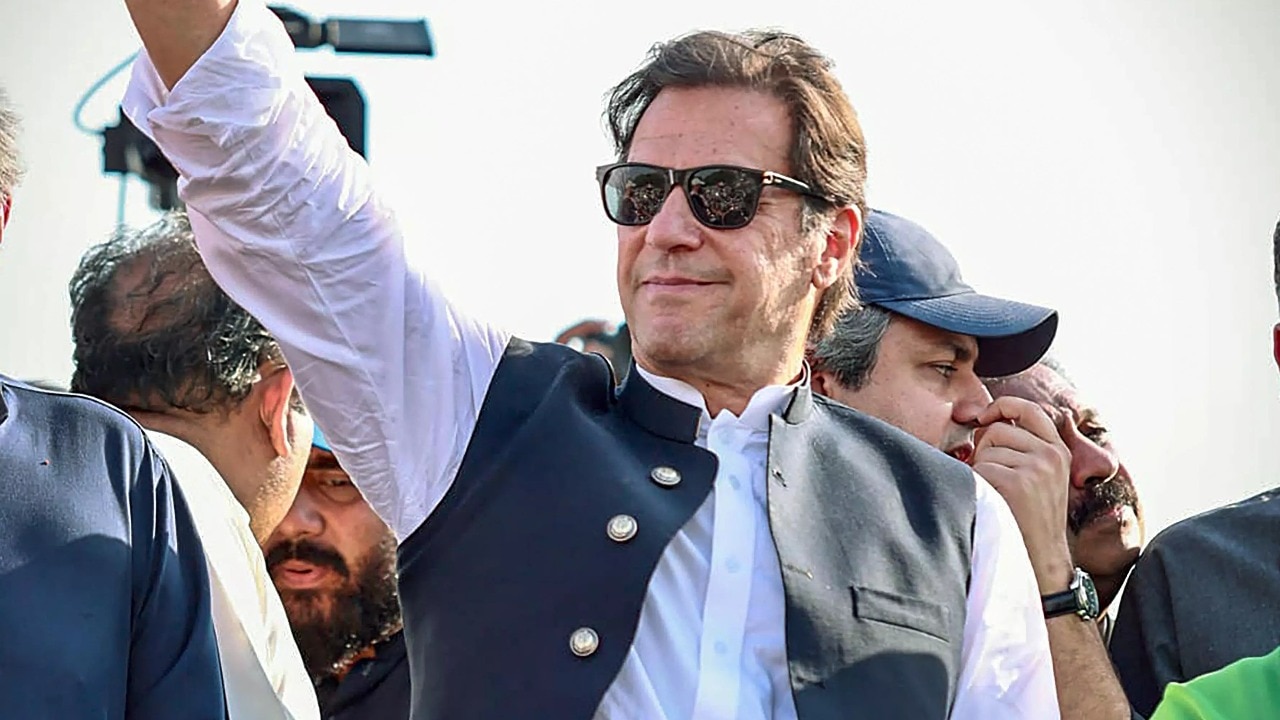
Imran Khan: Hero, prisoner, symbol of Pakistan's blind faith in army
India Today
Pakistan's greatest cricketer has become its most tragic political prisoner. His journey from the glory of Melbourne 1992 to a cell in Adiala Jail is a metaphor for Pakistan's decadence.
Imran Khan started life as a playboy, inspired a generation of fanboys, and turned into a jailboy. The arc of his life, from Lahore's Zaman Park to the cricket pitches of Oxford, to the World Cup podium in Melbourne, to the prime minister's chamber, to Adiala Jail, is one of the most extraordinary and most tragic in modern Pakistani history.
Within a span of a few decades, Pakistan produced a global hero, and then swallowed it. Ironically, Imran and his country share the same cage – locked by the army – and identical penchant for self-destruction.
In the winter of 2026, Barrister Salman Safdar, appointed as amicus curiae by Pakistan's Supreme Court, walked into Adiala Jail in Rawalpindi and emerged with a seven-page report that shocked Pakistan. The lawyer reported Imran, 73, was going blind.
The former cricket captain, philanthropist, and prime minister, went from perfect vision in both eyes to just 15% sight remaining in his right eye. The cause, according to his doctors, was a blood clot in the retina, left untreated for months as he repeatedly complained to prison authorities, who took no action.
This is a tragic denouement for Imran, an outcome nobody could have predicted for the handsome young man with a booming baritone and a lionesque mane.
Imran Ahmed Khan Niazi was born in 1952 in Lahore. A Pashtun from the Niazi tribe, he was closely related to AAK 'Tiger' Niazi, the Pakistani General who surrendered in Dhaka to Indian forces in 1971.


Ashu Ghai recreated the striking scene from Dhurandhar 2, where Ranveer Singh is introduced as Jaskirat Singh Rangi amid a cascade of fiery sparks.

Pakistan Army chief Asim Munir said Shias who "love Iran so much" should "go to Iran". His remarks triggered a row with prominent Shia clerics of Pakistan accusing Munir of insulting the community and the military establishment of serving America and Israel as a "servant".

Treasury Secretary Scott Bessent said the US may need to intensify strikes on Iran to end the conflict. This came soon after Trump threatened to hit Iran's energy plants amid soaring oil prices and Strait of Hormuz tensions.

The scooter rider rode into the pedestrian zone, collided with the car, and fell down. The man driving the car, however, did not react with anger and handled the situation with composure.

A minute-long ATC recording lays bare the confusion and urgency before a runway collision in New York. Controllers issued frantic warnings as a plane struck a vehicle, forcing a complete airport shutdown.

Tucker Carlson says he might cry listening to him. Millions call him a prophet. But who exactly is "Professor Jiang" — and what is he not telling you?

In a symbolic act of wartime messaging, Iran placed stickers carrying anti-war remarks by Spanish Prime Minister Pedro Sanchez on ballistic missiles bound for Israel as the Middle East conflict enters it fourth week.

The announcement was made a day after North Korea convened the first session of its Supreme People's Assembly. The assembly, the isolated nation's rubber-stamp legislature, formally approves state policy.


Indian Railway staff's swift action turned a medical emergency involving a toddler into relief aboard a train from Bengaluru to Gujarat.

Leon Panetta said Iran war was not an unexpected risk. He pointed out that for years, US security officials have known Iran could disrupt global oil supplies by blocking the Strait of Hormuz. According to him, this was a well-known danger, but one that appears to have been overlooked in the current conflict.

Sri Lanka raised fuel prices by about 25% for the second time in a week as the Gulf conflict disrupts global oil supplies via the Strait of Hormuz.

Iran has warned it is ready to respond. Parliament Speaker Mohammad Baqer Qalibaf warned that if Iran's infrastructure is targeted, then key facilities across the region could be "irreversibly destroyed."