How PECDA is showing up for contemporary dance
The Hindu
PECDA revitalizes India's contemporary dance scene, offering crucial support and opportunities amidst dwindling institutional backing.
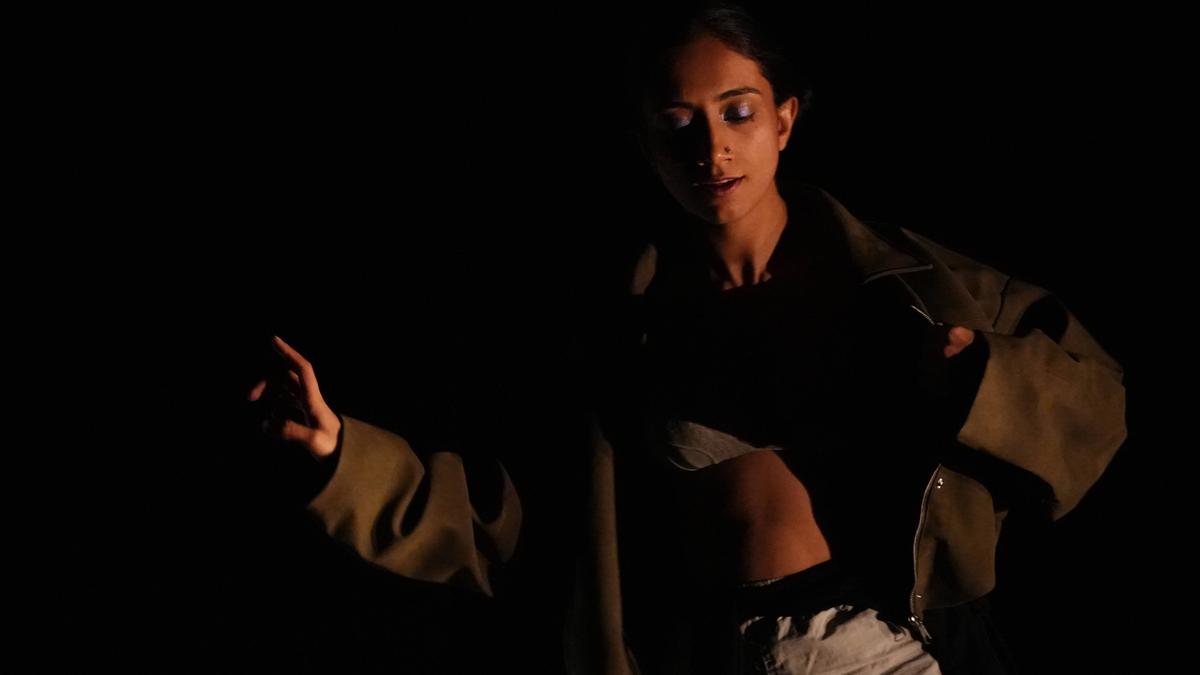
“What is happening here?” said one friend to another (unsurprisingly) during a moment of complete silence in the contemporary dance work being performed on stage. We were in the audience at the 7th edition of the Prakriti Excellence in Contemporary Dance Awards (PECDA), a biennial event that provides financial support, mentorship, and performance and networking opportunities through an open competition for contemporary dance practitioners.
This unfiltered audience member at the Bangalore International Centre auditorium wasn’t entirely to blame for their baffled query. The more one watches such live performances, the easier it is to understand abstract work.
India’s contemporary dance landscape is perennially in a dicey situation — lack of consistent funding, dwindling grants for creation and research, no institutional support (other than education and training), and hardly any critical writing around it. In this fragile ecosystem, being an opportunity that shows up consistently has been PECDA’s greatest win. Over the past 14 years and seven editions, it has stamped itself as the only publicly-available Rosetta Stone to understand the tangential explorations of our nation’s contemporary dance choreographers. It has also turned into an occasion to spend a weekend watching performances, attending workshops, and talking with dancers from all over India.
Performances at PECDA
The runway of opportunities provided by PECDA begins with its jury, a mix of national and international stakeholders. This year saw Saido Lehlouh, co-director of the Centre Chorégraphique National de Rennes et de Bretagne in France return, along with other key names from countries such as Australia, the U.K. and Thailand.
This committee was tasked with paring down the written proposals of 52 choreographers — the highest number of applicants till date — to 12 practitioners. The semi-finalists presented 10-minute excerpts of their dance works over two sessions, and then five finalists received individual sessions of feedback from the jury, had a day of mentoring with senior choreographers, and got rehearsal time to change up any technical factors of their presentations.


Telangana's 2026-27 budget allocates ₹33,688 crore to rural development, prioritizing employment and infrastructure growth in villages.

Supreme Court grants bail to Muppidi Avinash Reddy in Andhra Pradesh liquor scam case, pending trial proceedings.

Kerala Assembly elections: Amid reports of rift in Congress, V.D. Satheesan says seat-sharing done without discord

Through its accessible storytelling, the show offers a sharp portrayal of patriarchy and its impact on families, even though the presentation lacks finesse, making it clunky in some portions.

PECDA revitalizes India's contemporary dance scene, offering crucial support and opportunities amidst dwindling institutional backing.

The society must not allow people to be isolated or threatened on the basis of faith, he stressed

Telangana's public debt is nearing ₹6 lakh crore, projected at ₹5.62 lakh crore by the end of 2026-27.

Telangana's 2026-27 budget allocates ₹13,679 crore for health, emphasizing infrastructure, preventive care, and maternal and child health initiatives.

Guindy Children’s Park in Chennai closes due to avian flu outbreak after nearly 40 birds die from H5N1 virus.

A study reveals over 20 lichen species in Kochi's Subhash Chandra Bose Park, highlighting its ecological importance and air quality.

Telangana's 2026-27 budget focuses on welfare, emphasizing urban and rural development with significant allocations across key sectors.

Delhi HC criticizes Centre for lack of timeline on filling vacancies in the National Commission for Minorities, demanding accountability.

Supreme Court grants bail to ex-police officer Rajesh Das in sexual harassment case, overturning prior Madras High Court decisions.