Why has Madras High Court ordered eradication of seemai karuvelam? | Explained Premium
The Hindu
Madras High Court mandates eradication of prosopis juliflora with new directives to protect Tamil Nadu's environment and ecology.
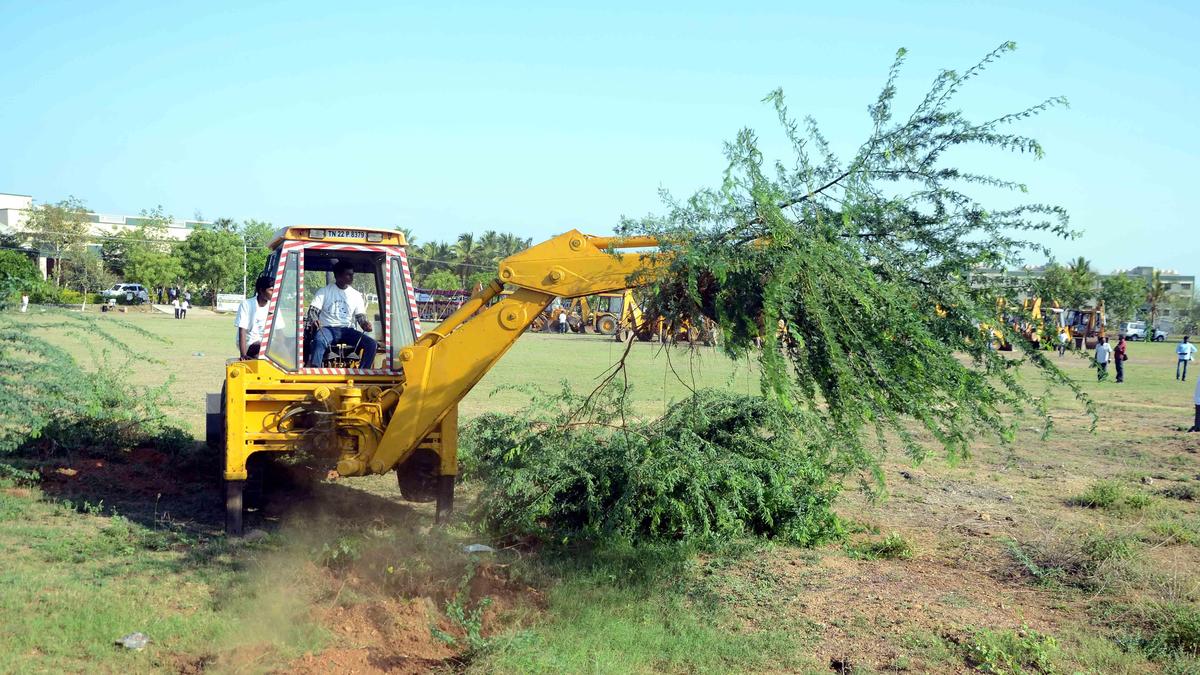
The story so far: The Madras High Court on March 18, 2026 issued a set of 34 directions for the eradication of the exotic and invasive species prosopis juliflora (seemai karuvelam in Tamil) from Tamil Nadu. One of those directions states all private landowners must uproot those plants from their properties within 30 days failing which the district administration concerned shall deracinate them and recover the costs from the landowners.
The court also made it clear if those property owners express willingness to plant native saplings, they must be given the saplings of their choice free of cost. The latest set of directives have been issued after a series of orders passed by the court in the last 12 years failed to achieve the desired result of eliminating the invasive species in toto.
A special Division Bench of Justices N. Sathish Kumar and D. Bharatha Chakravarthy constituted to hear environment and forest related cases has answered this question in its latest order. It pointed out the species originated in the South American countries and was introduced in other continents during the early days of colonisation for being used as firewood. “Though, initially, it served the purpose of providing firewood to the individuals and also as industrial fuel besides being used in the brick kilns and the charcoal industry, it has proven to be a disaster for our environment and ecology,” the judges said.
The court said, prosopis juliflora had destroyed the fertile lands, grasslands and the mossy and spongy earth of forests and the land beneath these trees had been transformed into barren grounds. Secondly, the exotic species had displaced the native flora. “A variety of Indian trees and plants have given way to this fittest survivor and it now enjoys a monopoly,” the order read. It also stated the growth of the invasive species had resulted in depletion of groundwater table and reduced moisture level in areas where it could be found in abundance.
On January 9, 2014 a Division Bench of Justices R. Sudhakar and V.M. Velumani (both retired now) had ordered removal of prosopis juliflora from all rivers and water bodies in the State “for the betterment of the farmers as well as the people of the country.” When the order was not complied with and a contempt of court petition was filed, the same Bench, on August 6, 2015 directed the State government to formulate a scheme for eradication of the invasive species “which is causing a great environment problem.”
Thereafter, former Madurai Mayor M. Patturajan (since dead) filed a public interest litigation (PIL) petition against prosopis juliflora and he was followed by Marumalarchi Dravida Munnetra Kazhagam (MDMK) general secretary Vaiko. Passing a series of orders in these two cases since 2015, the High Court had called for expert reports from bodies such as National Environmental Engineering Research Institute (NEERI) which confirmed the harmful nature of the invasive species.


Diya Chitale and Manav Thakkar reach semifinals, while Yashaswini Ghorpade upsets top seed Sreeja Akula at National TT Championships.

DYFI criticizes A.P.'s job calendar for failing unemployed youth, demanding a revision to include 1 lakh posts and higher age limits.

‘Lethargic’ officials who left Chambal sanctuary to the mercy of sand miners will be held liable: SC
Supreme Court holds negligent officials accountable for enabling illegal sand mining in Chambal Sanctuary, emphasizing habitat protection laws.

Work on the Srisailam Left Bank Canal tunnel resumes after 13 months, with completion targeted by 2027-end, says Minister Reddy.

Ancient ‘Vanni’ tree at Sri Meenakshi Sundareswarar Temple tilts; steps on to restore it

Bengaluru Metro penalises 14 passengers for disrupting services with loud singing, following a viral clip of their antics.

ASR district plans a 122 km world-class trekking network, enhancing tourism and local employment across Araku, Paderu, and Lambasingi.

Development without impact: Coastal residents of Kanniyakumari and Nagercoil constituencies voice discontent

Environmentalists in Kakinada celebrate World Sparrow Day, urging conservation efforts for sparrows and migratory birds.

T.K. Govindan secures full support from K. Sudhakaran for Kerala Assembly polls 2026 as a UDF-backed Independent candidate.

Karnataka implements weekly reviews and control rooms to combat rural drinking water shortages during the summer months.

BJP leads candidate selection for upcoming bypolls, while Congress faces internal challenges and community pressure in Bagalkot and Davangere.

A man died in a Kolkata hospital lift, prompting accusations of negligence against the West Bengal government and hospital authorities.