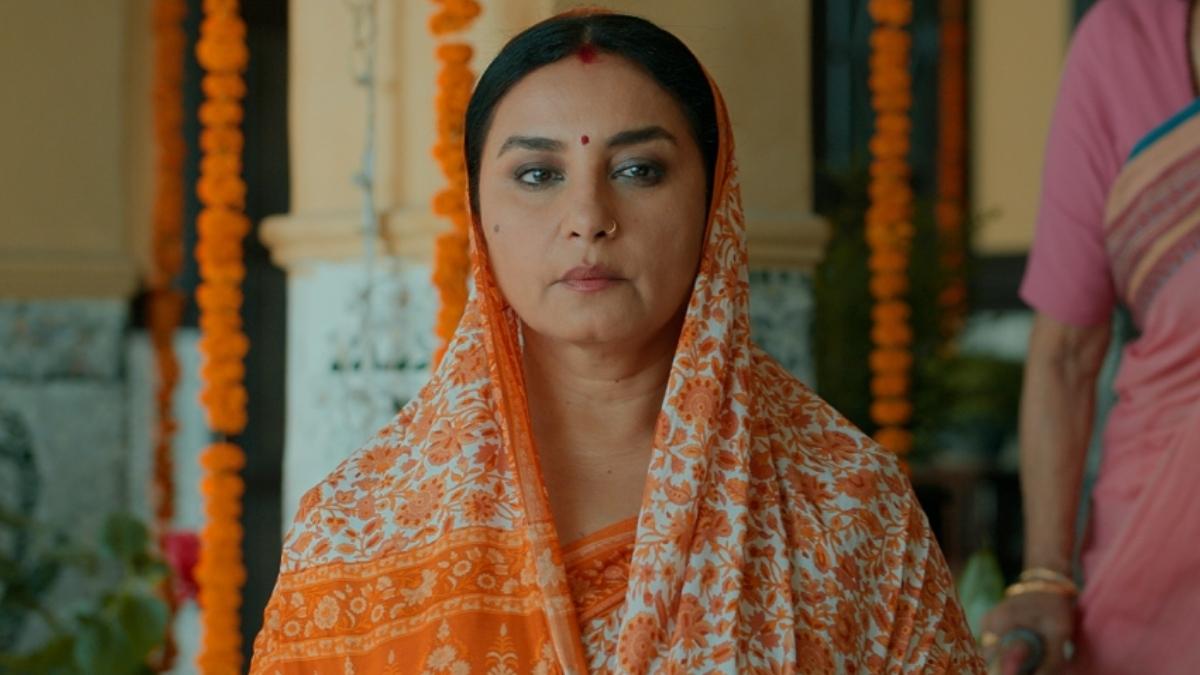
‘Chiraiya’ series review: Divya Dutta uplifts the rough edges of this timely take-down of marital rape
The Hindu
Through its accessible storytelling, the show offers a sharp portrayal of patriarchy and its impact on families, even though the presentation lacks finesse, making it clunky in some portions.
A quaint, easy-going charm follows Divya Dutta’s Chiraiya, often invoking the long-lost pleasures of watching a carefree television serial from the early 2010s. Written by Divy Nidhi Sharma, known for writing popular TV shows, Chiraiya is set in a traditional Indian household, dutifully run by Kamlesh (Divya), who handles the responsibilities of a wife, daughter-in-law, and a mother with a purposeful reckoning. However, she is not forever meek and submissive, like versions of such housewives glorified on TV for decades. The show is acutely aware of its familiar setup, as it doesn’t overlook the patriarchal overtones embedded within and rises up to stage a rebellion against the horrors that take place behind closed doors.
Adapted from the Bengali series Sampurna, the narrative of Chiraiya focuses essentially on the older bahu of the house,Kamlesh, and the newly wedded bride, Pooja (Prasanna Bisht), married to Arun (Siddharth Shaw), a seemingly harmless chocolate boy raised with love by Kamlesh. The two are close, and Kamlesh believes Arun can do nothing wrong. So, when a distraught Pooja tells Kamlesh about Arun’s forced sexual advances towards her on their first night, Kamlesh slaps her in disbelief. For her, the concept of consent in a marriage doesn’t exist. Soon, though, she goes through a transformation as she visits a local NGO and speaks to experts, who inform her about consent and the reality of marital rape. The bubble of a ‘perfect family’ bursts as she begins to see Arun as the entitled, misogynistic man he has become
A still from the show | Photo Credit: JioHotstar
Sharma spends some time exploring how the upbringing of such men instills a patriarchal mindset in their personality. Through bite-sized flashbacks, smaller instances from Arun’s childhood are shown when Kamlesh unconsciously infused a sense of superiority in him. Even though a bit too direct and filmed rather awkwardly, these simplistic sequences carry the spirit of critical thought in understanding the early roots of toxic masculinity. After an initiation from Pooja, Kamlesh takes it upon herself to unlearn the facets of patriarchy that she had doubtlessly internalised for decades. It is a subversive feat for a character existing within the landscape of a popular television setup to break away from the shackles of conservatism and question the powerful men in the house.
Divya’s assured performance eases into this transformation as she plays her own version of the traditional bahu without touching the cliches. Divya’s work on the character’s local dialect becomes one of the gateways to understand her naivety as she brightens even some of the flat portions of the show with her screen presence. Her confrontations with the hypocritical patriarch of the household, played with brevity by Sanjay Mishra, lead to genuine moments of reflection.
A still from the show | Photo Credit: JioHotstar


Telangana's 2026-27 budget allocates ₹33,688 crore to rural development, prioritizing employment and infrastructure growth in villages.

Supreme Court grants bail to Muppidi Avinash Reddy in Andhra Pradesh liquor scam case, pending trial proceedings.

Kerala Assembly elections: Amid reports of rift in Congress, V.D. Satheesan says seat-sharing done without discord

Through its accessible storytelling, the show offers a sharp portrayal of patriarchy and its impact on families, even though the presentation lacks finesse, making it clunky in some portions.

PECDA revitalizes India's contemporary dance scene, offering crucial support and opportunities amidst dwindling institutional backing.

The society must not allow people to be isolated or threatened on the basis of faith, he stressed

Telangana's public debt is nearing ₹6 lakh crore, projected at ₹5.62 lakh crore by the end of 2026-27.

Telangana's 2026-27 budget allocates ₹13,679 crore for health, emphasizing infrastructure, preventive care, and maternal and child health initiatives.

Guindy Children’s Park in Chennai closes due to avian flu outbreak after nearly 40 birds die from H5N1 virus.

A study reveals over 20 lichen species in Kochi's Subhash Chandra Bose Park, highlighting its ecological importance and air quality.

Telangana's 2026-27 budget focuses on welfare, emphasizing urban and rural development with significant allocations across key sectors.

Delhi HC criticizes Centre for lack of timeline on filling vacancies in the National Commission for Minorities, demanding accountability.

Supreme Court grants bail to ex-police officer Rajesh Das in sexual harassment case, overturning prior Madras High Court decisions.