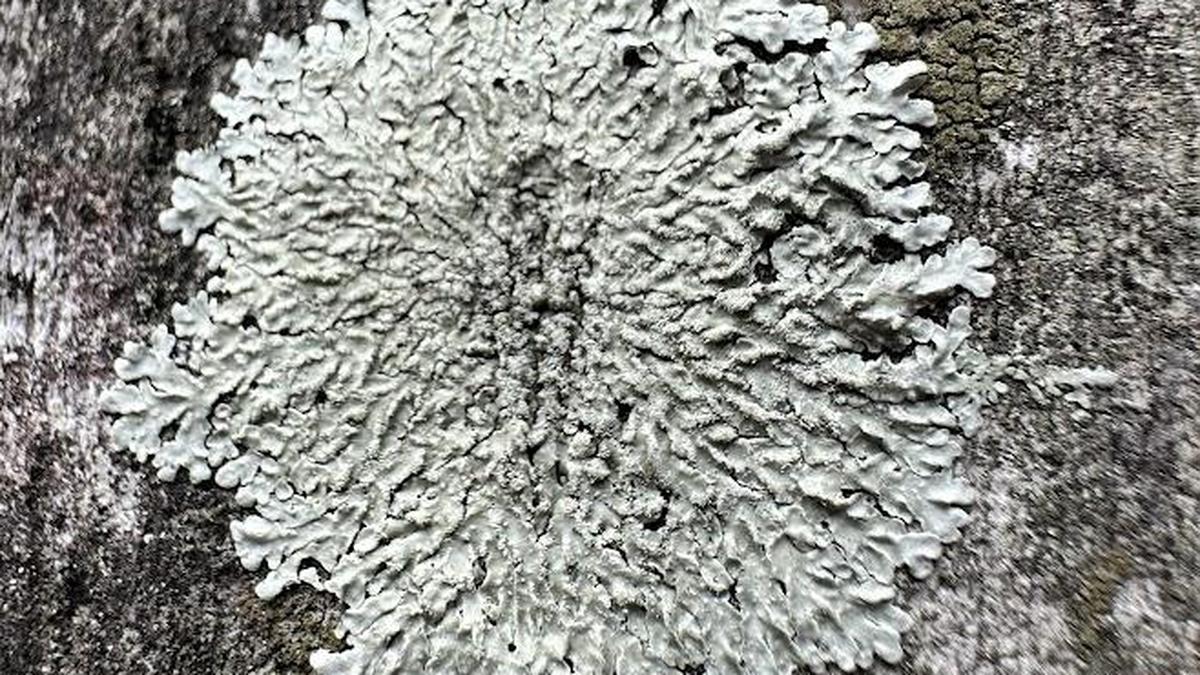
A study records over 20 lichen species at Kochi’s Subhash Chandra Bose Park
The Hindu
A study reveals over 20 lichen species in Kochi's Subhash Chandra Bose Park, highlighting its ecological importance and air quality.
The Subhash Chandra Bose Park, one of Kochi’s key green spaces, sprawling across 11.5-acres, is a lichen hotspot. A recent study carried out by the Nature Club and Department of Botany of Maharaja’s College along with the Bhoomitrasena Club of Sree Sankara College, Kalady, recorded over 20 species of lichens at the park.
The study, done as part of a biodiversity documentation exercise, recorded lichens growing on the bark of several tree species. A complex organism formed from a symbiotic relationship between a fungus an algae or cyanobacterium, lichens are often mistaken for fungi. They sometimes appear as mold and are easily overlooked.
But lichens play a vital role as biomonitoring agents. Owing to their sensitivity to air pollution and their capacity for carbon sequestration, they act as air quality indicators, says Stephen Sequeira, associate professor of Botany, Maharaja’s College, and a specialist in lichen taxonomy and ecology, under whose guidance the study was conducted.
One of the lichens recorded at Subhash Chandra Bose Park | Photo Credit: Special Arrangement
“No formal lichen survey has been done within city limits. This study revealed a wealth of lichen growth and this highlights the ecological significance of the area. After Managalavanam, which is considered Kochi’s green lung, Subhash Park, with its abundance of indigenous trees, can surely be considered an important urban oasis,” says Stephen. The study also provides valuable baseline data for future environmental monitoring and biodiversity conservation initiatives, he adds.
The lichen genera documented during the study includes Pyxine cocoes, Dirinaria, Porina, Graphis, Arthonia, Cryptothecia, Pyrenula, Lepraria, Pertusaria, Sarcographa Diorygma, Candelaria, Felhaneria, etc. These lichens were observed on trees such as Roystonea regia, Bougainvillea, Crescentia cujete, Wodyetia bifurcata (foxtail palm), Saraca asoca, Ficus benjamina, Mimusops elengi, Mangifera indica, Ficus religiosa, Ficus benjamina, Phyllanthus emblica, Bauhinia variegata, Swietenia macrophylla, Terminalia arjuna, Peltophorum, Pongamia glabra, Artocarpus, Polyalthia longifolia, Araucaria, Thuja and Livistona.


Diya Chitale and Manav Thakkar reach semifinals, while Yashaswini Ghorpade upsets top seed Sreeja Akula at National TT Championships.

DYFI criticizes A.P.'s job calendar for failing unemployed youth, demanding a revision to include 1 lakh posts and higher age limits.

‘Lethargic’ officials who left Chambal sanctuary to the mercy of sand miners will be held liable: SC
Supreme Court holds negligent officials accountable for enabling illegal sand mining in Chambal Sanctuary, emphasizing habitat protection laws.

Work on the Srisailam Left Bank Canal tunnel resumes after 13 months, with completion targeted by 2027-end, says Minister Reddy.

Ancient ‘Vanni’ tree at Sri Meenakshi Sundareswarar Temple tilts; steps on to restore it

Bengaluru Metro penalises 14 passengers for disrupting services with loud singing, following a viral clip of their antics.

ASR district plans a 122 km world-class trekking network, enhancing tourism and local employment across Araku, Paderu, and Lambasingi.

Development without impact: Coastal residents of Kanniyakumari and Nagercoil constituencies voice discontent

Environmentalists in Kakinada celebrate World Sparrow Day, urging conservation efforts for sparrows and migratory birds.

T.K. Govindan secures full support from K. Sudhakaran for Kerala Assembly polls 2026 as a UDF-backed Independent candidate.

Karnataka implements weekly reviews and control rooms to combat rural drinking water shortages during the summer months.

BJP leads candidate selection for upcoming bypolls, while Congress faces internal challenges and community pressure in Bagalkot and Davangere.

A man died in a Kolkata hospital lift, prompting accusations of negligence against the West Bengal government and hospital authorities.