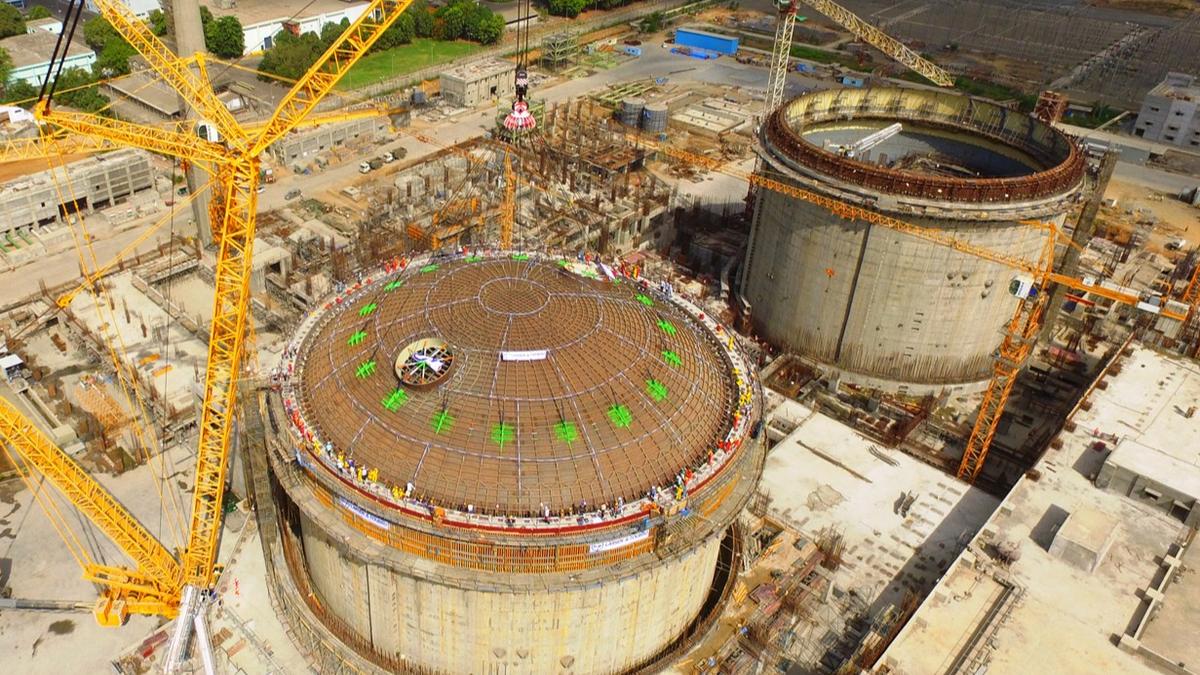
HALEU-Thorium fuel unsuitable for Indian nuclear reactors: study
The Hindu
A study by BARC scientists has concluded that HALEU-Thorium fuel is unsuitable for India's nuclear reactors, requiring costly redesigns and reducing plutonium production.
Bhabha Atomic Research Centre (BARC) researchers have reported that a new kind of nuclear fuel, touted for being able to allow India to take advantage of its vast thorium reserves, will not fit in the country’s three-stage programme and could entail expensive reactor redesigns.
The study was published in Current Science.
The composition the team evaluated is called HALEU-Thorium. It is the basis for “Advanced Nuclear Energy for Enriched Life”, or ANEEL, a fuel that the state-owned NTPC, Ltd. and the U.S.-based company Clean Core Thorium Energy are currently exploring.
India’s long-term nuclear energy plan has three stages. In the ongoing first stage, India is using pressurised heavy water reactors (PHWRs) using natural uranium. However, India has much less access to uranium than thorium, so the next two stages are designed to transition to using more thorium.
ANEEL mixes thorium with high-assay low-enriched uranium (HALEU), which contains uranium enriched to 5-20%. Its proponents have suggested ANEEL could be a “drop-in” in existing reactors, including PHWRs, allowing them to use thorium today.
The Indian government recently passed the SHANTI Act to allow private companies to help deploy such advanced technologies.


Greater Chennai Corporation launches free therapy center for children with developmental disabilities, with plans for two more locations.

With 60 lakh cases verification pending adjudication under West Bengal SIR, the publication of final rolls has several implications.

The 2026-27 Andhra Pradesh Budget shows debt moderation while scaling up capital investment

The directions by the Delhi High Court to Aam Aadmi Party (AAP) chief Arvind Kejriwal, senior leader Manish Sisodia, and 21 others seeking their response to the plea challenging their discharge in the excise policy case sparked a heated exchange in the Capital.

Joint Collector S. Ilakkiya highlights women's vital role in public service and social contributions during Women’s Day celebrations in Vijayawada.

Vizag Port aims to become a net-zero maritime hub by 2047, focusing on renewable energy and zero-emission vessels.

Iran is seen as the great disrupter of West Asia and srael wants to end Iran’s proxy war which it sees as an existential threat

A lesson from this war is that national security cannot be bought or outsourced

CM Stalin asserts Tamil Nadu will never fall under BJP rule, emphasizing the DMK's commitment to the state's culture and development.

Madras High Court orders post-mortem of alleged custodial death in Sivaganga, amid ongoing protests by the victim's family.

BNP proposes citizen-led solutions to enhance Bengaluru's garbage collection and address persistent blackspots through improved coordination and participation.

Accusing Prime Minister Narendra Modi of “meekly surrendering to the U.S.”, Chief Minister Siddaramaiah on Monday demanded that the Prime Minister step down for the good of the nation.

JPC will meet with UGC, AICTE, and NCTE officials this week to discuss the Viksit Bharat Shiksha Adhishthan Bill.