The lesson is national security cannot be outsourced Premium
The Hindu
A lesson from this war is that national security cannot be bought or outsourced
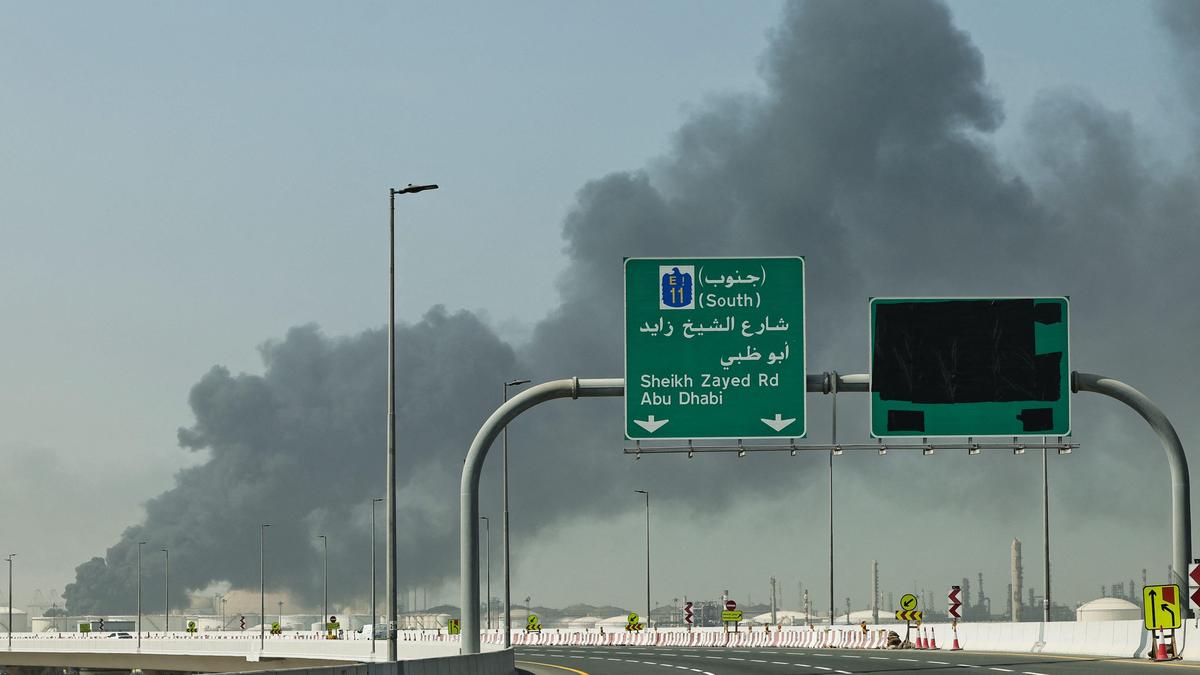
It is the second week of war since strikes by the United States and Israel on Iran began on February 28 citing ‘existential’ and ‘imminent’ threats. A joint offensive by two of the world’s most lethal and technologically advanced militaries was expected to crush Iran quickly — but Iran has struck back hard, hitting targets once thought safe or ‘untouchable’.
Why has Iran targeted them? How does it change the nature of war? These targets are the various American military bases and assets spread over the Gulf region in Saudi Arabia, the United Arab Emirates (UAE), Qatar, Bahrain, Jordan, Iraq, Syria and Oman. These attacks, combined with strikes on critical energy infrastructure, such as oil depots, oil fields, gas fields and perhaps most crucially, the closure of the Strait of Hormuz — have thrown the entire region into panic. Tough questions are being asked, especially on the security guarantees that America has been promising the region for over decades. There is a sense of disbelief and helplessness in the region witnessing the bubble of externally sponsored security blow away in no time. Many are questioning the logic of it all while others are already looking at alternate security options for the future.
As the war continues, there are reports that the missile interceptors in the Gulf countries have run out with the U.S. unable to replenish them, prioritising the limited availability of these critical defensive systems for Israel. Why are the Gulf countries so helpless in defending themselves? The answer lies in a security arrangement worked out in the region, through America, almost 45 years ago.
After the Iranian Revolution in 1979-80, the region’s monarchies felt threatened and the U.S. promised to defend Gulf stability against external threats. In his 1980 State of the Union Address, in reaction to the 1979 Iranian revolution, U.S. President Jimmy Carter had assured the region, and warned that any outside attempt to control the Persian Gulf would be regarded as an assault on vital interests of the U.S., and that such an assault would be repelled by any means necessary, including military force.
There were several more initiatives later. At the U.S.-Gulf Cooperation Council (GCC) Summit in Riyadh in May 2017, a proposed regional alliance in the form of an ‘Arab NATO’ or the Middle East Strategic Alliance (MESA) was mooted, including the GCC nations, and Egypt, and Jordan. It failed to take off due to the diplomatic blockade on Qatar in June 2017. And, after the Israeli missile strike on Doha, Qatar, targeting the Hamas leadership in September 2025, the U.S. had assured iron-clad security guarantees to Qatar akin to Article 5 of the North Atlantic Treaty Organization (NATO) Charter.
However, all past U.S. efforts and assurances have come to nothing. The U.S. has failed to protect the Gulf countries, and the ongoing conflict demonstrates that its security guarantees are illusory, ineffective and unreliable. The Gulf states can no longer count on American assurances for their future safety.


Cuban diplomat reflects on the ties between Cuba and Kerala

The Book Review Literary Trust announces 2025 Short Story Contest winners, celebrating literary talent at the Nikhil Chakravartty Memorial Lecture.

Nambiyar Nagar residents face severe water shortages and inadequate transport, impacting daily life in the fishermen's community.

Mamata Banerjee accuses CEC of threats to Bengal officials, demanding fair elections and voter inclusion amid ongoing protests.

AIOBCSA calls for OBC inclusion in Karnataka's Rohith Vemula Act to address discrimination in higher education.

Chennai Police Commissioner A. Arun announces comprehensive law and order measures for the upcoming Assembly election to ensure secure polling.

CM A. Revanth Reddy announces women’s stalls at restored lakes, emphasizing urban lake conservation and community development in Hyderabad.

Manipur BJP protests against Central and State leadership for inaction on MLA Vungzagin Valte's death and justice demands.

Chancellor Merz's party faces challenges after a narrow defeat in Baden-Württemberg amid a crucial year of German state elections.

Karnataka HC quashes rape case, emphasizing courts shouldn't serve personal vendettas over consensual relationships, highlighting legal boundaries.

Bengaluru Hotels Association warns of potential restaurant closures due to halted LPG supply, amid rising cylinder prices criticized by CM.

Two Karnataka climbers, Santhosh and Chinmayee, prepare to summit Mount Everest this April as part of a diamond jubilee expedition.

Chief Minister A. Revanth Reddy emphasizes the need for police adaptation to combat cybercrime and narcotics effectively.