GI tags for Goan mangoes and bebinca, crafts from Rajasthan and U.P.
The Hindu
Seven products from across India, including four from Rajasthan, were given the Geographical Indication (GI) tag by the Geographical Indications Registry in Chennai.
Seven products from across India, including four from Rajasthan, were given the Geographical Indication (GI) tag by the Geographical Indications Registry in Chennai. The GI tags were secured by ‘Jalesar Dhatu Shilp’ (a metal craft), ‘Goa Mankurad Mango’, ‘Goan Bebinca’, ‘Udaipur Koftgari Metal Craft’, ‘Bikaner Kashidakari Craft’, ‘Jodhpur Bandhej Craft’, and ‘Bikaner Usta Kala Craft’.
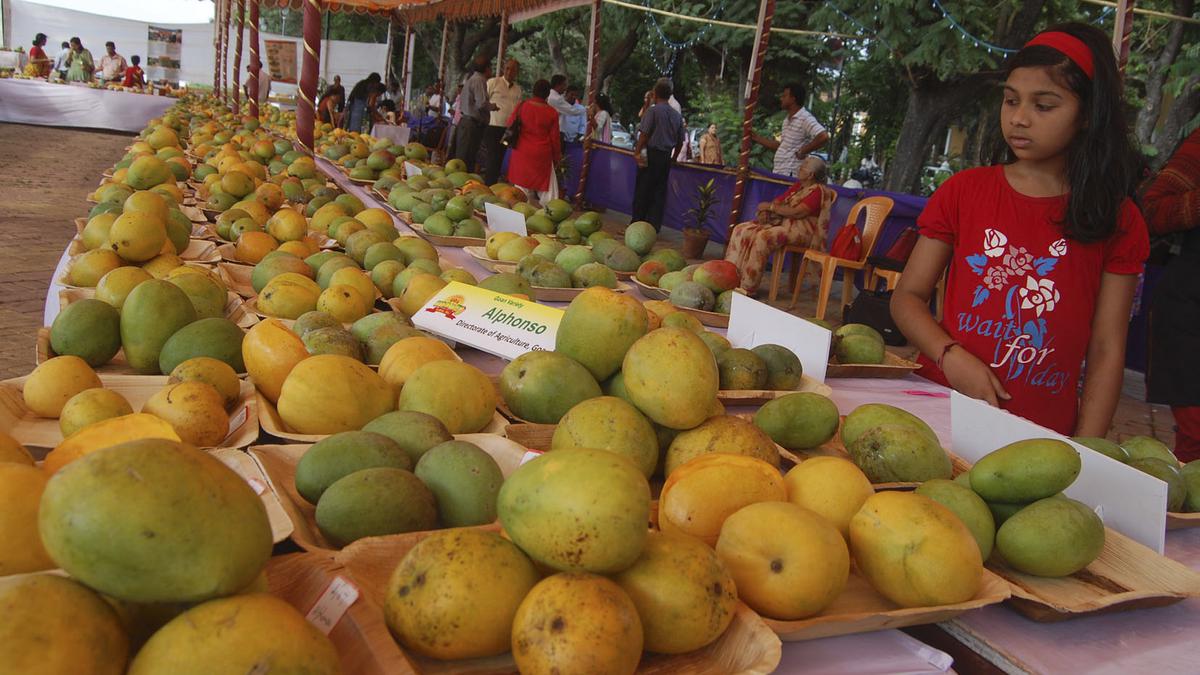
The application for the mankurad mango was filed by the All Goa Mango Growers Association, Panaji. This variety of mango is also known as malcorada, cardozo mankurad, corado, and Goa mankur. The Portuguese named the fruit malcorada, which means ‘poor coloured’, and with time, it became mankurad aamo (mango) in Konkani.
The application for the Goan bebinca was filed by the All Goa Bakers and Confectioners Association. Bebinca, also known as the ‘queen of Goan desserts’, is a traditional Indo-Portuguese pudding.
At Jalesar in Uttar Pradesh’s Etah district, once the capital of Magadha king Jarasandha, over 1,200 small units are engaged in making ‘Jalesar Dhatu Shilp’, including ghungrus (anklets), ghantis (bells) and other decorative metal craft and brassware. The Thatheras community, which resides in a mohalla (locality) named Hathuras, makes these products.
Among the four different crafts from Rajasthan given GI tags is ‘Udaipur Koftgari Metal Craft’. According to the documents submitted to the GI Registry, weapons are exquisitely ornamented by a complicated process of etching designs, heating, and then cooling, intertwined with embedding gold and silver wire into the metal, pressing and flattening it to a smooth surface with moonstone, and finally polishing it.
The GI tag has also been secured by the ‘Bikaner Kashidakari Craft’ traditionally created on cotton, silk or velvet with a variety of fine stitches and mirror-work, mainly for objects associated with marriage, especially gift items. The mirrors are believed to repel the ‘evil eye’ with their reflective surfaces. The weaving of fabrics by hand used to be done by the Meghwal community in Bikaner and nearby districts.
The ‘Jodhpur Bandhej Craft’ is the Rajasthani art of tying and dyeing. Bandhej is one of the most famous textile art forms of Rajasthan. The fabrics used for Bandhej are muslin, silk and voile. Cotton thread is used for tying the fabric.


Perundurai's industrial growth faces challenges of pollution, water scarcity, and healthcare, impacting residents ahead of the 2026 elections.

The Travancore Devaswom Board asserts that courts should respect community beliefs in its Supreme Court submission on Sabarimala's entry issue.

Karnataka cancels Deendayal Upadhyay event at KSOU due to protocol violations, citing inconsistency with university objectives.

Illegal pickle unit busted in Hyderabad, one arrested; unhygienic stock worth ₹3 lakh seized

Karnataka has entered a state of demographic transition where a large working-age population will no longer be enough to drive economic growth, and future gains will depend on how productively people are employed, the ‘State of Working India 2026’ report said.

Key demands in Sulur Assembly constituency include reviving the powerloom sector, addressing farmers' needs, and protecting River Noyyal.

Kodihalli urges Karnataka CM to allocate ₹10,000 crore revolving fund for seamless procurement of farm products under MSP scheme.

Kerala's political parties continue to marginalize women candidates, highlighting a troubling disconnect between gender demographics and representation.

The High Court of Karnataka on Tuesday ordered the issue of a notice to the State government on a PIL petition, which had complained about disturbances caused to people residing in the localities around the National Public School situated in Rajajinagar 5th block due to use of loudspeakers with high volume in the school and parking of school buses in residential areas.

China is extensively mapping ocean floors to enhance submarine warfare capabilities against the U.S. and allies across key oceans.

AIADMK's 2026 manifesto promises free rations, women's benefits, education reforms, and economic growth initiatives for Tamil Nadu.

The vehicle towing drive will soon resume in the city to ease traffic congestion. The Bengaluru Traffic Police (BTP), in coordination with the Greater Bengaluru Authority (GBA), is set to relaunch the vehicle towing drive across the city shortly to tackle traffic congestion and illegal parking.

Panic buying, not shortage, is leading to long queues at Hyderabad petrol pumps.