Ghulami legal: Taliban divide society into four classes, make mullahs untouchable
India Today
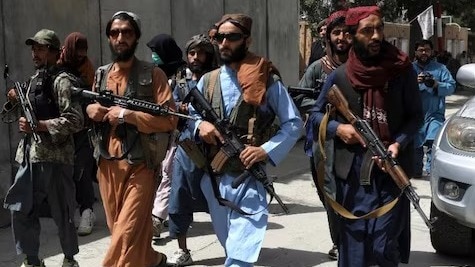
Afghanistan's Taliban's newly issued Criminal Procedure Code has triggered alarm among rights groups about dividing Afghan society into rigid classes, where religious elites (mullahs) will enjoy near-immunity from punishment for crimes. Critics say the Taliban have revived slavery-like legal categories and given legal sanctity to violence.
The Taliban-administered Afghanistan's new "Criminal Procedure Code for Courts", a document intended to guide judicial processes, has sparked outrage among human rights bodies, officials of the older regime, and international observers, over its contents. The Taliban Code, which divides citizens into four unequal classes, legitimises slavery (referred to as "ghulami" or "ghulam") through explicit references to slaves as a legal category, say human rights groups. It also makes mullahs or clerics immune to trials for crime.
The new Taliban Code's Article 9, divides Afghan society into four classes, where the top spot is occupied by religious scholars. If the mullahs (religious scholars) commit any crime, they would merely be advised, while those at the bottom would suffer both incarceration and corporal punishment, according to Rawadari, the human rights body founded by activists, many of whom were forced into exile following the Taliban's return to power in August 2021.
Punishments for the same offence in Taliban-controlled Afghanistan will now vary based on the offender's class.
What is striking is that the code bans only specific forms of physical violence that result in "bone fractures" or the "tearing of the skin", reported the Afghan International, a London-based Afghani news outlet.
The Taliban is infamous for its long-standing Islamic jurisprudence and inhuman violent policies used as a tool of control. Such spectacles were common during the Taliban's first regime and have resurfaced after 2021. They are now backed by courts and decrees sanctioned by supreme leader Hibatullah Akhundzada. What has changed is the formalisation, where human rights violations are increasingly embedded into law and judicial process.
Earlier this month, Akhundzada signed and distributed a new "Criminal Procedure Code for Courts," a 119-article document meant to guide judicial processes in Taliban-ruled Afghanistan.


Amid the ongoing Middle East war, Turkish authorities destroyed a US-made unmanned vessel in a controlled blast after it washed ashore on the country's Black Sea coast.

Ashu Ghai recreated the striking scene from Dhurandhar 2, where Ranveer Singh is introduced as Jaskirat Singh Rangi amid a cascade of fiery sparks.

Pakistan Army chief Asim Munir said Shias who "love Iran so much" should "go to Iran". His remarks triggered a row with prominent Shia clerics of Pakistan accusing Munir of insulting the community and the military establishment of serving America and Israel as a "servant".

Treasury Secretary Scott Bessent said the US may need to intensify strikes on Iran to end the conflict. This came soon after Trump threatened to hit Iran's energy plants amid soaring oil prices and Strait of Hormuz tensions.

The scooter rider rode into the pedestrian zone, collided with the car, and fell down. The man driving the car, however, did not react with anger and handled the situation with composure.

A minute-long ATC recording lays bare the confusion and urgency before a runway collision in New York. Controllers issued frantic warnings as a plane struck a vehicle, forcing a complete airport shutdown.

Tucker Carlson says he might cry listening to him. Millions call him a prophet. But who exactly is "Professor Jiang" — and what is he not telling you?

In a symbolic act of wartime messaging, Iran placed stickers carrying anti-war remarks by Spanish Prime Minister Pedro Sanchez on ballistic missiles bound for Israel as the Middle East conflict enters it fourth week.

The announcement was made a day after North Korea convened the first session of its Supreme People's Assembly. The assembly, the isolated nation's rubber-stamp legislature, formally approves state policy.


Indian Railway staff's swift action turned a medical emergency involving a toddler into relief aboard a train from Bengaluru to Gujarat.

Leon Panetta said Iran war was not an unexpected risk. He pointed out that for years, US security officials have known Iran could disrupt global oil supplies by blocking the Strait of Hormuz. According to him, this was a well-known danger, but one that appears to have been overlooked in the current conflict.

Sri Lanka raised fuel prices by about 25% for the second time in a week as the Gulf conflict disrupts global oil supplies via the Strait of Hormuz.