East India Company goes bankrupt, shuts down again after 170 years
India Today
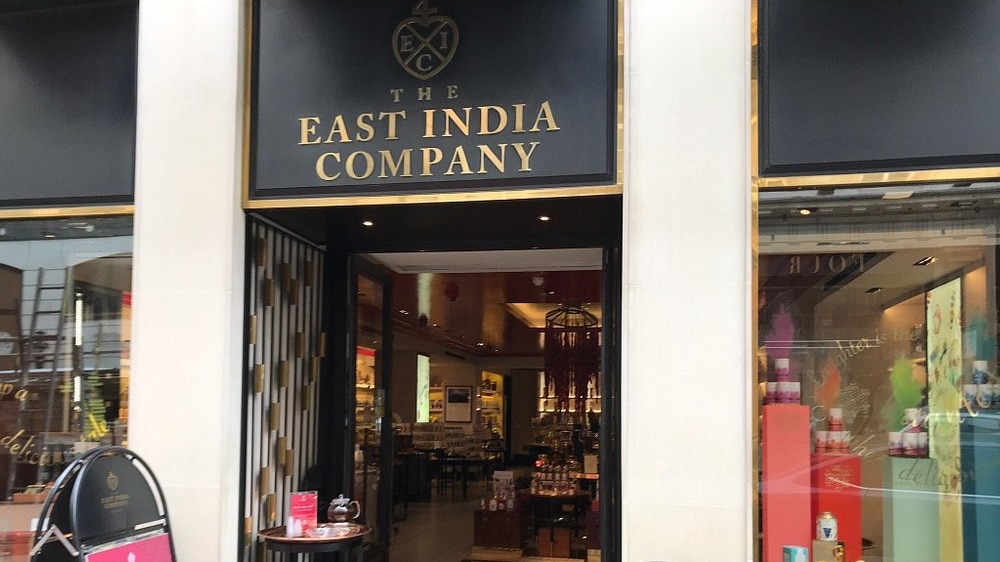
The East India Company, once ruler of vast Indian territories, has closed for the second time. Relaunched in the 2000s by Indian entrepreneur Sanjiv Mehta as a Mayfair luxury brand, which sold high-end teas and fine foods. It owed over £950,000 and entered creditors' voluntary liquidation.
The East India Company, the once-powerful British trading firm that ruled large parts of India and heralded the British colonisation of the country, has closed down, again, this time as a luxury retailer in London. The original East India Company went dormant nearly 152 years ago, but was revived by a British-Indian businessman in 2010, by buying the rights to the name. That East India Company project has now ended, after going bankrupt.
The East India Company's rule in India was taken over by the British government after the 1857 Indian Rebellion, also known as the Sepoy Mutiny. The British Crown took over its control in 1858, which marked the start of the direct British Raj in India.
The East India Company's legacy is mostly seen in negative connotations because of its large-scale exploitation in India and the rest of Asia. It changed global trade, but caused great suffering for Indians, through violence and the Great Bengal Famine that killed 30 million people.
When Indian entrepreneur Sanjiv Mehta bought the rights to the East India Company name in 2010, it was seen as a revenge of the colonised. That a company that ruled India was now being ruled by an Indian was celebrated in headlines across the world.
However, the modern version of the company has gone into liquidation.
The East India Company Limited appointed liquidators in October 2025, The Sunday Times reported. It owed more than £600,000 (Rs 6.3 crore) to its parent group, registered in the British Virgin Islands, £193,789 (Rs 2.03 crore) in taxes, and £163,105 (Rs 1.71 crore) to employees, according to the British newspaper. Several related companies with "East India" in the name, connected to owner Sanjiv Mehta, have also been dissolved, it reported.


Amid the ongoing Middle East war, Turkish authorities destroyed a US-made unmanned vessel in a controlled blast after it washed ashore on the country's Black Sea coast.

Ashu Ghai recreated the striking scene from Dhurandhar 2, where Ranveer Singh is introduced as Jaskirat Singh Rangi amid a cascade of fiery sparks.

Pakistan Army chief Asim Munir said Shias who "love Iran so much" should "go to Iran". His remarks triggered a row with prominent Shia clerics of Pakistan accusing Munir of insulting the community and the military establishment of serving America and Israel as a "servant".

Treasury Secretary Scott Bessent said the US may need to intensify strikes on Iran to end the conflict. This came soon after Trump threatened to hit Iran's energy plants amid soaring oil prices and Strait of Hormuz tensions.

The scooter rider rode into the pedestrian zone, collided with the car, and fell down. The man driving the car, however, did not react with anger and handled the situation with composure.

A minute-long ATC recording lays bare the confusion and urgency before a runway collision in New York. Controllers issued frantic warnings as a plane struck a vehicle, forcing a complete airport shutdown.

Tucker Carlson says he might cry listening to him. Millions call him a prophet. But who exactly is "Professor Jiang" — and what is he not telling you?

In a symbolic act of wartime messaging, Iran placed stickers carrying anti-war remarks by Spanish Prime Minister Pedro Sanchez on ballistic missiles bound for Israel as the Middle East conflict enters it fourth week.

The announcement was made a day after North Korea convened the first session of its Supreme People's Assembly. The assembly, the isolated nation's rubber-stamp legislature, formally approves state policy.


Indian Railway staff's swift action turned a medical emergency involving a toddler into relief aboard a train from Bengaluru to Gujarat.

Leon Panetta said Iran war was not an unexpected risk. He pointed out that for years, US security officials have known Iran could disrupt global oil supplies by blocking the Strait of Hormuz. According to him, this was a well-known danger, but one that appears to have been overlooked in the current conflict.

Sri Lanka raised fuel prices by about 25% for the second time in a week as the Gulf conflict disrupts global oil supplies via the Strait of Hormuz.