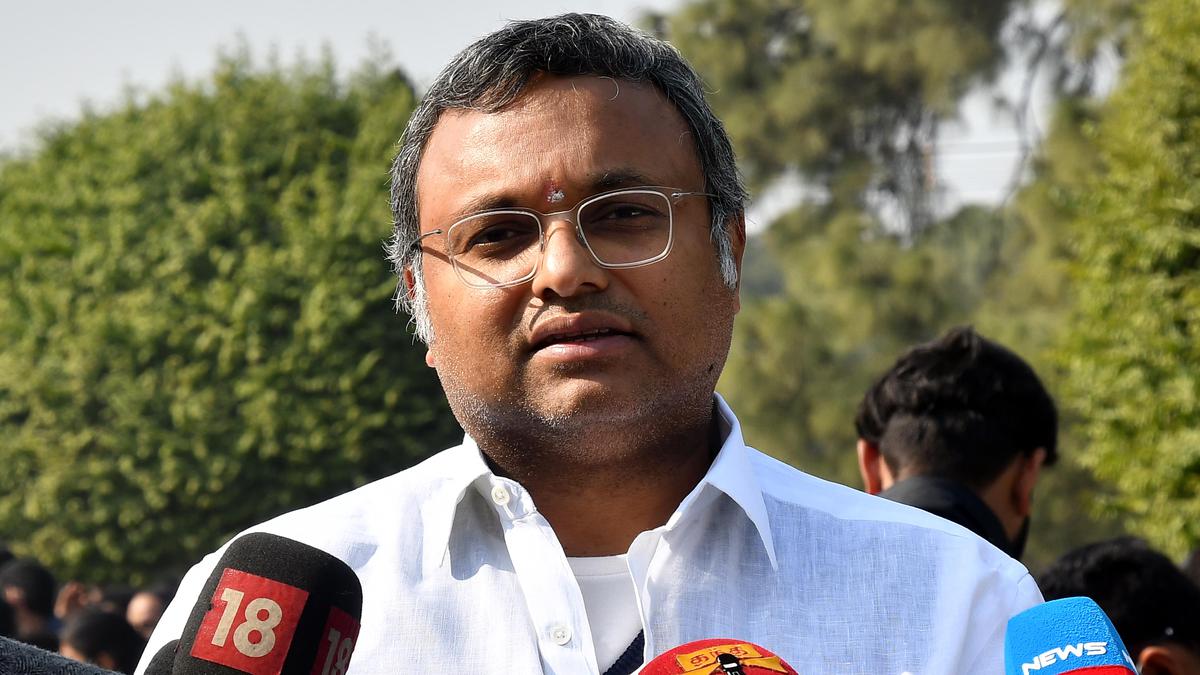
Congress MP Karti Chidambaram criticises Chennai Corporation over lax street dog sterilisation programme
The Hindu
Congress MP Karti P. Chidambaram criticizes Chennai Corporation for failing to control street dog population, citing low sterilization rates.
Congress Member of Parliament (MP) Karti P. Chidambaram criticised the Greater Chennai Corporation for failing to address the growing street dog population, the numbers, which, he claimed had surpassed 1,80,000. He also claimed that only 27% of the stray dogs had been sterilised, raising health and safety concerns.
In a letter to Mayor R.Priya, a copy shared by him on X dated March 18, Mr.Chidambaram stated, “In the 2022-23 budget, the Tamil Nadu government allocated ₹20 crore for animal welfare programs, but there has been little observable improvement. The recent budget [for FY 2025-26] once again allocated the same amount for the ABC [Animal Birth Control] program, but without effective local implementation, it is unlikely that any tangible progress will be made.”
The Congress MP claimed that the number of street dogs in Chennai had gone up from 58,000 in 2018 to 181,347 in September 2024, quoting a survey by the Greater Chennai Corporation (GCC).
He said, “...Despite funding in past and recent TN Budget, the abysmal failure to act by the Corporation has led to a surge in attacks. Immediate, decisive action is crucial—prioritise sterilisation, target high-density areas, and enforce accountability without delay.”
He cited factors such as government negligence, lack of support from animal welfare organisations, and insufficient public awareness as contributing reasons.
He raised concerns about low sterilisation rates, inconsistent implementation across wards, and breeding issues. He said,”There is considerable variation in sterilisation coverage across Chennai’s 200 wards, with some areas reporting as low as 2% sterilization, while others achieve up to 73%. This disparity highlights the failure of the Chennai Corporation to implement a consistent and effective approach.”
He stated that zones with lower sterilisation rates showed higher dog-related complaints.


First-level randomisation of EVMs completed in Nagapattinam for upcoming elections, ensuring transparency and security.

A district-level committee in Krishnagiri has been formed to assess and verify seizure claims of goods and cash.

Minister Anam Ramanarayana Reddy pledges government support for local fishermen and farmers facing challenges in Andhra Pradesh.

MP M. Sribharat urges collective efforts to revive Visakhapatnam Steel Plant, highlighting key reforms for crucial recovery and growth.

141 candidates have filed nominations for Kozhikode's Assembly elections, with scrutiny on March 24 and campaigning intensifying.

BJP's Vijayendra accuses Congress of using money to influence Bagalkot bypolls, urging voters to reject their tactics.

First randomization of electronic voting machines completed in Tirunelveli and Tenkasi districts for upcoming Assembly elections.

RPF seizes 10.12 kg of unclaimed cannabis worth ₹5.06 lakh from a train in Mangaluru.

Kolar's groundwater levels rise to 50-100 ft due to the K.C. Valley project, ensuring clean water and improved health outcomes.

Three smugglers arrested in Sangareddy with 574 kg of ganja valued at ₹2.87 crore during a police operation.

Mysuru MP urges a 'flex-free Mysuru' by discouraging birthday banners, promoting responsible celebrations to preserve the city's heritage.

Farmers of Kalakudi demand payment for paddy bags procured at DPC

BJP's seal on a 2019 Election Commission letter ignites controversy in Kerala, prompting claims of careless handling by CPI(M).