Church’s opposition to FCRA Bill triggers political storm in Kerala
The Hindu
Church opposition to the FCRA Bill sparks political turmoil in Kerala, putting the BJP on the defensive ahead of elections.
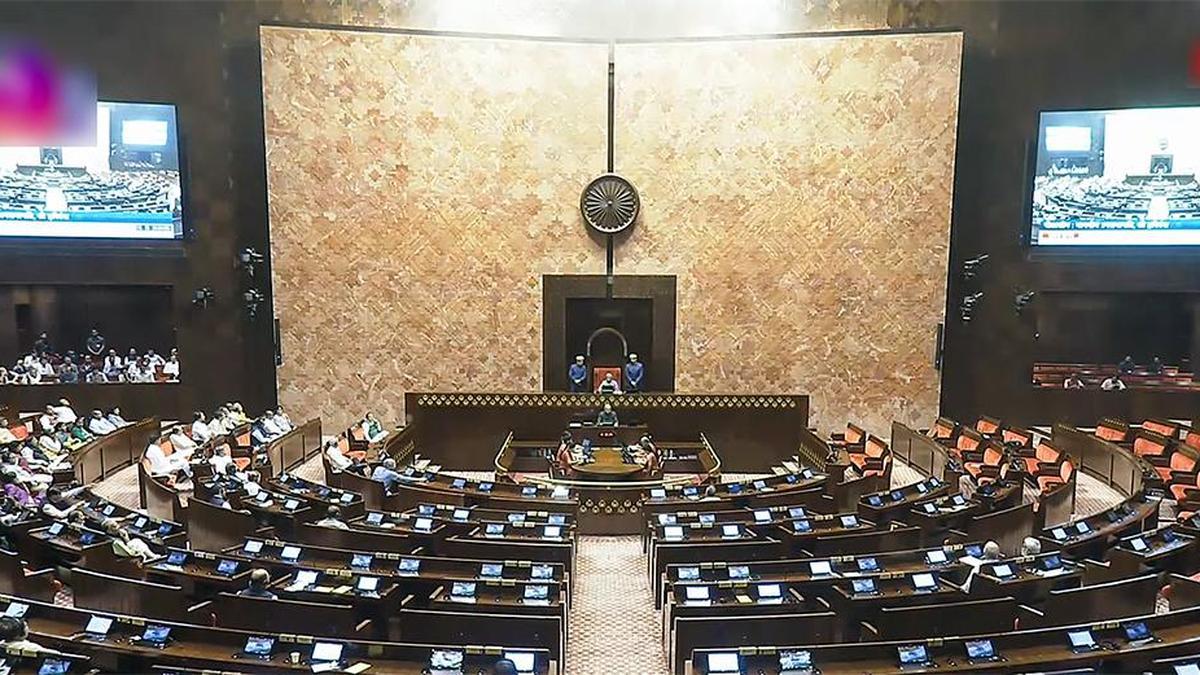
The Catholic Church’s strident opposition to the Centre’s bid to table the contentious Foreign Contribution (Regulation) Act Amendment Bill, 2026 (FCRA) in Parliament on Wednesday has roiled Kerala politics in the run-up to the Assembly election and put the Bharatiya Janata Party (BJP) in the State on the defensive.
The BJP, which has zealously sought to make inroads into the Christian community, a significant electoral bloc in Kerala, went into firefighting mode. The party’s Kerala president, Rajiv Chandrasekhar, told a hastily convened press conference in Thiruvananthapuram that the Union government would factor in the Church’s reservations about the Bill before tabling the proposed law in Parliament.
Mr. Chandrasekhar’s statement came shortly after Union Parliamentary Affairs Minister Kiren Rijiju announced the postponement of the Bill, following a bipartisan protest by MPs from Kerala outside the House.
The Kerala Catholic Bishops’ Council (KCBC) demand that the Union government refer the contentious Bill to the Parliamentary Subject Committee on Home Affairs also appeared to have caused the BJP to backpedal.
The apex Church body has also petitioned Prime Minister Narendra Modi not to pass the controversial law without detailed discussions in the Upper and Lower Houses of Parliament and in the public domain. The KCBC has mooted public hearings on the proposed law.
The KCBC deputy secretary general, Father Thomas Tharayil, termed the amendment to the original law unconstitutional, superfluous, and draconian. He said the Bill sought to grant the bureaucracy untrammelled authority to take over and administer charitable institutions, citing the slightest contravention of the law as a pretext.


Parliament Budget Session LIVE updates April 4 2026

Church opposition to the FCRA Bill sparks political turmoil in Kerala, putting the BJP on the defensive ahead of elections.

Maharashtra launches NCMC card scheme for travel concessions to senior citizens, students, and disabled individuals, enhancing public transport access.

Explore insightful interviews with key candidates and leaders as Kerala prepares for the 2026 Assembly elections.

Discover how inclusive training can empower people with disabilities, bridging the skills gap and fostering economic independence.

Three Manipur militants arrested, with over 2300 ammunition rounds and explosives seized during police operations in multiple districts.

The much-awaited first glimpse into Ranbir Kapoor’s Rama from Nitesh Tiwari’s Ramayana was unveiled by the makers on Thursday (April 2, 2026) on the occasion of Hanuman Jayanti.

Delhi HC orders Paramvah Studios to pay ₹25 lakh for unauthorised song use in 'Bachelor Party', including fines for non-compliance.

Omar Abdullah emphasizes that Kashmiri Pandits can only return safely after restoring security and protecting Hindu shrines in J&K.

Residents of Egmore weigh infrastructure improvements against longstanding civic issues as they prepare for the upcoming T.N. Assembly elections.

Union Ministry approves ₹438.29 crore project to redevelop Berth No. 9 of New Mangalore Port for enhanced liquid bulk cargo handling.

PMK's manifesto demands a caste census, cash support for women, and accountability for Tamil Nadu's government amid alleged corruption.

India has 33 crore LPG connections, but domestic natural gas production could cater to 30 crore connections if households switch to piped natural gas (PNG). LPG is delivered in cylinders, while natural gas is transported through pipelines or as LNG and regasified, with PNG emerging as a drop-in replacement for cooking. The government is pushing PNG to reduce high LPG import dependence, but pipeline expansion, last-mile connectivity, and supply constraints remain key challenges.