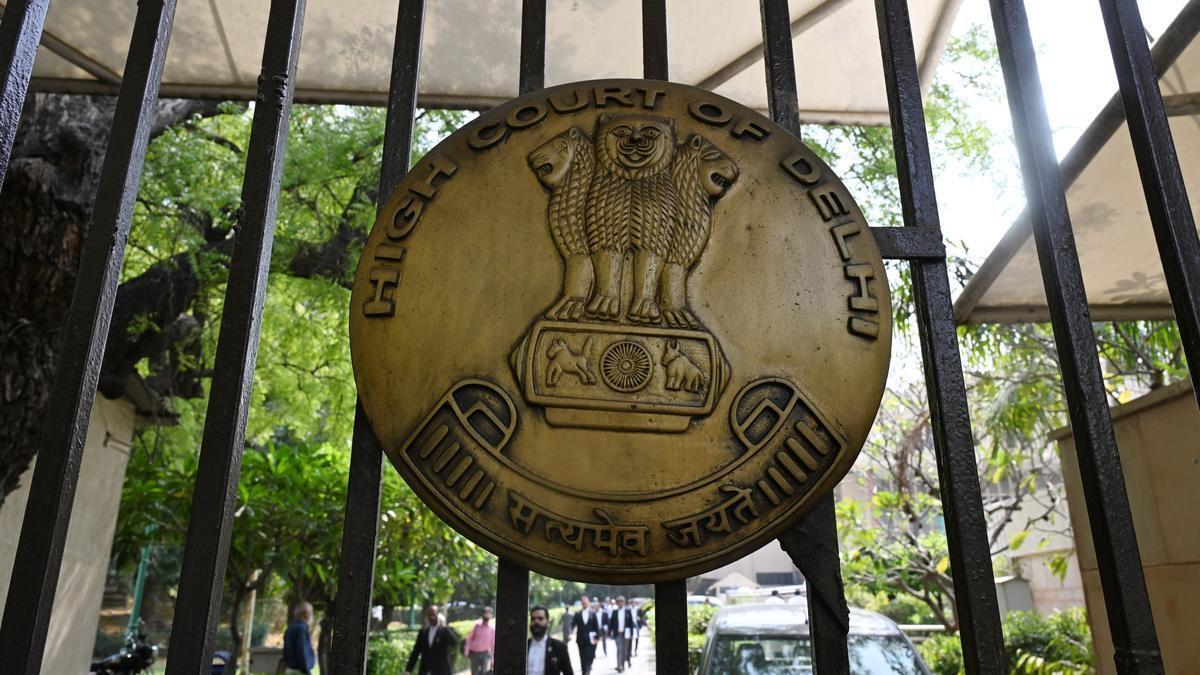
Delhi HC orders Rakshit Shetty to pay ₹25 lakh for unauthorised use of songs in Bachelor Party
The Hindu
Delhi HC orders Paramvah Studios to pay ₹25 lakh for unauthorised song use in 'Bachelor Party', including fines for non-compliance.
The Delhi High Court has ordered Paramvah Studios, the production house of Kannada actor-filmmaker Rakshit Shetty, to pay ₹25 lakh to MRT Music for the unauthorised use of two songs in his Kannada film ‘Bachelor Party’.
The amount includes ₹20 lakh towards the licence fee for the songs “Nyaya Ellide” and “Omme Ninnanu”, which had already been deposited during the proceedings, and an additional ₹5 lakh imposed as exemplary costs for non-compliance with an earlier court order.
In a judgment delivered on March 28, Justice Tejas Karia held that MRT Music is the exclusive copyright holder of the two songs, having acquired the rights from master recording company Sangeetha through an assignment deed.
The court noted that the producers had approached MRT Music in January 2024 seeking a licence, but went ahead with the film’s theatrical release on January 26, 2024, and later its OTT release without securing permission despite being informed of the licence fee.
Rejecting the defence that the use was protected under “fair use”, the court observed that the songs were deliberately used to enhance the narrative of the film and were therefore not incidental.
The court noted that “Nyaya Ellide” means “where is the justice?”. “It appears that the defendants have carefully chosen this well-known song to further the script of the impugned film,” the court noted.


Union Ministry approves ₹438.29 crore project to redevelop Berth No. 9 of New Mangalore Port for enhanced liquid bulk cargo handling.

PMK's manifesto demands a caste census, cash support for women, and accountability for Tamil Nadu's government amid alleged corruption.

India has 33 crore LPG connections, but domestic natural gas production could cater to 30 crore connections if households switch to piped natural gas (PNG). LPG is delivered in cylinders, while natural gas is transported through pipelines or as LNG and regasified, with PNG emerging as a drop-in replacement for cooking. The government is pushing PNG to reduce high LPG import dependence, but pipeline expansion, last-mile connectivity, and supply constraints remain key challenges.

A fire in Bidar kills 45 goats and a 62-year-old man, devastating the local community and prompting an investigation.

India's government offers incentives to foreign companies investing in coal gasification, highlighting its potential and seeking technological collaboration.

Discover how Tank Bund Shiva transforms his tragic past into a life-saving mission at Hyderabad's Hussainsagar lake.

Learn how to self-enumerate for Census 2027 with this step-by-step guide for convenient online data submission.

Congress and farmers criticize M.P. government for delaying wheat procurement, while BJP blames bag shortages on West Asia war.

Iran's President reassures Americans of goodwill, rejecting the portrayal of Iran as a threat in a recent letter.

A 7.4-magnitude earthquake off Indonesia's coast kills one, triggers tsunami warning, later lifted as aftershocks follow.

Samajwadi Party criticizes U.P. Government over IAS officer's resignation, questioning the treatment of efficient officials under BJP rule.

Rajya Sabha approves amendments to the Insolvency and Bankruptcy Code, enhancing investor confidence and strengthening the banking system.

Delhi HC highlights child trafficking crisis, calling the city a 'mandi' and demands police and railways’ response to petition.