Kashmiri Pandits’ return possible after a sense of safety is fully restored: Omar Abdullah
The Hindu
Omar Abdullah emphasizes that Kashmiri Pandits can only return safely after restoring security and protecting Hindu shrines in J&K.
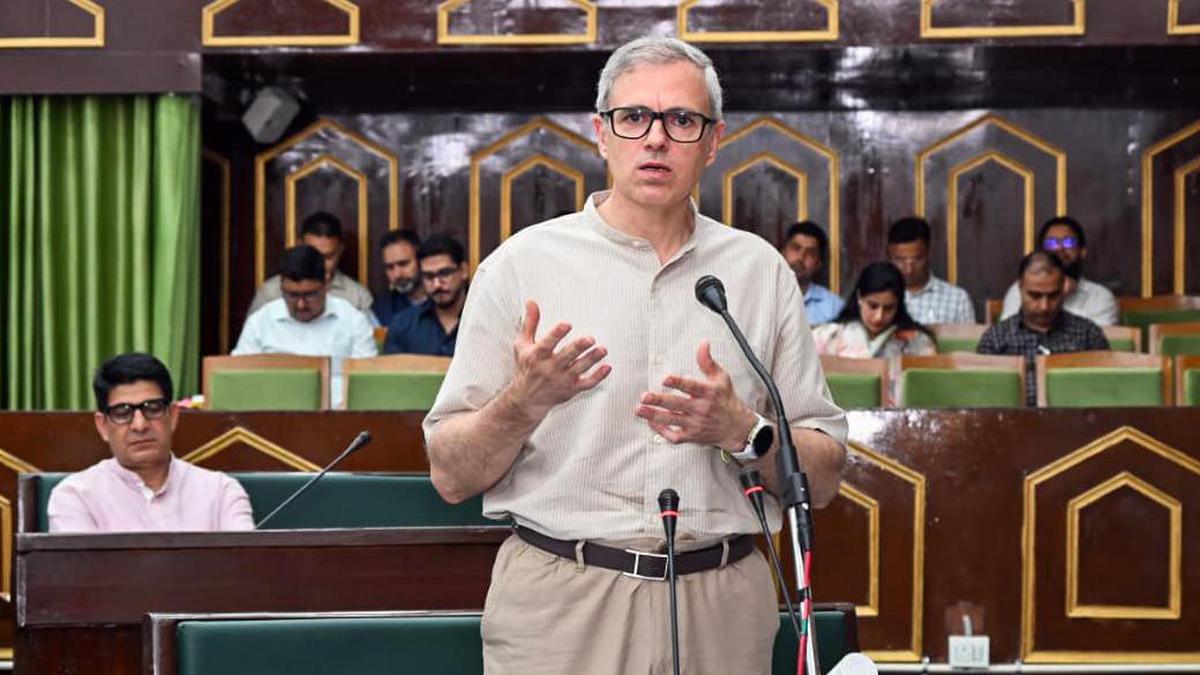
J&K Chief Minister Omar Abdullah on Wednesday (April 1, 2026) said the return of displaced Kashmir Pandits was possible “only after a sense of safety is fully restored” and showed willingness to have a fresh legislation on protection of Hindu shrines and religious sites.
“The migration of Kashmiri Pandits in the 1990s took place under extremely difficult circumstances after their security was compromised. Their return cannot be expected unless a sense of safety is fully restored,” Mr. Abdullah told the J&K Assembly.
He was speaking on a private member bill submitted by ruling National Conference (NC) legislator Arjun Singh Raju. The Bill seeks to provide for better management, protection, administration and governance of Kashmiri Hindu Shrines and religious places in J&K.
Mr. Abdullah said protecting the properties and religious shrines of displaced Kashmiri Pandits remained a key responsibility of the government until their safe and dignified return.
“While narratives around the plight of Kashmiri Pandits often gain attention, there are instances where local Kashmiri Muslims have safeguarded temples in their absence. The government is open to enacting a law on the issue, provided there is broader consensus within the community,” Mr. Abdullah said.
He underlined that successive governments both at the Centre and in J&K have reiterated their commitment towards facilitating their dignified return.


Union Ministry approves ₹438.29 crore project to redevelop Berth No. 9 of New Mangalore Port for enhanced liquid bulk cargo handling.

PMK's manifesto demands a caste census, cash support for women, and accountability for Tamil Nadu's government amid alleged corruption.

India has 33 crore LPG connections, but domestic natural gas production could cater to 30 crore connections if households switch to piped natural gas (PNG). LPG is delivered in cylinders, while natural gas is transported through pipelines or as LNG and regasified, with PNG emerging as a drop-in replacement for cooking. The government is pushing PNG to reduce high LPG import dependence, but pipeline expansion, last-mile connectivity, and supply constraints remain key challenges.

A fire in Bidar kills 45 goats and a 62-year-old man, devastating the local community and prompting an investigation.

India's government offers incentives to foreign companies investing in coal gasification, highlighting its potential and seeking technological collaboration.

Discover how Tank Bund Shiva transforms his tragic past into a life-saving mission at Hyderabad's Hussainsagar lake.

Learn how to self-enumerate for Census 2027 with this step-by-step guide for convenient online data submission.

Congress and farmers criticize M.P. government for delaying wheat procurement, while BJP blames bag shortages on West Asia war.

Iran's President reassures Americans of goodwill, rejecting the portrayal of Iran as a threat in a recent letter.

A 7.4-magnitude earthquake off Indonesia's coast kills one, triggers tsunami warning, later lifted as aftershocks follow.

Samajwadi Party criticizes U.P. Government over IAS officer's resignation, questioning the treatment of efficient officials under BJP rule.

Rajya Sabha approves amendments to the Insolvency and Bankruptcy Code, enhancing investor confidence and strengthening the banking system.

Delhi HC highlights child trafficking crisis, calling the city a 'mandi' and demands police and railways’ response to petition.