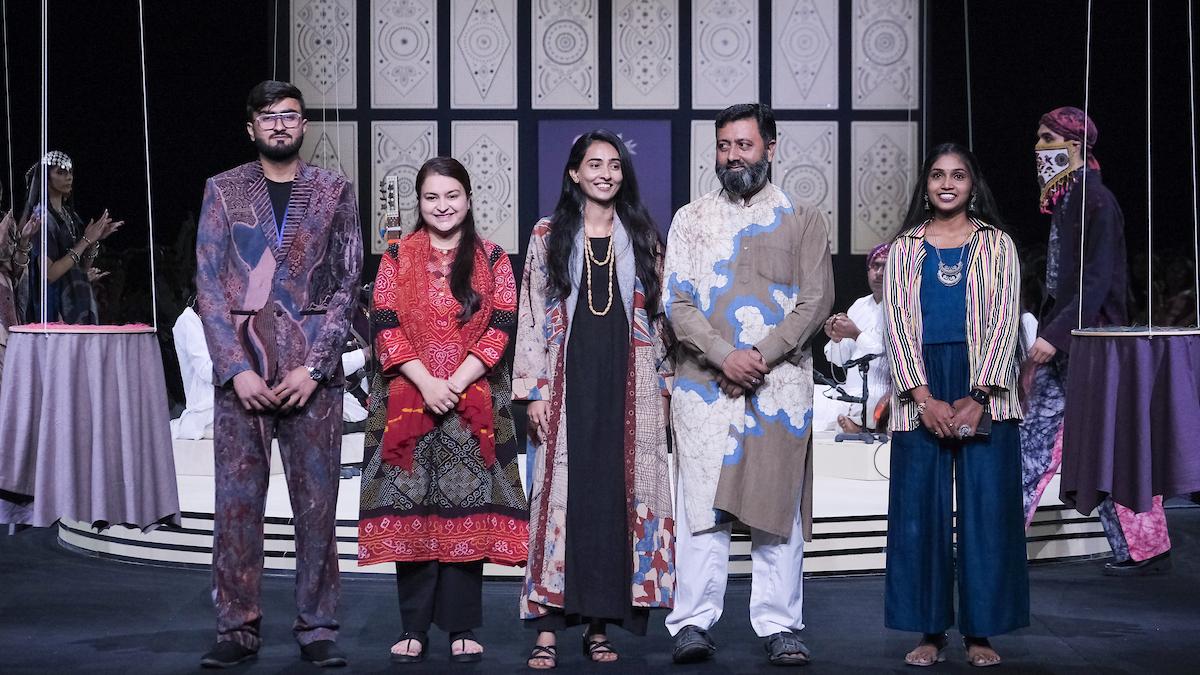
At the Lakmé Fashion Week 2025 x FDCI, artisans take the runway
The Hindu
Indian artisans step into the spotlight at Lakmé Fashion Week, challenging traditional narratives with authenticity and innovation.
Indian fashion is entering an era of quiet reckoning — one where the silent hands behind couture’s most intricate weaves and prints are finally stepping into the light. For decades, artisans remained the invisible scaffolding of Indian fashion’s most-celebrated narratives. Now, the script is shifting. At Lakmé Fashion Week x FDCI’s March 2025 edition, this shift felt not only palpable but overdue too. In a special show, titled Design Craft Presents Artisan Designers of Somaiya Kala Vidya, master craftspeople emerged not as footnotes but as the headline.
Established in 2014, Somaiya Kala Vidya (SKV), situated in Anjar, Kutch, is a pioneering institution that flips the script on how we view artisans and design. Founded on the belief that the custodians of India’s textile legacy deserve more than just seasonal patronage, SKV empowers traditional artisans with the tools of modern design, branding, and entrepreneurship — without asking them to abandon their roots.
Unlike urban design schools that often view craft through an outsider’s lens, SKV is embedded within the artisan community. It offers structured, culturally sensitive education to master artisans — many of whom have inherited centuries-old techniques of weaving, dyeing, or embroidery. The curriculum, taught in the local language and tailored around the artisans’ calendars, balances aesthetics with market relevance.
The runway bore witness to a powerful confluence of tradition, technique and self-expression anchored by five artisan-led labels: Ajrakh Gharana by Zaid Khatri, Alaicha by Amruta Vankar, Elysian by Mubbasirah Khatri, Musk by Muskan Khatri, and Neel Batik by Shakil Ahmed. Each collection offered a distinct voice, rooted in heritage yet unafraid to play with silhouette, colour, and context.
With ajrakh as the centre of attraction, Zaid Khatri’s Eternal Ajrakh collection for his label Ajrakh Gharana was a journey from the past to the present and then into the future. It was a poetic reflection on time, layering ajrakh’s storied geometry with sleek, contemporary tailoring. His work asked a poignant question: Can tradition stretch into the future without losing its soul? Judging by his restrained yet evocative presentation — indigo jackets layered over fluid separates — the answer felt like a resounding yes.
Amruta Vankar’s Alaicha drew from her mashru weaving legacy, translating the tactile language of handloom into quiet luxury. Her palette was earthy, her cuts clean — each look paid an ode to rhythm and repetition, the two things every weaver knows intimately.
Mubbasirah Khatri (the only female ajrakh artisan and artisan designer in Kutch) designed the Anatomy collection for the label Elysian. Mubbasirah turned to ajrakh presenting a softer, dreamier take on the resist-dye technique. There was romance in her folds — fluid dresses in pastel tones, dotted with the signature clusters of tie-dye that whispered of patience and precision.


T.N. CM Stalin urges the Centre to build consensus with transgender persons before imposing changes to the Trans Amendment Bill 2026.

Trump's engagement with Pakistan as a mediator for Iran echoes Nixon's historical diplomacy with China amid shifting geopolitical dynamics.

Telangana's Petroleum Dealers Association assures no fuel shortage, attributing temporary stock issues to panic buying fueled by rumors.

The Ottiyambakkam panchayat had an harrowingly difficult time keeping people from swimming in the deadly quarry with its protruding rocks under the water. There had been many deaths. And then nature intervened, and the fatal accidents stopped. An invasive, floating weed that is a bane of water sources everywhere, the water hyacinth is not just tolerated in the quarry but welcomed

Fuel supply panic causes severe traffic congestion in Hyderabad on March 25, 2026, prompting police intervention to manage long queues and road chaos.

Mohamed Salah will leave Liverpool at season's end, concluding a remarkable nine-year tenure at Anfield.

Telangana CM to hold urgent meeting on March 25 to address petrol, LPG, and urea stock concerns amid rising demand.

Karnataka Minister announces efforts to resume separate Haj terminal at Mangaluru airport, pending Centre's approval.

Ahead of the Assembly election, DMK Youth Wing secretary and Deputy Chief Minister Udhayanidhi Stalin has tasked the party youth wing members with meeting young voters every day till the polling day to explain various achievements of the ‘Dravida model government’ to them.

Bird flu outbreak in Chhattisgarh's Bilaspur kills 4,400 chickens, prompting increased surveillance and culling measures.

Four queer activists discuss the repercussions of the Trans Amendment Bill 2026 on dignity and identity within the community.

Explosion in Ooty's Botanical Garden highlights Tamil Viduthalai Padai's protest against Hindi imposition and demand for Tamil Eelam.

Assembly polls 2026: Follow updates from The Hindu on the upcoming elections in five States on March 25, 2026