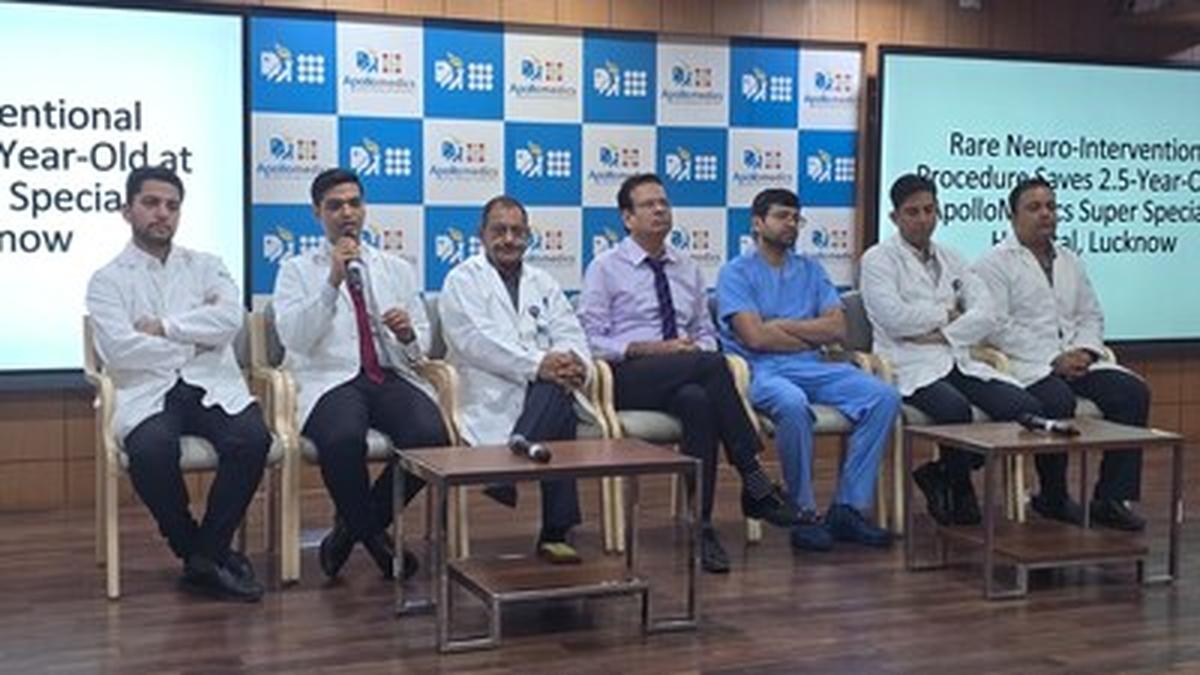
ApolloMedics Lucknow Performs Rare Emergency Neuro-Intervention in 2.5-Year-Old, Reversing Devastating Stroke Effects
The Hindu
ApolloMedics Lucknow Performs Rare Emergency Neuro-Intervention in 2.5-Year-Old, Reversing Devastating Stroke Effects
LUCKNOW, India, March 3, 2026 /PRNewswire/ -- What started as severe indigestion and mild fever in a two-and-a-half-year-old girl quickly escalated into repeated seizures, altered sensorium and sudden loss of movement, leaving her family deeply distressed. At ApolloMedics Super Speciality Hospital, Lucknow, rapid diagnosis and a timely decision to escalate treatment enabled doctors to perform a rare, highly complex neuro-interventional procedure, intracranial catheter-directed thrombolysis, leading to significant neurological recovery.
The case, marked by rapid deterioration and a narrow window for intervention, will be presented at the Indian National Stroke Conference 2026 in Kochi, underlining both its clinical significance and the growing capabilities of advanced stroke care in India.
The child was diagnosed with deep Cerebral Venous Sinus Thrombosis (CVST) with multiple brain infarcts, a condition associated with high mortality risk and potentially devastating long-term neurological disability.
Recognising the urgency, the doctors took a critical, high-risk decision to escalate treatment without delay. A multidisciplinary team led by Dr. Dewansh Mishra, Interventional Neuro-Radiologist, along with Dr. Arpit Taunk and Dr. Amol Srivastava, performed the complex intracranial catheter-directed thrombolysis under general anaesthesia.
Through the femoral vein in the thigh, a microcatheter was carefully navigated into the intracranial venous system, and clot-dissolving medication was delivered directly at the site of thrombosis to restore venous drainage. This was successful in limiting further neurological damage.
Explaining the complexity and urgency of the case, Dr. Dewansh Mishra said,“Deep cerebral venous thrombosis in toddlers is exceptionally rare, and neurointervention in paediatric stroke is particularly challenging because of the small size of vessels and increased risk of bleeding. Literature on catheter-directed thrombolysis in such young patients is limited. In this case, the child was deteriorating quickly, and timely escalation to precision neurointervention was crucial to prevent irreversible brain injury and give her the best possible chance of recovery.”


Concerns arise as Indian Railway delays training for new Assistant Loco Pilots of South Western Railway, increasing workload for current staff.

BJP leaders criticize DMK government for inaction on drug proliferation after a double murder in Tirunelveli.

Explore the candidates and selection process for the next U.N. Secretary-General, set to begin in 2027.

DVAC considers filing a review against Madras High Court's order to register an FIR in K.N. Nehru's cash for jobs scam.

India Handmade Collective launches Telangana chapter with a permanent pavilion in Hyderabad, featuring sustainable crafts and workshops.

ApolloMedics Lucknow Performs Rare Emergency Neuro-Intervention in 2.5-Year-Old, Reversing Devastating Stroke Effects

Ukraine secures $1.5 billion from the IMF, aimed at supporting priority expenditures and macro-financial stability, says PM Svyrydenko.

Art, activism unite Kerala’s Malappuram against war in West Asia

Secunderabad Cantonment Board receives ₹14.54 crore from MoD to settle pending liabilities

Revivo’s Obesity meet looks beyond Ozempic and the weighing scale

Telangana Collectors' conference, led by Chief Secretary K. Ramakrishna Rao, focuses on Census-2027 and the 99-day action plan.

Shree TMT Joins Indian Green Building Council (IGBC), Reinforcing Its Commitment to Green Steel and Sustainable Construction

AIADMK urges PM Modi for Puducherry's Statehood, loan waiver, and support for textile mills and airport development.