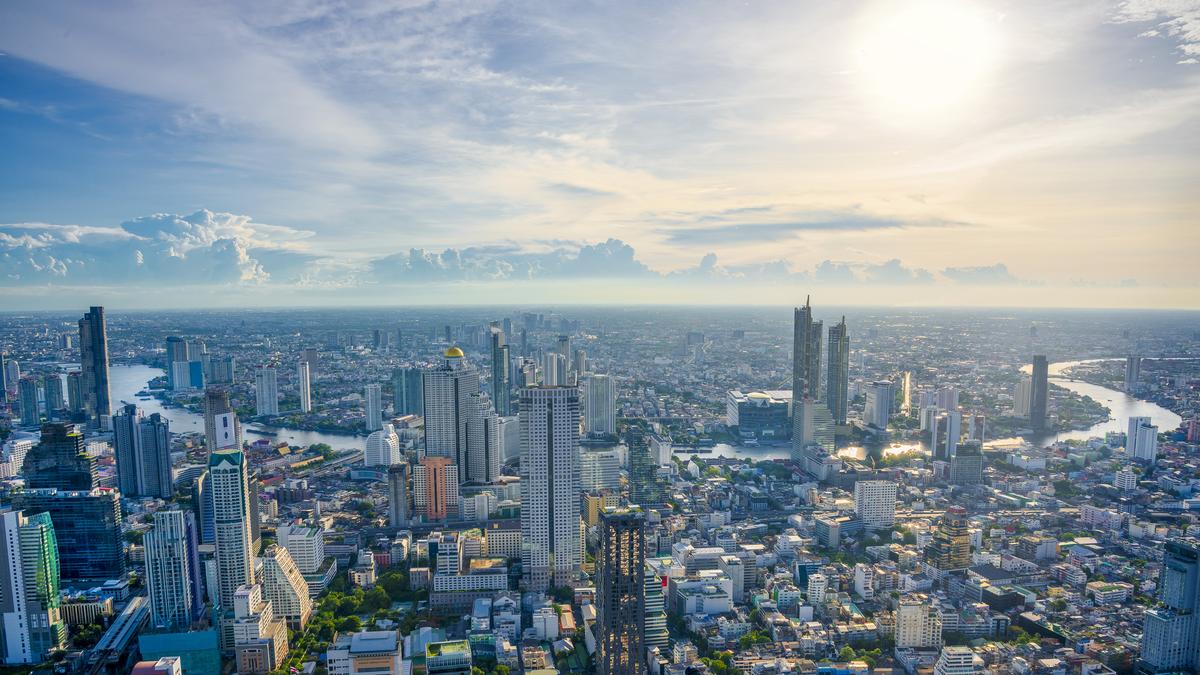
Bangkok to Krabi: A luxury Thailand itinerary beyond the tourist trail
The Hindu
From turtle gardens in Thonburi and riverside rituals at The Peninsula Bangkok to cave dining at Rayavadee in Krabi, here’s how to experience Thailand in style
There is something in Bangkok for everybody. If I didn’t believe this before, I certainly found new faith in the promise when I found myself in a quiet time-capsuled corner of Thonburi district, beyond the glamour of the city’s luxuries and the Wat Aun-esque grandeur, offering soy chunks on a stick to hungry turtles. Featuring a small pond, a manmade mountain (meant to symbolise Mount Meru of Buddhist and Hindu mythology), a sprinkling of stupas and a collection of exotic plants, the Khao Mor (The Turtle Garden) has served as a serene retreat for nearly 200 years, a stone’s throw away from Wat Prayun.
Wat Prayun | Photo Credit: The Peninsula Bangkok
The unassuming temple complex features a Lankan-style chedi (stupa) that has stood the test of time, braving Second World War bombings, a break-in, and the threat of collapse. Engineers went to work to reinforce the building’s bones after a 2006 survey found that the tower was leaning by nearly a metre towards the Chao Phraya River. By the time the work was done, the chedi had revealed two hidden crypts filled with long-forgotten relics, narrates Mu, our guide and historian. Today, a museum alongside the shrine tells the fascinating tales of its survival and houses the treasures it has gathered along the way.
A short walk away is the Guan Yu Shrine, one of Bangkok’s oldest Chinese shrines, an 18th Century creation by the Hokkien immigrants from China. Here, locals leave behind contract papers to seek good luck for their business ventures. This sits adjacent to the Princess Mother Memorial Park, created in honour of former King Bhumibol’s mother; today, it is a place for people to practice tai chi, host workshops, and play tag. This is just a few steps away from Goowatin Islam Mosque, a warehouse-like structure with a minaret in the Indian-Islamic style of architecture, built by a group of Indian traders (the Nanas) whose descendants still hold sway in the community today. All testament to the quiet ways in which Thailand continues to be a potpourri of cultures and communities — an enduring legacy of its Siam days.
Contract documents presented to Guan Yu at the shrine in Thonburi, Bangkok. | Photo Credit: Kannalmozhi Kabilan
This insight into Thonburi’s cultural landscape was courtesy of the two-hour walking tour put together by The Peninsula Bangkok. Perched on the banks of the Chao Phraya River, The Peninsula offers not just the luxuries of a global hospitality giant, but several thoughtfully curated guest experiences that allow for the exploration of the local milieu.


KITE launches KITE-QTrack app for real-time tracking of higher secondary exams in Kerala, enhancing security and transparency.

Discover how DMK and Congress overcame their differences through strategic backchannel diplomacy ahead of Tamil Nadu's Assembly elections.

Explore Mohammed Khadeer Babu's anthology, challenging myths and highlighting communal harmony in coastal Andhra Pradesh through engaging stories.

From turtle gardens in Thonburi and riverside rituals at The Peninsula Bangkok to cave dining at Rayavadee in Krabi, here’s how to experience Thailand in style

Maharashtra arranges flights for 164 stranded citizens in UAE amidst the Iran conflict and launches emergency WhatsApp helpline.

Concerns arise as Indian Railway delays training for new Assistant Loco Pilots of South Western Railway, increasing workload for current staff.

BJP leaders criticize DMK government for inaction on drug proliferation after a double murder in Tirunelveli.

Explore the candidates and selection process for the next U.N. Secretary-General, set to begin in 2027.

DVAC considers filing a review against Madras High Court's order to register an FIR in K.N. Nehru's cash for jobs scam.

India Handmade Collective launches Telangana chapter with a permanent pavilion in Hyderabad, featuring sustainable crafts and workshops.

ApolloMedics Lucknow Performs Rare Emergency Neuro-Intervention in 2.5-Year-Old, Reversing Devastating Stroke Effects

Ukraine secures $1.5 billion from the IMF, aimed at supporting priority expenditures and macro-financial stability, says PM Svyrydenko.

Art, activism unite Kerala’s Malappuram against war in West Asia