Review of That’s a Fire Ant Right There, stories by Telugu writer Mohammed Khadeer Babu
The Hindu
Explore Mohammed Khadeer Babu's anthology, challenging myths and highlighting communal harmony in coastal Andhra Pradesh through engaging stories.
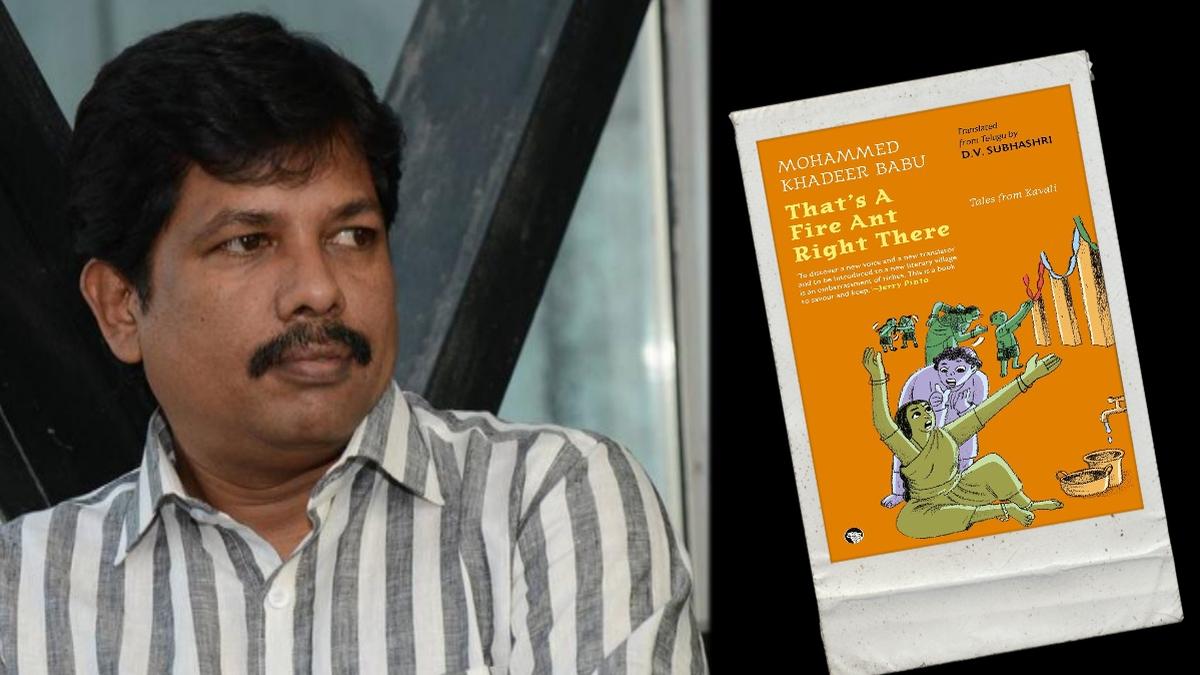
Muslim children reluctant to learn Urdu, a mother resisting Ramzan fasts, a Hindu vouching for the “24-carat gold” character of his Muslim friend for a marriage proposal — Telugu writer Mohammed Khadeer Babu busts several myths in his collection of stories, That’s a Fire Ant Right There, translated into English by D.V. Subhashri.
The narrator is a young boy, much like the protagonist of R.K. Narayan’s Swami and Friends, and he brings 50 stories of everyday life from his village in coastal Andhra Pradesh, speaking in his Nellore dialect. The translator leaves many of the original words, and the ebbs and flows of the local tongue, enhancing the reading.
An astute observer, the narrator’s look-back at his childhood is replete with canny scrutiny of the school system, where there is a clear division between the ‘Clevers’ and the rest, who get a “solid thrashing” for their low scores, customs and rituals, social barriers, patriarchy and the stranglehold of caste.
These tales from Kavali come bearing the anecdotal history of the place. We are told, for instance, how it got its name. “Once upon a time this place was inhabited by soldiers guarding the Udayagiri fort. Because they kept vigil here — ‘kavali‘ in Telugu — the place came to be known as ‘Kavali’.”
When the family shifts to another place called Patooru, where 80% of the people are Reddys, the narrator’s father, who is already acquainted with many Reddys, adjusts easily. But his mother and grandmother miss the warmth of their old neighbours. “What sort of sattenashinam hellhole is this Patooramma! Not a person here to even borrow a leaf of coriander to a piece of ginger for curry,” his mother frets.
The pages are filled with descriptions of mouth-watering palavs, semiyas and fried sweets and savouries of all kinds; it also maps the region’s trees (neem, turai) and flowers (sannajaaji jasmine) like Bibhutibhusan Bandopadhyay does of rural Bengal in Pather Panchali. Through the narrator, readers get a glimpse of the beauty of the place as also its grim poverty.


Tamil Nadu CM Stalin inaugurates a senior citizens' home in Chennai, featuring extensive facilities and accommodations for 75 elderly residents.

KITE launches KITE-QTrack app for real-time tracking of higher secondary exams in Kerala, enhancing security and transparency.

Discover how DMK and Congress overcame their differences through strategic backchannel diplomacy ahead of Tamil Nadu's Assembly elections.

Explore Mohammed Khadeer Babu's anthology, challenging myths and highlighting communal harmony in coastal Andhra Pradesh through engaging stories.

From turtle gardens in Thonburi and riverside rituals at The Peninsula Bangkok to cave dining at Rayavadee in Krabi, here’s how to experience Thailand in style

Maharashtra arranges flights for 164 stranded citizens in UAE amidst the Iran conflict and launches emergency WhatsApp helpline.

Concerns arise as Indian Railway delays training for new Assistant Loco Pilots of South Western Railway, increasing workload for current staff.

BJP leaders criticize DMK government for inaction on drug proliferation after a double murder in Tirunelveli.

Explore the candidates and selection process for the next U.N. Secretary-General, set to begin in 2027.

DVAC considers filing a review against Madras High Court's order to register an FIR in K.N. Nehru's cash for jobs scam.

India Handmade Collective launches Telangana chapter with a permanent pavilion in Hyderabad, featuring sustainable crafts and workshops.

ApolloMedics Lucknow Performs Rare Emergency Neuro-Intervention in 2.5-Year-Old, Reversing Devastating Stroke Effects

Ukraine secures $1.5 billion from the IMF, aimed at supporting priority expenditures and macro-financial stability, says PM Svyrydenko.