45 of 48 pollution parameters not monitored at Kodungaiyur 50-tonne incinerator, alleges report
The Hindu
Report reveals 45 of 48 pollution parameters unmonitored at Kodungaiyur incinerator, raising serious environmental and health concerns.
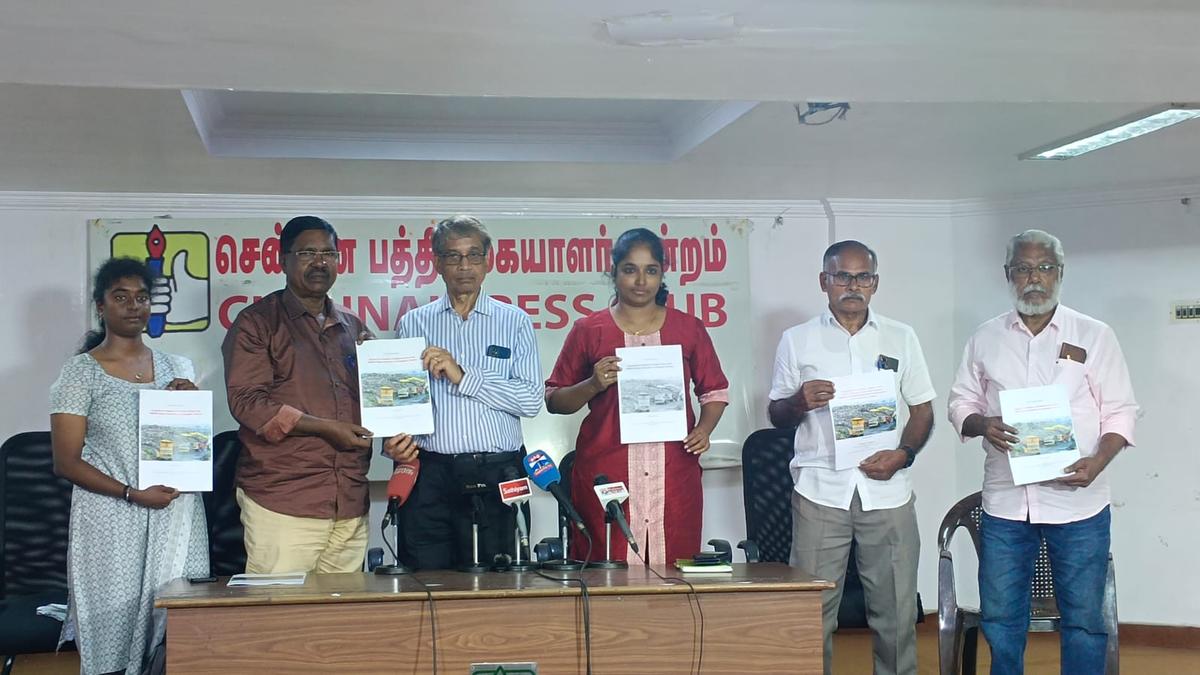
Out of 48 mandatory environmental parameters, 45 have not been monitored at the 50-tonne-per-day (MTPD) waste incinerator in Kodungaiyur since it began operations in 2021, according to a fact-finding report by the Federation of North Chennai Resident’s Welfare Association (FNCRWA) and the Alliance for Incinerator Free Chennai (AIFC).
The report claimed that the findings were based on responses received in August 2025 from the Tamil Nadu Pollution Control Board to Right to Information (RTI) queries, as well as on site inspections conducted subsequently.
Nine out of 11 air emission parameters — including cancer-causing dioxins, furans, and heavy metals — were never monitored, the report claimed. Further, all 19 wastewater pollution parameters and 13 toxicity parameters for bottom ash and fly ash remained unmonitored. There is a lack of advanced pollution control equipment, such as activated carbon filters, and the failure to install the mandatory Online Continuous Emission Monitoring System (OCEMS), the report added.
According to Chythenyen D.K. of the Centre for Financial Accountability (CFA), the Tamil Nadu Budget last year allocated ₹3,450 crore for two waste-to-energy (WTE) projects. He said that within a year, shortcomings in the functioning of two such projects had been repeatedly highlighted. Referring to this year's Tamil Nadu Budget, he said, “Even then, why does the government want to spend more on similar projects? Instead, the funds could be directed towards zero-waste management solutions, such as the ‘Green Chennai’ initiative proposed by residents.”
The FNCRWA has urged the State government to immediately shut down the Kodungaiyur plant and conduct an independent, multidisciplinary investigation into environmental and public health violations. The association demanded legal action against the operator for non-compliance, compensation for affected communities, and the scrapping of proposed large-scale WTE projects in favour of the ‘Green Chennai’ initiative, a decentralised zero-waste roadmap focusing on segregation, composting, and recycling.
Residents living near the site reported persistent foul odours, black dust deposition, and a rise in respiratory and skin ailments. Despite these documented violations, the facility currently holds a consent to operate valid until March 31, 2028, the report mentioned.


Running for change: Young athlete covers 1,520 km to aid marginalised children

Mullaperiyar dam water level is 116.75 feet, with inflow of 47 cusecs and discharge of 467 cusecs.

KTR demands cancellation of Suryapet mining tenders, citing irregularities and calls for an independent investigation into the auction process.

Dindigul hosts events promoting environmental awareness, academic innovation, and sports achievements, fostering community engagement and education.

Class 12 State Board exams commence in central districts with over 31,000 students enrolled across multiple examination centres.

A bomb threat at Erode Head Post Office was confirmed as a hoax after a thorough police search revealed no explosives.

Villupuram court to deliver verdict on April 2 in illegal red sand quarrying case involving former Minister K. Ponmudy and associates.

Over 35,000 students sat for the Class 12 language exam in Coimbatore, with 445 absentees reported.

Tiruchi farmers protest for higher maize prices, demanding intervention as market rates fall below the minimum support price.

Report reveals 45 of 48 pollution parameters unmonitored at Kodungaiyur incinerator, raising serious environmental and health concerns.

South Western Railway reports record freight loading and revenue growth in February 2026, achieving best-ever performance in logistics.

Police and community members participated in marathons promoting health, a drug-free Karnataka, and pride in local law enforcement.

Farmers petition for a direct paddy procurement centre in Narasinganallur to ensure fair access for all communities.