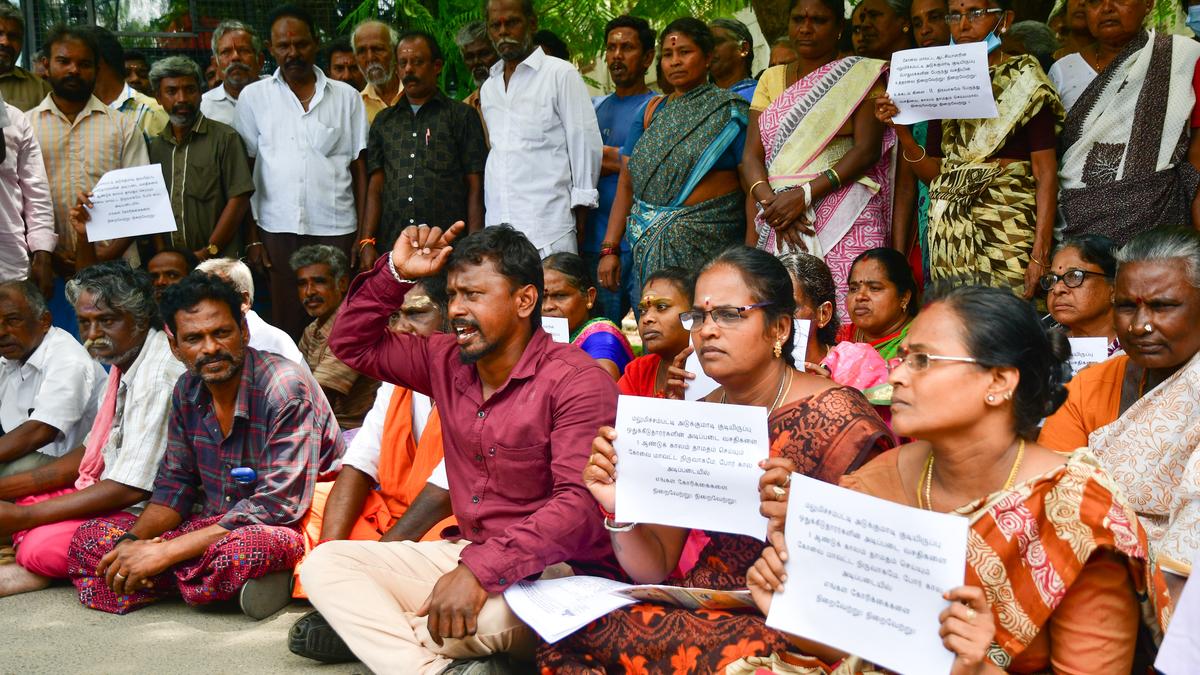
TNUHDB residents in Coimbatore demand basic amenities
The Hindu
Habitat development board residents in coimbatore demand better facilities
Residents of the Tamil Nadu Urban Habitat Development Board (TNUHDB) at Malumichampatti have demanded better facilities at the TNUHDB complex.
In a memorandum submitted to District Collector Kranthi Kumar Pati at the grievances day meeting on Monday, the TNUHDB Malumichampatti Allottees Welfare Association members said there are 1,440 families residing at the complexi. All the nine borewells at the complex need to be repaired and so water supply to the residential units is inadequate. Five new borewells should be sunk, they said.
The residents include Corporation workers and daily wage earners, who commute to work every day. However, there is no proper transport facility to the complex. Further, the doctor and nurse for the health centre at the complex do not visit it regularly, they added.
There are 45 blocks at the complex and thefts and use of ganja are on the rise. So, CCTV cameras should be installed, at least one for each block, the residents said.
Farmers’ plea
In a memorandum submitted by the AIKS Tamil Nadu Farmers’ Association, the petitioners said Kanajapalli in Annur block is a part of the Athikadavu - Avinashi scheme. However, the town panchayat is trying to let in sewage into the water body, they alleged. The association said steps should be taken to prevent sewage getting mixed with the water.
A press release from the district administration said totally 407 petitions were submitted to the Collector. These included demands for free housing sites, jobs, and pattas. The Collector disbursed ₹25.5 lakh to 30 beneficiaries of the Chief Minister’s Accident Relief Fund.


In Surendranagar, Gujarat, where only a handful of families continue to practise tangaliya weaving, we visit artisanal communities working with brands like Jaypore to revive the intricate craft for contemporary wardrobes

Madras High Court allows police to arrest YouTuber 'Savukku' Shankar if needed, dismissing claims of solitary confinement.

Lula leads Brazil's largest-ever business delegation to India, aiming for trade deals and global governance reforms amidst geopolitical challenges.

AIADMK reveals its first candidate list for Tamil Nadu Assembly election, featuring familiar names and few surprises.

A study reveals antibiotic resistance causes 87% of India's typhoid economic burden, significantly impacting children and families.

How Dikshitar was inspired by Vaduvur Rama to come up with a composition in a raganga raga

Lok Sabha passes Finance Bill 2026 with amendments, completing its budgetary approval before Rajya Sabha's consideration.

Karnataka government to consult legal experts on pursuing action against Adani Group's ACC Ltd. over ₹850 crore in disputed dues.

The FCRA amendment bill aims to create an authority for managing NGO assets after license loss, addressing misuse of foreign funds.

Telangana Minister assures adequate petroleum stocks for three months, warns against illegal fuel carrying amid panic buying rumors.

TMC calls for the removal of Bhabanipur returning officer, citing alleged ties to BJP and concerns over neutrality.

Kerala CM Pinarayi Vijayan condemns UDF's misogynistic attacks on CPI(M) legislator U. Prathibha, highlighting political degeneration.

Selected from 9,400 submissions across 37 countries, the 100 photographs on display traverse intimate and political terrains. In MRC Nagar, photographer Swastik Pal captures life in the Sundarbans, where severe climate change has brought humans and wildlife into closer contact. Shane Hynan’s Beneath Beofhod reflects on Ireland’s boglands as sites of memory and restoration, while Mateo Trevisan’s More than the Sun examines the impact of coal-driven industrialisation in the Western Balkans.