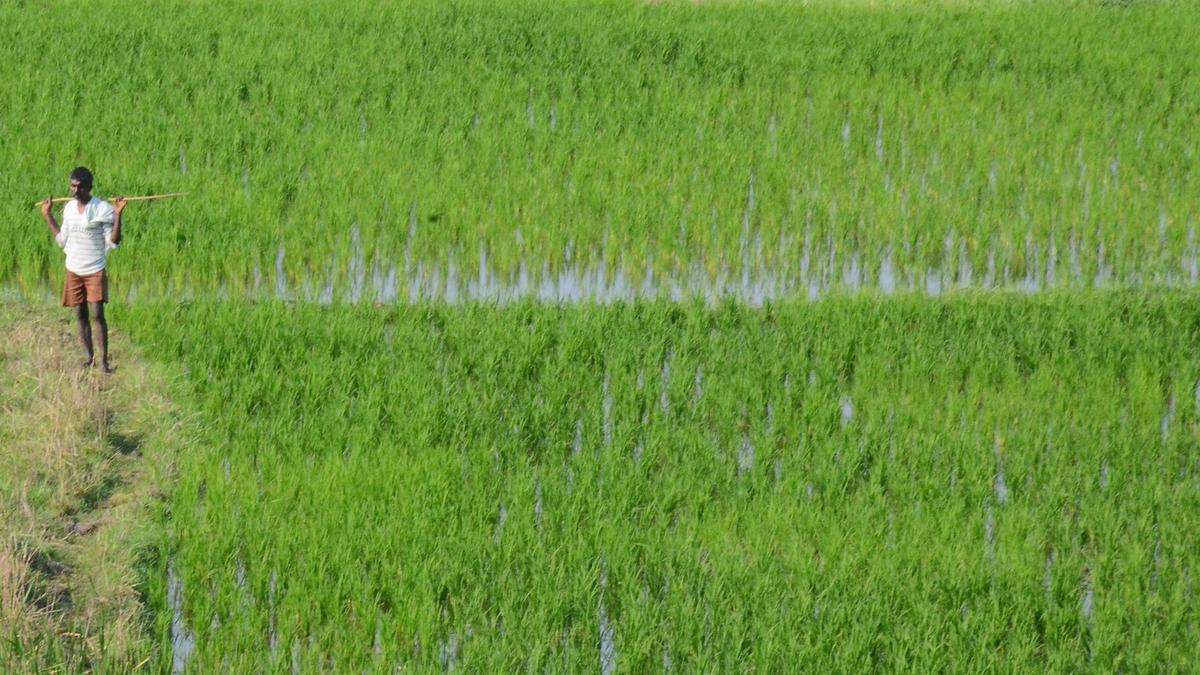
Allocation to Telangana’s Rythu Bandhu in FY 2026-27 likely to see a decline
The Hindu
Telangana's Rythu Bandhu budget allocation for FY 2026-27 is expected to decline, affecting agricultural support for farmers.
The quantum of budget allocated to Telangana Government’s Rythu Bandhu, agricultural investment support scheme, for the next financial year (2026-27) is likely to see a considerable decline.
It appears so going by the projections made for Rythu Bharosa in the demand for Agriculture sector placed in the Legislative Assembly. The Government has said that an amount of ₹13,603 crore has been allocated in the budget for the financial year 2026-27, for providing an assistance of ₹12,000 an acre for the year, at ₹6,000 an acre each for the two crop seasons — Kharif and Rabi.
Interestingly, the same document said that Rythu Bharosa assistance of ₹8,744.13 crore was released to 69.4 lakh pattadars in a record nine days from June 16 to 25 last year [2025]. The release proves that the Government is incurring expenditure in excess of ₹17,400 crore for crediting Rythu Bharosa amounts into the accounts of eligible farmers.
But the projection of ₹13,603 crore for the next fiscal implies that allocation per season has come down to ₹6,800 crore. The document said Rythu Bharosa would be provided to landholders based on the extent of land registered on their names on the Bhu Bharati (Dharani) portal. “Non arable lands will not be covered under the scheme,” the Government said.
The development follows the comprehensive survey launched by the Government to identify genuine beneficiaries under the flagship scheme and ensure that there is no scope for misuse. The Government procured 400 rovers for providing accurate assessment of land under cultivation in the recent months and had decided to add 410 more for taking up the survey covering all parts of the State.


In Surendranagar, Gujarat, where only a handful of families continue to practise tangaliya weaving, we visit artisanal communities working with brands like Jaypore to revive the intricate craft for contemporary wardrobes

Madras High Court allows police to arrest YouTuber 'Savukku' Shankar if needed, dismissing claims of solitary confinement.

Lula leads Brazil's largest-ever business delegation to India, aiming for trade deals and global governance reforms amidst geopolitical challenges.

AIADMK reveals its first candidate list for Tamil Nadu Assembly election, featuring familiar names and few surprises.

A study reveals antibiotic resistance causes 87% of India's typhoid economic burden, significantly impacting children and families.

How Dikshitar was inspired by Vaduvur Rama to come up with a composition in a raganga raga

Lok Sabha passes Finance Bill 2026 with amendments, completing its budgetary approval before Rajya Sabha's consideration.

Karnataka government to consult legal experts on pursuing action against Adani Group's ACC Ltd. over ₹850 crore in disputed dues.

The FCRA amendment bill aims to create an authority for managing NGO assets after license loss, addressing misuse of foreign funds.

Telangana Minister assures adequate petroleum stocks for three months, warns against illegal fuel carrying amid panic buying rumors.

TMC calls for the removal of Bhabanipur returning officer, citing alleged ties to BJP and concerns over neutrality.

Kerala CM Pinarayi Vijayan condemns UDF's misogynistic attacks on CPI(M) legislator U. Prathibha, highlighting political degeneration.

Selected from 9,400 submissions across 37 countries, the 100 photographs on display traverse intimate and political terrains. In MRC Nagar, photographer Swastik Pal captures life in the Sundarbans, where severe climate change has brought humans and wildlife into closer contact. Shane Hynan’s Beneath Beofhod reflects on Ireland’s boglands as sites of memory and restoration, while Mateo Trevisan’s More than the Sun examines the impact of coal-driven industrialisation in the Western Balkans.