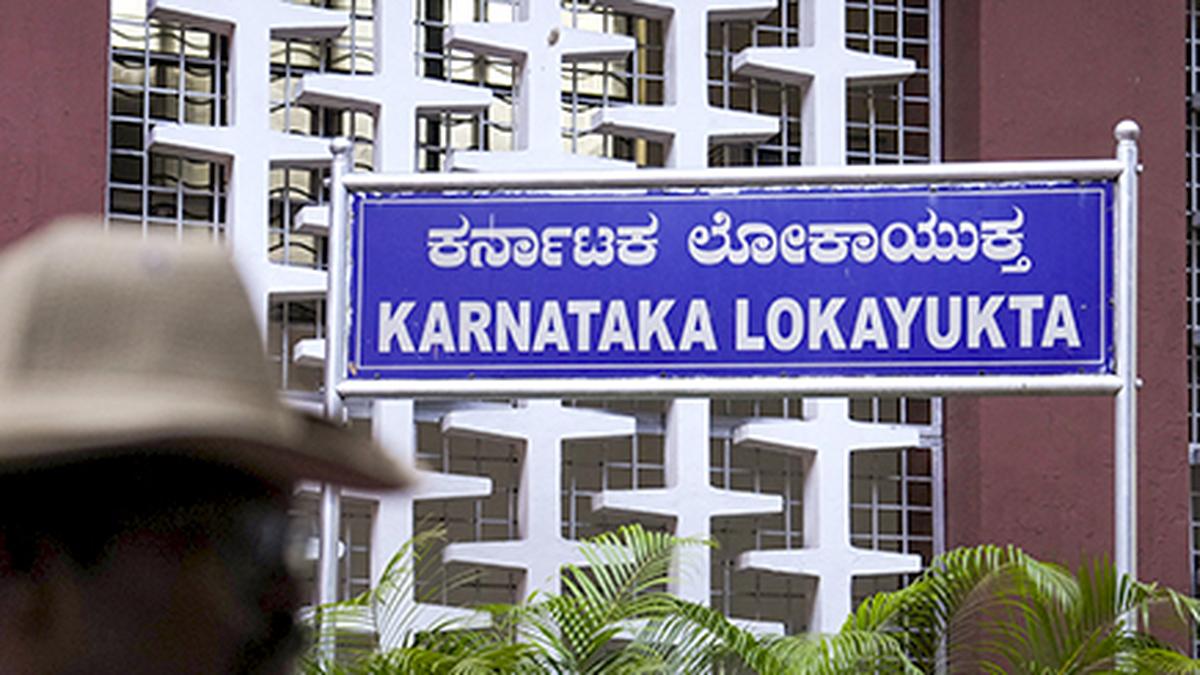
Three officials caught taking bribes by Karnataka Lokayukta
The Hindu
In one case, the superintendent in the office of the Assistant Registrar of Cooperative Societies in Belagavi demanded a bribe of ₹50,000 for registration of a society.
Bhartesh Shabannanavar, the superintendent in the office of the Assistant Registrar of Cooperative Societies in Belagavi, was caught by the Karnataka Lokayukta team while taking a bribe of ₹50,000 for registration of a society.
The complainant, Prashant Atmaram Kelgade from Sankeshwar, had applied for the registration of United Social and Sports Club.
The office superintendent, Bhartesh Shabannanavar, allegedly demanded ₹50,000 claiming that senior officers would have to be given a share of the amount. He refused to register the club till the bribe was paid and delayed the process by three weeks.
Prashant Atmaram Kelgade lodged a complaint on March 2. The Lokayukta police registered a case under Section 7(c) of the Prevention of Corruption Act, 1988. Under the guidance of Superintendent of Police Hanumantharaya, a team led by Deputy SP B.S. Patil and Inspector Niranjan Patil, caught the official red-handed while taking the bribe.
In another case, a forest officer in Ramdurg and his colleague were arrested for demanding a bribe of ₹6,000 to avoid legal action under the Wildlife Protection Act, 1972.
The complainant had caught three pigeons using a net near the bridge on Malaprabha river in Ramdurg.
Mohammadsab Imamsab Musamiya (52), a forest watcher, and Deputy Range Forest Officer Vinayak Veerabhadra Gouda Patil (41) demanded ₹7,000 to drop the case. They took ₹6,000 on March 21 and demanded that the remaining ₹1,000 be handed over soon.


In Surendranagar, Gujarat, where only a handful of families continue to practise tangaliya weaving, we visit artisanal communities working with brands like Jaypore to revive the intricate craft for contemporary wardrobes

Madras High Court allows police to arrest YouTuber 'Savukku' Shankar if needed, dismissing claims of solitary confinement.

Lula leads Brazil's largest-ever business delegation to India, aiming for trade deals and global governance reforms amidst geopolitical challenges.

AIADMK reveals its first candidate list for Tamil Nadu Assembly election, featuring familiar names and few surprises.

A study reveals antibiotic resistance causes 87% of India's typhoid economic burden, significantly impacting children and families.

How Dikshitar was inspired by Vaduvur Rama to come up with a composition in a raganga raga

Lok Sabha passes Finance Bill 2026 with amendments, completing its budgetary approval before Rajya Sabha's consideration.

Karnataka government to consult legal experts on pursuing action against Adani Group's ACC Ltd. over ₹850 crore in disputed dues.

The FCRA amendment bill aims to create an authority for managing NGO assets after license loss, addressing misuse of foreign funds.

Telangana Minister assures adequate petroleum stocks for three months, warns against illegal fuel carrying amid panic buying rumors.

TMC calls for the removal of Bhabanipur returning officer, citing alleged ties to BJP and concerns over neutrality.

Kerala CM Pinarayi Vijayan condemns UDF's misogynistic attacks on CPI(M) legislator U. Prathibha, highlighting political degeneration.

Selected from 9,400 submissions across 37 countries, the 100 photographs on display traverse intimate and political terrains. In MRC Nagar, photographer Swastik Pal captures life in the Sundarbans, where severe climate change has brought humans and wildlife into closer contact. Shane Hynan’s Beneath Beofhod reflects on Ireland’s boglands as sites of memory and restoration, while Mateo Trevisan’s More than the Sun examines the impact of coal-driven industrialisation in the Western Balkans.