The university under attack, universities undermined Premium
The Hindu
The key role of institutions of higher learning is to generate socially relevant knowledge and this requires autonomy to challenge orthodoxy
Universities are facing an unprecedented challenge. While in India the challenge has been growing over the last three decades, in the United States, it has erupted since President Donald Trump took office in January 2025. The challenge has been growing elsewhere too as society’s expectations from universities are changing.
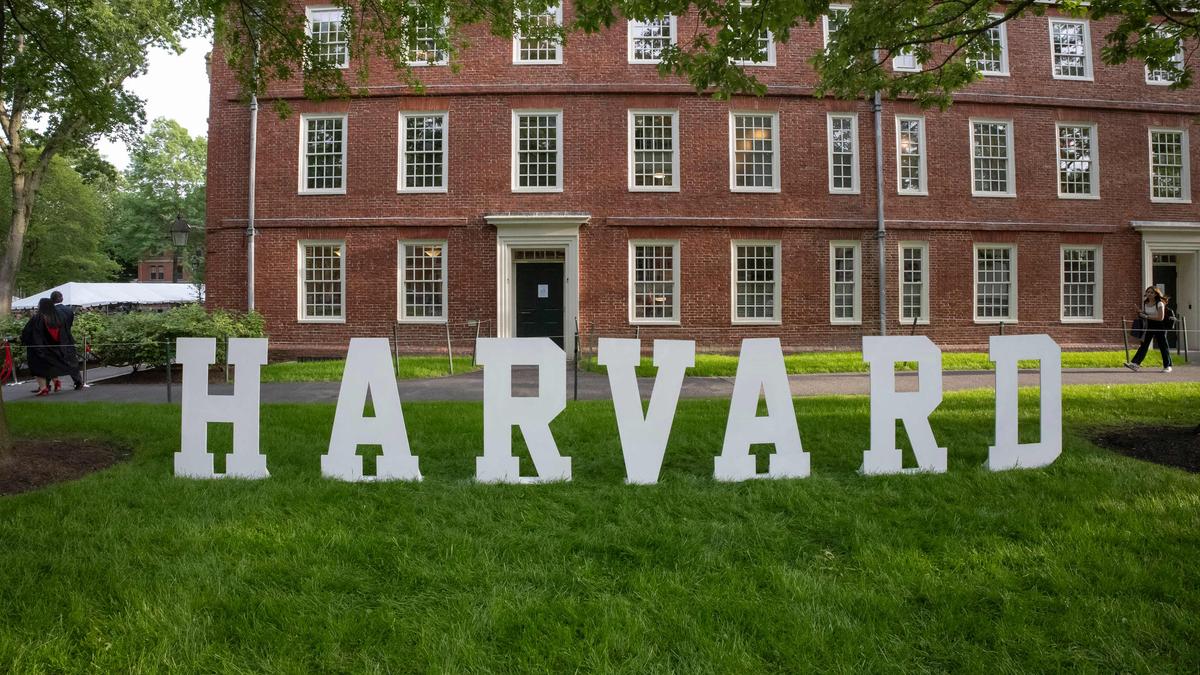
The Trump administration is freezing $3.2 billion of Harvard University’s grants and contracts. There is a move to revoke Harvard’s tax-exempt status which will cost it a few hundred million dollars. Harvard’s President Alan M. Garber has said that political disagreements could pose an existential threat to educational institutions. Because a cut in funds is being used to coerce universities to change their policies regarding student admissions, protests on campus, faculty recruitment, and diversity, equity, and inclusion (DEI) programmes.
In India, the control of institutions of higher learning has increasingly slipped out of the hands of academics to the bureaucracies in the Ministries of Education and the University Grants Commission over the last 40 years. Academics in India are facing growing challenges related to teaching and research. The institutions they work in do not come to their defence, as seen in a recent case of a prestigious private university. All this represents a shift in the fine balance in the societal role of institutions of higher learning. The U.S. system was a model to emulate and even that is being dismantled.
There is an inherent tension in the social role of universities. On one side they are required to generate socially relevant knowledge to meet the evolving challenges society faces while on the other, they are expected to reproduce the existing societal structures.
To fulfil their creative role, academia requires autonomy. The heart and soul of creativity is what makes societies dynamic. Unfortunately, rulers while paying lip service to this are hollowing it out in practice.
Autonomy enables academics to take a long-term view of emerging social challenges, even anticipating them. Given the accelerating pace of change, by the time society becomes aware of the change, it becomes too late to tackle it. For instance, developments in Artificial Intelligence and social media are leading to challenges for employment, the issue of fake news and the nature of war.
Autonomy enables current orthodoxy to be challenged and facilitates the generation of new knowledge. Without Galileo challenging the Church our understanding of the universe would not have advanced. Further, dynamism comes when academics who are aware of their own assumptions question them.


Parliament Budget Session LIVE: Follow The Hindu's latest updates on the Parliament Budget Session on March 18, 2026.

Severe storms cause over 1,100 flight cancellations and 7,300 delays across the U.S., exacerbating travel chaos amid a government shutdown.

Three MBBS students tragically died in a scooter accident in Kozhikode, Kerala, early Wednesday morning.

Microsoft said on Tuesday it is reorganising its Copilot teams by unifying its commercial and consumer versions, as the tech giant rushes to improve its artificial intelligence assistant to drive better adoption.

Poco has launched the new X8 Pro series smartphones in India, consisting three phones: the Poco X8 Pro Max, Poco X8 Pro, and the special edition Poco X8 Pro Iron Man Edition

Morocco is crowned African football champion after Senegal forfeits the final due to a controversial walk-off protest.

Israeli tank fire reportedly hit a U.N. base in Lebanon, wounding Ghanaian peacekeepers amid rising tensions with Hezbollah.

LPG shortages in India force schools to revert to firewood, increasing burdens on women workers in mid-day meal schemes.

Discover the dramatic history and significance behind Tamil Nadu's name change from Madras on January 14, 1969.

Researchers found that interbreeding between Neanderthals and early modern humans favoured male Neanderthals mating with female modern humans.

BRICS functions as a collaborative force aimed at establishing a multipolar world system. Cooperation in science, technology and innovation has been a key agenda for the grouping

Assembly polls 2026: Follow live updates from The Hindu on the upcoming elections in five States, on March 18, 2026

Iran-Israel war: Follow live updates from The HIndu on the West Asia conflict on Marh 18, 2026