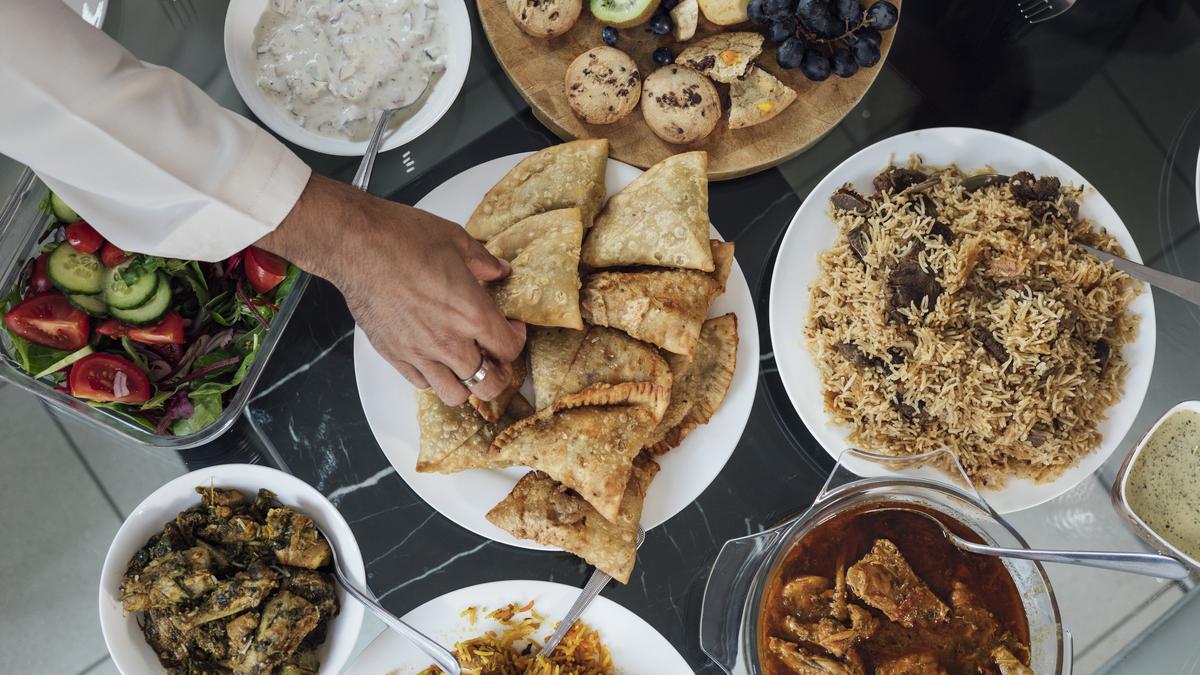
Eid food in India: A look at Bhopali, Bohra and Memon culinary traditions
The Hindu
Eid food in India: A look at Bhopali, Bohra and Memon culinary traditions
At Jehan Numa Palace in Bhopal, in the holy month of Ramzan, I am shown a mango tree said to be nearly 100 years old. A few years ago, it took a direct lightning strike and had to be cut back sharply; since then, it yields barely a dozen mangoes each season, a few claimed by the staff while the rest find their way into the kitchen. Dinner, as it turns out, is served under this very tree.
Taj-ul-Masajid in Bhopal, India’s largest mosque | Photo Credit: Special arrangement
The setting is not incidental. General Obaidullah Khan — the second son of Nawab Sultan Jahan Begum, one of Bhopal’s most influential rulers and the last of its remarkable line of female sovereigns, known for administrative reforms and a relatively austere court culture — served as Commander-in-Chief of the Bhopal State Forces. Under him, time outdoors was woven into daily life. Hunting expeditions were common, and meals were often taken under trees, with family and guests gathering in the open after long hours outside. Sitting here now feels less like staging and more like a continuation of that habit.
Green chicken rizala | Photo Credit: R.Mathew
The meal, The General’s Table, a 20-course feast that people can sign up for (prices vary according to the season), draws from the kitchens of Bhopal’s former royals. The courses move through kebabs, curries, rice dishes and desserts with a certain ease.
Dry curries dominate the table in Bhopal | Photo Credit: R.Mathew


Watch the thrilling trailer for 'Dune: Part Three,' showcasing epic battles and Paul Atreides' struggle with power and resistance.

TMC announces candidates for 2026 Bengal Assembly elections, contesting 291 seats; BGPM to handle three Darjeeling hill seats.

DMK finalizes a seat-sharing deal with CPI for Tamil Nadu elections, allotting five seats amid ongoing discussions with CPI(M).

Parliament Budget Session LIVE: Follow The Hindu's latest updates on the Parliament Budget Session on March 18, 2026.

Severe storms cause over 1,100 flight cancellations and 7,300 delays across the U.S., exacerbating travel chaos amid a government shutdown.

Three MBBS students tragically died in a scooter accident in Kozhikode, Kerala, early Wednesday morning.

Microsoft said on Tuesday it is reorganising its Copilot teams by unifying its commercial and consumer versions, as the tech giant rushes to improve its artificial intelligence assistant to drive better adoption.

Poco has launched the new X8 Pro series smartphones in India, consisting three phones: the Poco X8 Pro Max, Poco X8 Pro, and the special edition Poco X8 Pro Iron Man Edition

Morocco is crowned African football champion after Senegal forfeits the final due to a controversial walk-off protest.

Israeli tank fire reportedly hit a U.N. base in Lebanon, wounding Ghanaian peacekeepers amid rising tensions with Hezbollah.

LPG shortages in India force schools to revert to firewood, increasing burdens on women workers in mid-day meal schemes.

Discover the dramatic history and significance behind Tamil Nadu's name change from Madras on January 14, 1969.

Researchers found that interbreeding between Neanderthals and early modern humans favoured male Neanderthals mating with female modern humans.