LPG crunch pushes PM POSHAN kitchens back to firewood, burdening women workers Premium
The Hindu
LPG shortages in India force schools to revert to firewood, increasing burdens on women workers in mid-day meal schemes.
The PM POSHAN mid‑day meal scheme is facing implementation challenges amid the LPG crunch in India triggered by the U.S.–Israel and Iran conflict. The scheme which serves about 11 crore children across 10.35 lakh schools, mostly from socially disadvantaged and low-income backgrounds, is now reverting to alternative fuels.
Some schools that had recently shifted from firewood to LPG are returning or planning to return to firewood. Schools that already relied on firewood, along with centralised or community kitchens that use steam-based systems with firewood and briquettes, have largely been insulated from the LPG shortage.
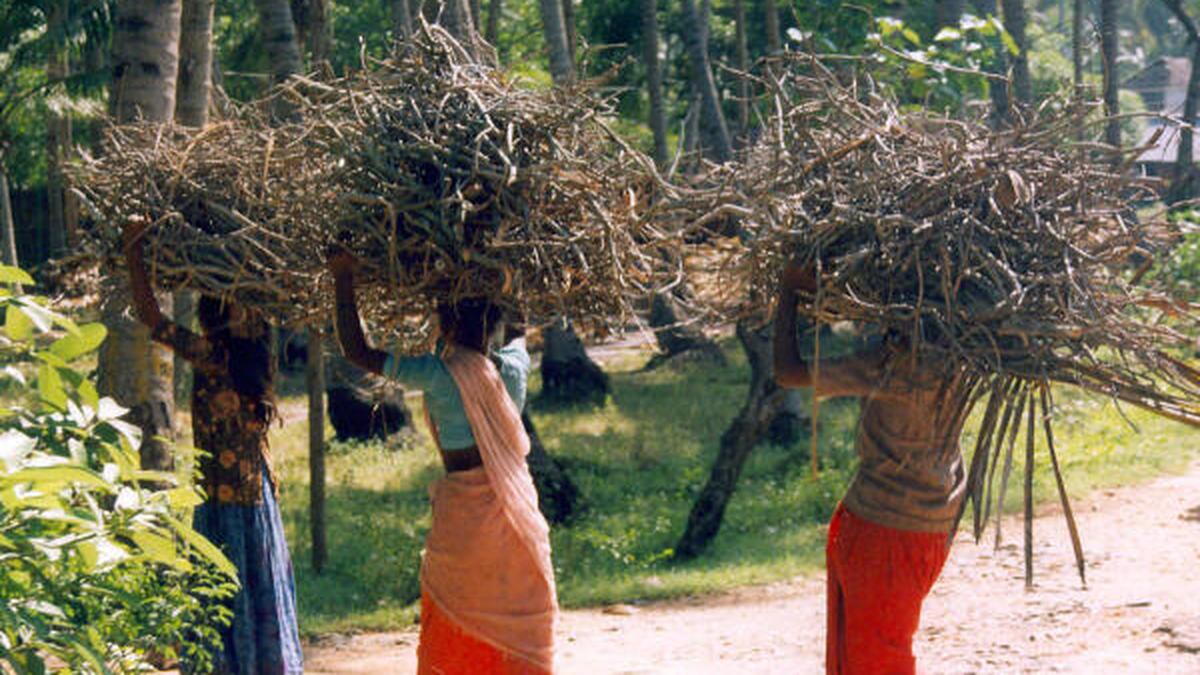
But, who are the workers forming the backbone of these school kitchens, and how are they coping with—or planning to cope with—the shift from gas to firewood? For those who have always worked with firewood, what challenges do they face?
The answers point to women. The kitchens are overwhelmingly run by them. According to Ministry of Education data, over 90% of the 24 lakh cook‑cum‑helpers (CCHs) under the scheme are women. These honorary workers prepare and serve nutritious meals to children, receiving ₹1,000 a month for 10 months, an amount shared between the Centre and the states, with several states providing additional support toward the honorarium.
Bharathi* begins her day at 8 a.m., preparing the mid-day meal at a government school in a remote block of eastern part of district in Bihar. She recalls that she had cooked on firewood for years earlier, and says the recent shift back over the past few days to it has brought back the same physical strain.
Cooking on firewood, she says, takes longer and leaves her with watery eyes and chest discomfort. In addition she has to source fuel to fire the wood as well. “With summer temperatures rising, the conditions in the kitchen have become even more taxing,” she added. Despite these difficulties, she continues to prepare meals for nearly 500 children in the school along with three other CCHs. She says there is little relief in sight, as summer holidays in the State are scheduled only in June, unlike in some other States where schools close as early as April.


Explore the evolution of cooking fuels in Madras, from wood and coal to the rise of LPG, amid recent shortages.

Protests against the Sharavathi Pumped Storage Hydroelectric Project in the Western Ghats just got new life

51 couples take thebig plunge at Udaipur mass wedding event

A bridge collapse in Roop Nagar kills a woman; Delhi government forms a probe panel amid rising safety concerns.

Tribunal halts Colonel Purohit's retirement, pending promotion decision after his acquittal in the 2008 Malegaon blast case.

Pinarayi Vijayan launches his election campaign in Dharmadam, aiming for a third consecutive term amid tightening competition.

Delhi Speaker Vijender Gupta has written to Lieutenant-Governor Taranjit Singh Sandhu seeking directions to instal audible signals at traffic intersections across the city to ensure the safety of mobility-impaired individuals and senior citizens.

GVMC council concludes its five-year term, highlighting significant development projects and global events that enhanced Visakhapatnam's recognition.

Karnataka SC/ST Commission discusses internal reservation issues amidst confusion over reduced quotas for Scheduled Castes and Tribes.

President Droupadi Murmu serves Akshaya Patra’s 5 billionth meal, highlighting child nutrition and education at Rashtrapati Bhavan.

PM Modi and UAE President agree on ensuring safe navigation through the Strait of Hormuz amid regional tensions.

JNU student leaders face severe repercussions for activism, risking their academic futures amid allegations and online abuse.

India Post launches 24-hour and 48-hour Speed Post services in Bengaluru, ensuring urgent delivery across major metro cities.