Tendency of categorisation of terrorism based on motivations behind terrorist acts is 'dangerous': India
The Hindu
India also asserted that states that provide shelter to terrorists should be called out and held accountable for their deeds, a veiled reference to Pakistan.
India has said that the tendency to categorise terrorism on the basis of motivations behind terrorist acts is “dangerous” and asserted that all kinds of terror attacks, whether motivated by Islamophobia, anti-Sikh, anti-Buddhist or anti-Hindu prejudices, are condemnable.
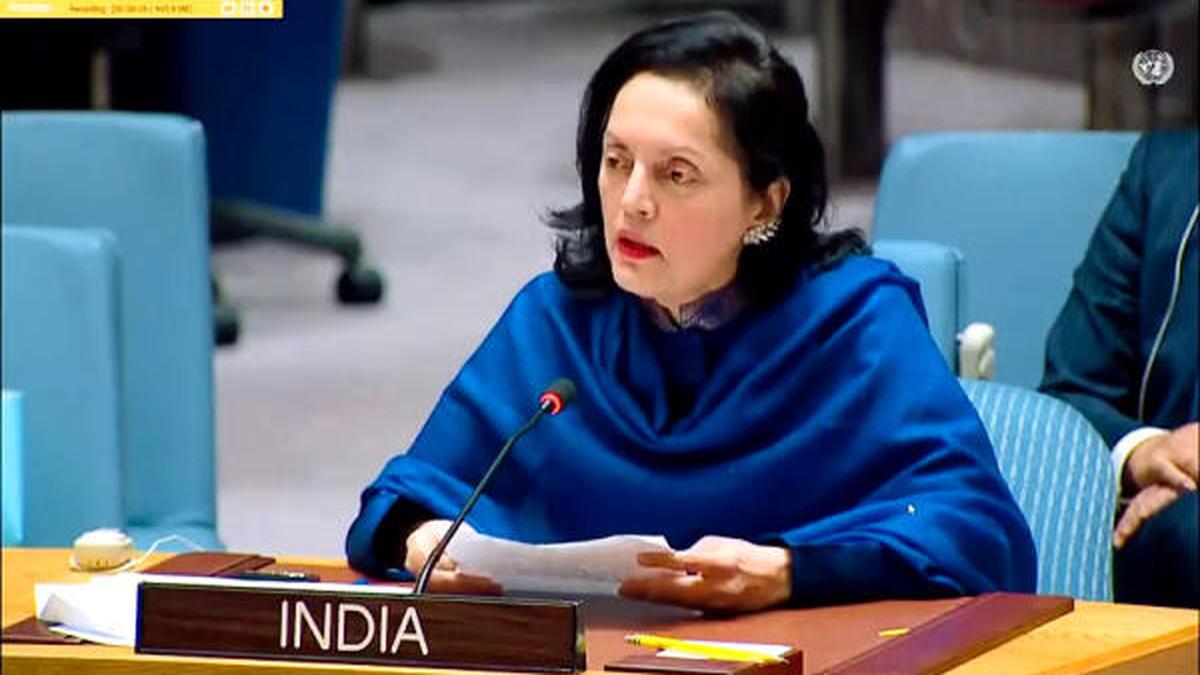
India’s Permanent Representative to the U.N. Ambassador Ruchira Kamboj said on Thursday that the international community needs to stand guard against new terminologies and false priorities that can dilute its focus of combatting the scourge of terrorism.
“The tendency of categorisation of terrorism based on the motivations behind terrorist acts is dangerous and goes against the accepted principles that 'terrorism in all its forms and manifestations should be condemned and there cannot be any justification for any act of terrorism, whatsoever’,” she said at the First Reading of the Draft Resolution on 8th Review of the Global Counter-Terrorism Strategy (GCTS).
Underlining that there cannot be good or bad terrorists, Ms. Kamboj said such an approach “will only take us back to the pre-9/11 era of labelling terrorists as ‘Your Terrorists’ and ‘My Terrorists’ and erase the collective gains the international community has made over the last two decades.
“Moreover, some of the terminologies such as right or right-wing extremism, or far right or far left extremism opens the gate for misuse of these terms by vested interests. We, therefore, need to be wary of providing a variety of classifications, which may militate against the concept of democracy itself,” she said.
India also asserted that states that provide shelter to terrorists should be called out and held accountable for their deeds, a veiled reference to Pakistan.
The U.N. Global Counter-Terrorism Strategy is a "unique global instrument” to enhance national, regional and international efforts to counter-terrorism. Through its adoption by consensus in 2006, all U.N. member states agreed for the first time to a common strategic and operational approach to fighting terrorism.


A bridge collapse in Roop Nagar kills a woman; Delhi government forms a probe panel amid rising safety concerns.

Tribunal halts Colonel Purohit's retirement, pending promotion decision after his acquittal in the 2008 Malegaon blast case.

Pinarayi Vijayan launches his election campaign in Dharmadam, aiming for a third consecutive term amid tightening competition.

Delhi Speaker Vijender Gupta has written to Lieutenant-Governor Taranjit Singh Sandhu seeking directions to instal audible signals at traffic intersections across the city to ensure the safety of mobility-impaired individuals and senior citizens.

GVMC council concludes its five-year term, highlighting significant development projects and global events that enhanced Visakhapatnam's recognition.

Karnataka SC/ST Commission discusses internal reservation issues amidst confusion over reduced quotas for Scheduled Castes and Tribes.

President Droupadi Murmu serves Akshaya Patra’s 5 billionth meal, highlighting child nutrition and education at Rashtrapati Bhavan.

PM Modi and UAE President agree on ensuring safe navigation through the Strait of Hormuz amid regional tensions.

JNU student leaders face severe repercussions for activism, risking their academic futures amid allegations and online abuse.

India Post launches 24-hour and 48-hour Speed Post services in Bengaluru, ensuring urgent delivery across major metro cities.

A 24-hour control room in Krishnagiri monitors the Model Code of Conduct and manages election-related complaints ahead of polls.

Madurai Collector inaugurates voter awareness campaign

MLC Kishore Kumar Puttur criticizes the State for poor implementation of the Centre's health scheme for senior citizens.