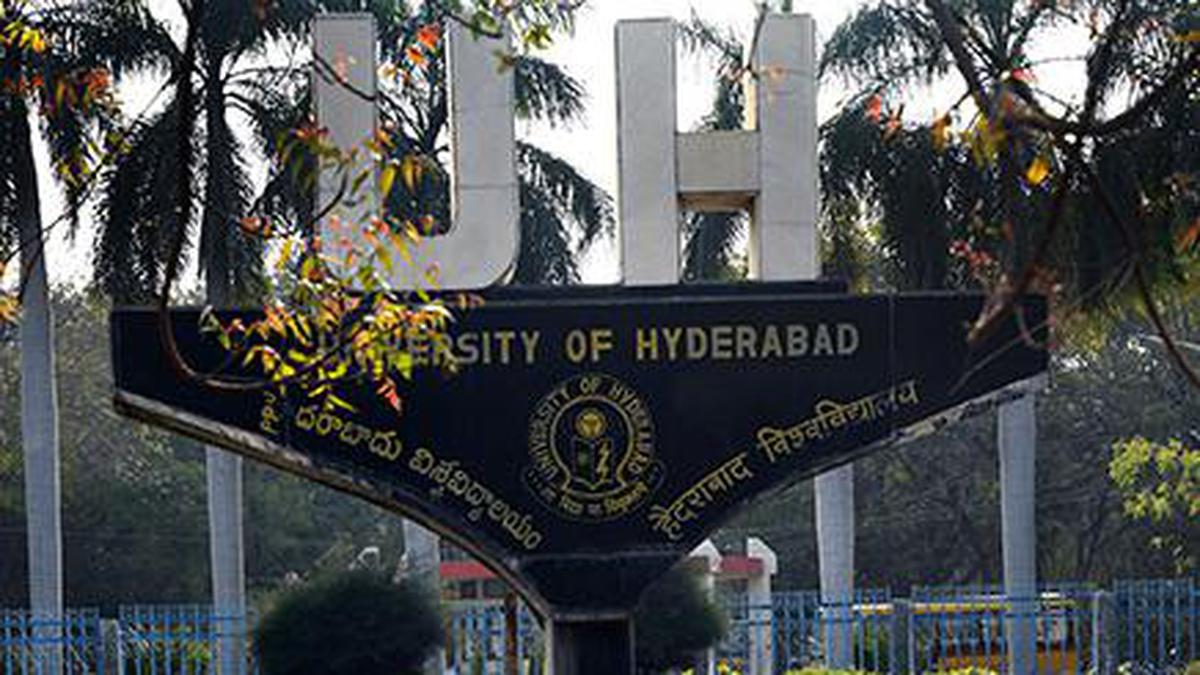
Supreme Court says discrimination in educational institutions a “very serious issue”, asks University Grants Commission to specify steps taken to curb it
The Hindu
The Supreme Court on July 6 asked the University Grants Commission (UGC) to specify steps it has taken and proposed to take, to provide non-discriminatory, enabling environment for the students belonging to Scheduled Castes and Schedule Tribes in institutions of higher learning, terming it a “very serious issue”
The Supreme Court on July 6 asked the University Grants Commission (UGC) to specify the steps it had taken and proposed to take, to provide a non-discriminatory and enabling environment for students belonging to Scheduled Castes and Schedule Tribes in institutions of higher learning, terming it a “very serious issue”.
A Bench of Justices A.S. Bopanna and M.M. Sundresh asked the UGC to furnish the details on a plea by the mothers of Rohith Vemula and Payal Tadvi, who had allegedly died by suicide following alleged caste-based discrimination in their educational institutions.
While Vemula, a dalit Ph.D scholar at Hyderabad Central University, had ended his life on January 17, 2016, Tadvi, a student at TN Topiwala National Medical College, Mumbai, and belonging to the Adivasi Tadvi Bhil community, took the extreme step on May 22, 2019, due to alleged caste-based discrimination by three doctors of her institution.
“This is a very serious issue. Whatever concerns are raised... how do you propose to deal with it and what steps have you taken to address these grievances? This issue is non-adversarial and the UGC needs to take some concrete action. It is for the benefit of students and their parents. Steps taken would ensure that these types of incidents don't happen in future,” the Bench told the counsel appearing for the UGC. Senior advocate Indira Jaising, appearing for the mothers of Vemula and Tadvi, said they had lost their son and daughter respectively, and in the past year three more students, studying at a National Law School, a medical college, and the Indian Institute of Technology — Bombay, had taken their lives.
“Therefore, there is a sense of urgency about this petition. It would be appropriate that UGC formulates binding guidelines which can be followed by institutes of higher learning.
“It is unfortunate that the existing guidelines do not have a binding effect as they do not have any sanction for violation of the norms. There should be some regulations like Prevention of Sexual Harassment [PoSH] at Workplace Act and the anti-ragging law, which provides for punitive action in case of violation,” Ms. Jaising said.
She said equity regulations framed by the UGC in 2012 to address the complaints of caste discrimination on campuses were proving to be inadequate.


Delhi Speaker Vijender Gupta has written to Lieutenant-Governor Taranjit Singh Sandhu seeking directions to instal audible signals at traffic intersections across the city to ensure the safety of mobility-impaired individuals and senior citizens.

GVMC council concludes its five-year term, highlighting significant development projects and global events that enhanced Visakhapatnam's recognition.

Karnataka SC/ST Commission discusses internal reservation issues amidst confusion over reduced quotas for Scheduled Castes and Tribes.

President Droupadi Murmu serves Akshaya Patra’s 5 billionth meal, highlighting child nutrition and education at Rashtrapati Bhavan.

PM Modi and UAE President agree on ensuring safe navigation through the Strait of Hormuz amid regional tensions.

JNU student leaders face severe repercussions for activism, risking their academic futures amid allegations and online abuse.

India Post launches 24-hour and 48-hour Speed Post services in Bengaluru, ensuring urgent delivery across major metro cities.

A 24-hour control room in Krishnagiri monitors the Model Code of Conduct and manages election-related complaints ahead of polls.

Madurai Collector inaugurates voter awareness campaign

MLC Kishore Kumar Puttur criticizes the State for poor implementation of the Centre's health scheme for senior citizens.

Karnataka's Health Minister announces redeployment of specialists to taluk hospitals to reduce neonatal mortality rates effectively.

Celebrate IPL's start and Polly Umrigar's legacy, reflecting on cricket's evolution and the enduring impact of its pioneers.

BJP accuses Congress and Rahul Gandhi of endorsing an ‘anti-India’ USCIRF report undermining India's global image.