IPL and Polly Umrigar — let us celebrate both next week Premium
The Hindu
Celebrate IPL's start and Polly Umrigar's legacy, reflecting on cricket's evolution and the enduring impact of its pioneers.
Columnists are sometimes carried along by the rush of events, often feeling obliged to comment on the here-and-now. Thus, the progress from the build-up to the T20 World Cup to its unfolding to the final, to the post-mortem of the event. And when that’s over, the IPL gets similar treatment. Occasionally, however, it is rewarding to look back rather than forward, and place today in the context of yesterday.
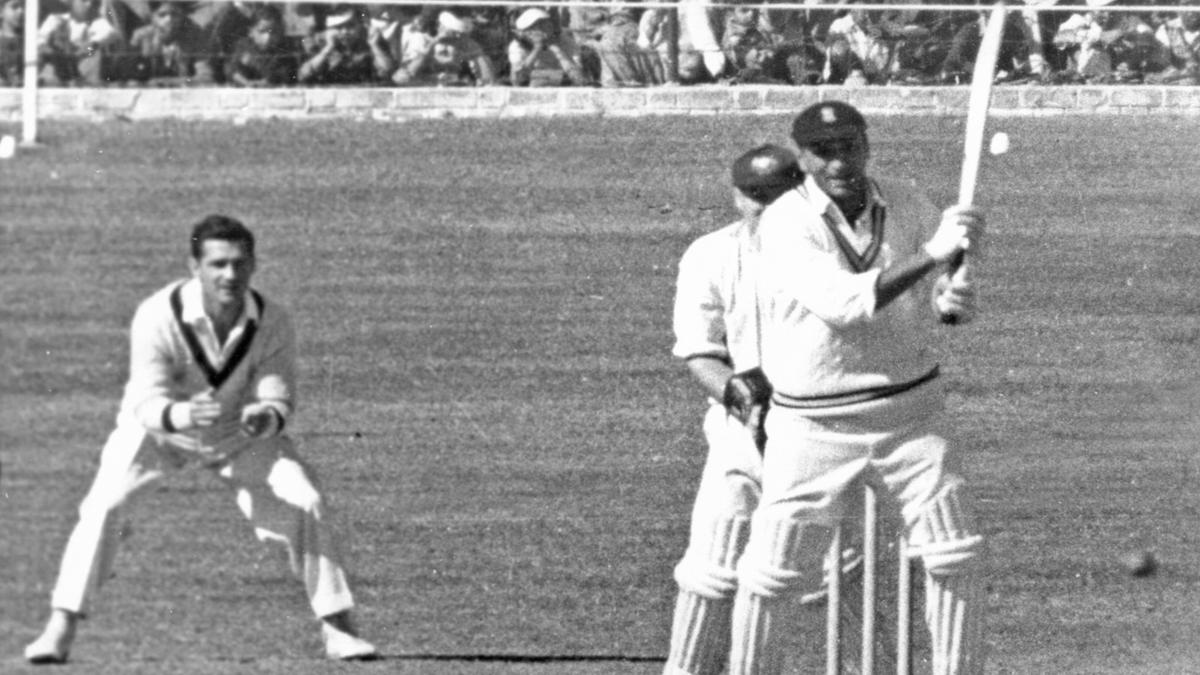
March 28, for example, is a significant date this year. It sees the start of the IPL. It is also the birth centenary of one of India’s finest, Pahlan ‘Polly’ Umrigar. In the 1950s and early 1960s, when Indian batting still sought global respect, Umrigar was its most solid ambassador. He was tall and composed. The crowd rarely gasped when he took guard. Yet by the time he finished, he had rewritten much of India’s early batting history. Today, he would have been an IPL star too!
Known in the West Indies as ‘Palm tree hitter’, Umrigar was the bridge between origins and modernity. He played his first Test under independent India’s first captain, Lala Amarnath, in a team with Indian cricket’s early heroes: Vijay Hazare and Vinoo Mankad. His final Test came under Tiger Pataudi, who ushered in modernism.
For long Umrigar was India’s most experienced Test cricketer, maker of most runs and centuries and the country’s first Test double centurion. He cleared the path for champions Sunil Gavaskar, Sachin Tendulkar and Virat Kohli. Yet, it is a curse of sport that he is often remembered for one bad series in England.
In the fourth Test at Port of Spain in 1962, Umrigar claimed five for 107 in 56 overs, then made 56 and 172 not out after India followed on, and bowled 16 overs for 17 runs as the West Indies won. No one calls this ‘Umrigar’s Test’ in the manner they did of the Lord’s Test of 1952 when Mankad returned similar figures. Perhaps because those days only cricket writers from England could bestow such honours and none was present. India’s K.N. Prabhu, however said it was “fit enough for verses and ballads.”
This came a decade after Umrigar’s bad series in England, where he had a highest score of 14 and was palpably uncomfortable against fast bowler Fred Trueman. It mattered what you did in England; their writers ensured that epithets stuck. Umrigar finished with 1688 runs on the trip with double-hundreds against Lancashire, Kent and Oxford. He made a century in Manchester on the next trip, but he couldn’t get rid of the ‘reputation’ from 1952, although Trueman bowled on that later tour too.


Karnataka's Health Minister announces redeployment of specialists to taluk hospitals to reduce neonatal mortality rates effectively.

Celebrate IPL's start and Polly Umrigar's legacy, reflecting on cricket's evolution and the enduring impact of its pioneers.

BJP accuses Congress and Rahul Gandhi of endorsing an ‘anti-India’ USCIRF report undermining India's global image.

Education Ministry proposes UGC-like funding under Shiksha Adhishthan, raising concerns about centralization and public university financing.

Shivraj Singh Chouhan defends the new rural jobs Act, dismissing opposition protests as ineffective and highlighting increased funding and worker protections.

Supreme Court questions why heirs can't access unclaimed funds of deceased depositors, urging government to develop a disclosure policy.

Karnataka High Court demands LPG supply details amid state restrictions, threatening Bengaluru's restaurants and livelihoods.

Shorts News:UN body investigating deadly strike on Iranian girls school

Moodbidri police inspector suspended pending inquiry over allegations of misbehaviour and inappropriate conduct towards women.

The State currently hosts more than 880 GCCs, up from around 500 GCCs in 2021.

Transgender and intersex activists march to Lok Bhavan, protesting the regressive Transgender Persons Bill and demanding its withdrawal.

Hyderabad's LGBTQIA+ community opposes the Transgender Amendment Bill, stressing dignity over identity verification and highlighting economic and medical concerns.

MDMK's manifesto demands total prohibition, life imprisonment for sexual offenders, and measures to protect youth and improve public transport in Tamil Nadu.