Small ears, frizzy hair and dry ear wax - the genetics of mammoths
The Hindu
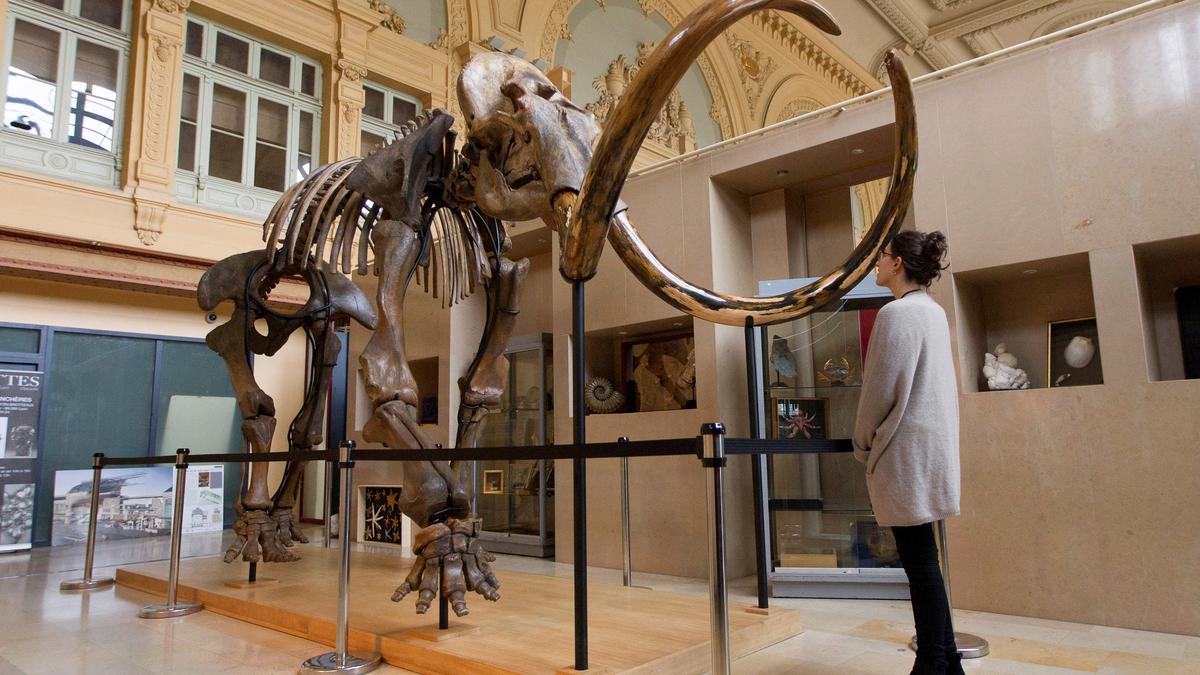
Genetic analysis of woolly mammoths has shown that they used a number of strategies to adapt to the arctic climate including small ears and frizzy hair
The largest-ever genetic assessment of the woolly mammoth has yielded new insight into this elephant cousin - an icon of the Ice Age - including about its fluffy hair, small ears, cold tolerance, fat storage and even dry ear wax.
Researchers on Friday said they had analysed the genomes of 23 woolly mammoths - including 16 newly sequenced ones - based on remains preserved in Siberian permafrost. They then compared them to the genomes of 28 modern-day Asian and African elephants.
"The objective was to find those mutations that are present in all mammoths but not in any of the elephants - that is, the genetic adaptations exclusive to the woolly mammoth," said evolutionary geneticist David Díez-del-Molino of the Centre for Palaeogenetics in Stockholm, lead author of the study published in the journal Current Biology.
"We find that woolly mammoths had molecular adaptations in genes related to coping with cold Arctic environments, such as thick fur, fat storage and metabolism, and thermal sensation, among others," Díez-del-Molino added.
The genomes included a mammoth from 700,000 years ago - near the origination time of this species on the Siberian steppes - and others that lived later in their history, thus showing how genetic adaptations evolved.
The species, which arose at a time when Earth's climate was cooling, inhabited parts of northern Eurasia and North America. Most mammoths went extinct roughly 10,000 years ago amid a warming climate at the last Ice Age's end, with scientists debating whether human hunting played a role. The last ones died out on Wrangel Island off Siberia's coast 4,000 years ago.
Also Read | Why did woolly rhino, mammoth go extinct?


A riot of capes, corsets, and carefully crafted armour took centrestage as Chennai Comic Con wrapped up at the Chennai Trade Centre, with cosplay emerging as the undisputed showstopper. From anime icons and gaming legends to beloved Indian comic characters, over 500 fans transformed the venue into a living, breathing multiverse, showcasing how Chennai’s fandom culture has evolved, placing the city on India’s pop culture map.

Warmer oceans and depleting food have affected the ubiquitous loggerhead turtle’s reproductive and migratory patterns — and even its size.

Toyota Urban Cruiser Ebella review: Explore design, range, features, ride comfort and safety of Toyota’s new electric SUV for India. Expected price ₹14–18 lakh, with up to 500 km claimed range and practical urban usability.

Explore India's potential in bio-based chemicals and enzymes, highlighting industry leaders and challenges in sustainable manufacturing.

Astronomers discover an unusual planetary system with a rocky planet formed outside its gaseous neighbors, challenging existing formation theories.

Four new astronauts arrive at the ISS to replace a crew evacuated due to a serious health issue.

Neurobehavioural therapy can transform brain connectivity in functional neurological disorders, highlighting the link between cognition, emotion, and behavior.

The centuries-long quest for synthetic diamonds, also known as lab-grown diamonds or human-made diamonds, came to an end in 1954-55. On February 15, 1955, the creation of the first synthetic diamonds were announced, and it was quickly picked-up by newspapers around the world. A.S.Ganesh tells you more about these diamonds and the man who first made it happen…

Kadhambari S. Viswanathan highlights online education's evolution and its coexistence with traditional methods at The Hindu Tech Summit 2026.

The Hindu science quiz on Charles Darwin on February 13 2026

Explore the immersive art exhibit "A Story in Red" in Fort Kochi, featuring 13 installations celebrating memory, culture, and emotion.

Explore why different animals have varying litter sizes based on reproduction strategies and survival adaptations.

Experience Bitter Nectar at Bikaner House, an engaging exhibition exploring ecological issues through interactive art installations until February 15.