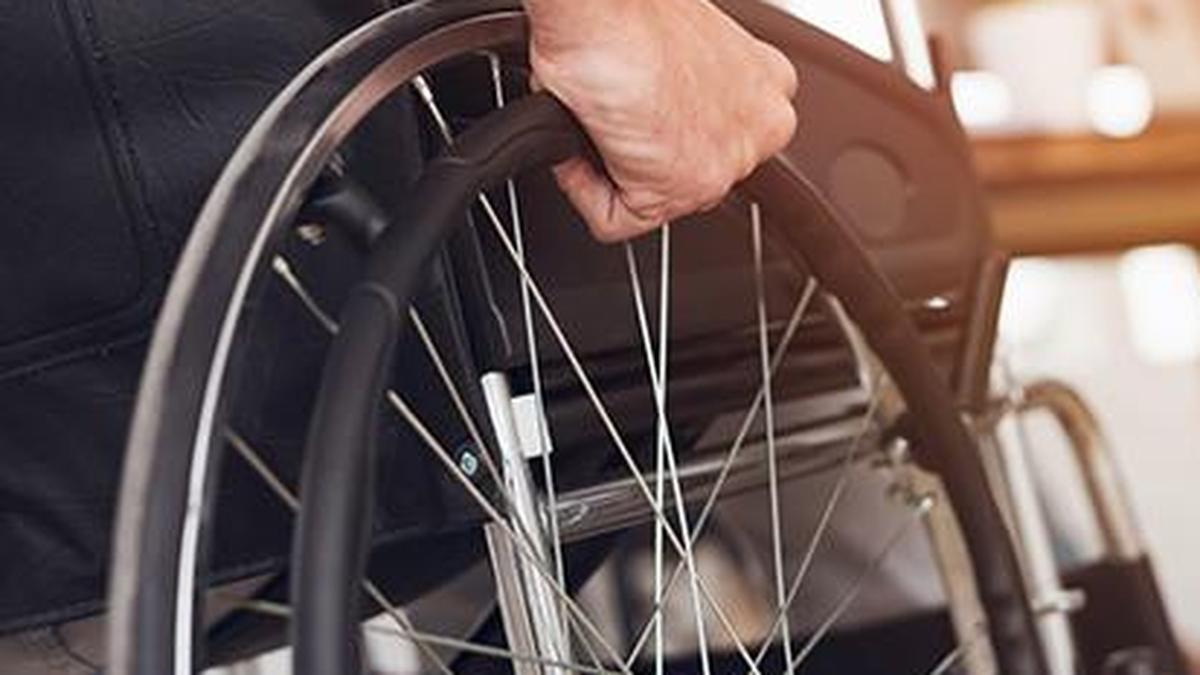
Sensitise government officials on rights of persons with disabilities, orders Madras High Court
The Hindu
Madras High Court directs government officials to sensitise on disability rights after unjust job rejection of a qualified applicant.
The Madras High Court has expressed surprise over the Puducherry government having denied the job of Junior Engineer (Electrical) to a person with hereditary sensorimotor neuropathy, though he had obtained a B.Tech. degree in electrical and electronics engineering after clearing practical examinations and had also served as an electrical supervisor in a private company for four years.
In a judgment delivered on the day of his retirement, former Chief Justice of the High Court, Manindra Mohan Shrivastava, and Justice G. Arul Murugan directed the Puducherry Chief Secretary to formulate a Standard Operating Procedure (SOP) within two months, directing all government departments and public officials dealing with persons with disabilities to hold sensitisation programmes periodically.
“India is party to international conventions. If we claim to be a progressive society in the 21st century, the age-old practice of monotonous automation needs to be zealously eschewed and has to be substituted by a proactive and positive obligated attitude of all public functionaries and authorities in dealing with persons with disabilities, more particularly, while dealing with the cases of persons with disabilities, as to whether they are medically fit to undertake a job/employment,” the Bench wrote.
It went on to state: “Their disability element is required to be judged with the assistive tools and devices, if any, available for such kind of disabilities. As an illustration, a person with high disability, which otherwise would make him medically unfit, may lower down the degree of disability with the help of assistive device. This kind of affirmative action as part of positive obligation and proactive attitude that required sensitivity is what is least expected, and quite legitimately, by persons with disabilities in our society, who are none other than our own brothers and sisters. Indeed, their rights are our obligations.”
The Bench agreed with senior counsel R. Vaigai, representing the writ petitioner E. Hariharan, that the medical board had not properly assessed the ability of her client to perform the services of a Junior Engineer (Electrical). It directed Puducherry Additional Government Pleader V. Vasanthakumar to ensure the constitution of a medical board afresh by including an officer well versed with the nature of work of a junior engineer.
Taking note that the petitioner had secured high marks of 65% in the written test conducted for the post, the judges said, he would be entitled to appointment immediately after being cleared by the new medical board. They also directed the government to pay costs of ₹50,000 to the petitioner.


Tamil Nadu Chief Minister M.K. Stalin greets R.N. Ravi on his appointment as West Bengal Governor during a meeting in Raj Bhavan, Chennai.

Rahul Gandhi visits Sivagiri Mutt in Kerala, paying respects to Sree Narayana Guru during his two-day trip.

Madras High Court directs government officials to sensitise on disability rights after unjust job rejection of a qualified applicant.

While an AI-generated video of a man taking an underwater selfie with a shark is easy to identify as fake, more realistic Gen AI videos can warp the way we think about wild animals and their behavioural traits

Government sets wheat procurement target at 30.3 million tonnes for 2026-27, ensuring adequate supply amid record production.

The Iranian ship IRIS Lavan's docking in Kochi sparks public curiosity amid ongoing Israel-Iran tensions and repair uncertainties.

Over five million patients need radiosurgery for brain tumors yearly, but fewer than 10% receive treatment, highlights John R. Adler.

Karnataka's 2026 budget allocates funds to fill 182 tanks in Chikkaballapur and 59 in Hosakote, enhancing irrigation.

Prashanth Vihari inaugurates the vibrant Sanskriti ’26 fest at KITSW

Join the Grape Festival in Rajendranagar on March 7 to explore 59 grape varieties and enhance farming knowledge.

The trailer of Ranveer Singh’s Dhurandhar 2 was unveiled by the makers on Saturday, March 7, 2026. Written and directed by Aditya Dhar, the film also stars Sanjay Dutt, Arjun Rampal, R Madhavan, Akshaye Khanna and Sara Arjun in pivotal roles.

Saudi Defence Minister warns Iran to avoid miscalculation amidst escalating Gulf tensions and recent missile and drone attacks.

Breast cancer cases in India have doubled in 30 years, highlighting treatment access gaps despite advancements, experts warn.