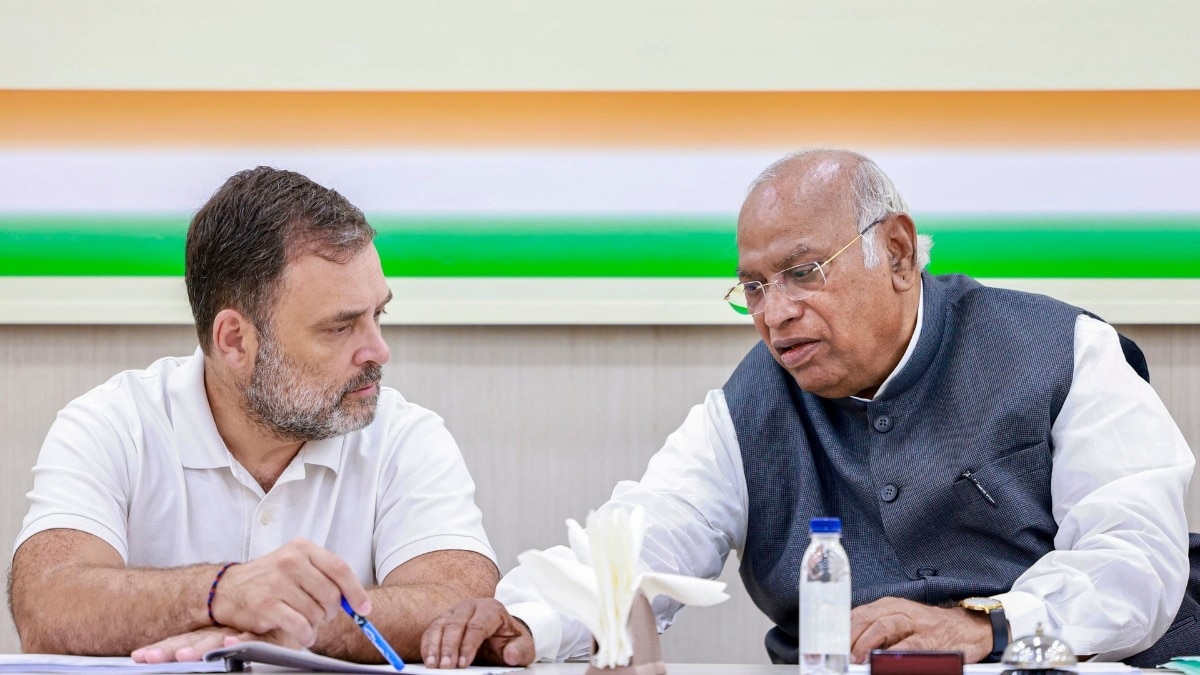
Rajya Sabha polls expose Congress cracks as MLAs defy party in three states
India Today
Rajya Sabha polls expose cracks in Congress discipline, with absenteeism and cross-voting costing key seats. Leadership struggles to rein in dissent, raising urgent questions about internal control and state-level coordination.
The recently concluded Rajya Sabha elections have turned into a major embarrassment for the Indian National Congress, with several legislators either skipping voting or cross-voting in favour of rival candidates across three states - Bihar, Odisha, and Haryana.
The developments have sparked fresh debate within the party over the limited control of the central leadership over state units, particularly in states where Congress is not in power.
In Bihar, Congress faced criticism for what many leaders described as poor coordination and election management. Party sources noted that state in-charge Krishna Allavaru did not travel to Patna to oversee the voting process.
While five MLAs of the All India Majlis-e-Ittehadul Muslimeen (AIMIM) — not formally part of the opposition alliance — supported Mahagathbandhan candidate A.D. Singh, three of the six Congress MLAs stayed away from voting.
The absence proved costly, enabling the National Democratic Alliance (NDA) to secure a fifth Rajya Sabha seat from Bihar. A Rashtriya Janata Dal (RJD) leader described the outcome as a “betrayal” by Congress legislators, intensifying tensions within the opposition bloc.
In Odisha, the episode highlighted deeper organisational challenges for Congress. The controversy arose after the Biju Janata Dal (BJD) announced Hota as a joint opposition candidate, reportedly without broad consensus.


A domestic dispute turns deadly on Mumbai's lifeline, sparking a dramatic CCTV-led chase across cities. How police tracked the accused within hours and what led to the shocking crime unfolds inside.

Her health deteriorated after she had her tooth extracted at a private clinic in Hariharganj town. She was rushed to the Community Health Center. However, doctors could not save her.

The government told the Bombay High Court that the situation remains dynamic due to international developments, and emphasised that it may not be appropriate to deliberate such matters within court proceedings. He assured the bench that the government is taking all necessary remedial measures to ensure that global disruptions do not adversely impact domestic supply of LPG.

Rahul, a school operator from Delhi, had been struggling with mental stress and health problems. The police confirmed no suicide note was found, and the bodies were sent for post-mortem before being handed to the family.

PM speaks to UAE President Al Nahyan over phone, discusses importance of safe passage through Strait of Hormuz

Matthew VanDyke, arrested with six Ukrainian mercenaries, is no ordinary character. Often called a CIA asset who was once an al-Qaida affiliate, VanDyke is a dangerous character who can't stop playing war.

The TMC's lead in the Bhabanipur Assembly segment narrowed to just 8,297 votes in the 2024 Lok Sabha elections from a margin of over 28,000 in the 2021 Assembly elections.

In its findings, the court underscored that "mere irregularity or lapses cannot be converted into offences," stressing that the essential ingredient of criminal intent, mens rea, was missing. It noted that there was no evidence of dishonest or fraudulent misappropriation of property entrusted to public servants, nor any material to suggest forgery or deliberate wrongdoing.

The award, presented by Lakshyaraj Singh Mewar, the Managing Trustee of the Maharana of Mewar Charitable Foundation (MMCF), recognised Singh's contributions of three decades to Indian media.

The police have arrested three accused allegedly involved in the incident. They are also trying to trace the source of the money and suspect that it is linked to a hawala channel.

In a sharp and sarcastic remark, he said that in Hyderabad, "only two are enjoying public governance, thieves and mosquitoes," underscoring his criticism of what he termed as administrative apathy. He also suggested that several localities be renamed after mosquitoes.

Remove Nora Fatehi 'Sarke Chunar' song from all platforms, take strict action: Government to film board

The Odisha Congress suspended three MLAs - Ramesh Chandra Jena, Dasarathi Gomango, and Sofia Firdous - for voting BJP-backed Independent Dilip Ray in Rajya Sabha polls. The party termed it "betrayal" and will seek their disqualification under the Tenth Schedule.