Why court cleared Ajit Pawar, family in Maharashtra State Cooperative Bank case
India Today
In its findings, the court underscored that "mere irregularity or lapses cannot be converted into offences," stressing that the essential ingredient of criminal intent, mens rea, was missing. It noted that there was no evidence of dishonest or fraudulent misappropriation of property entrusted to public servants, nor any material to suggest forgery or deliberate wrongdoing.
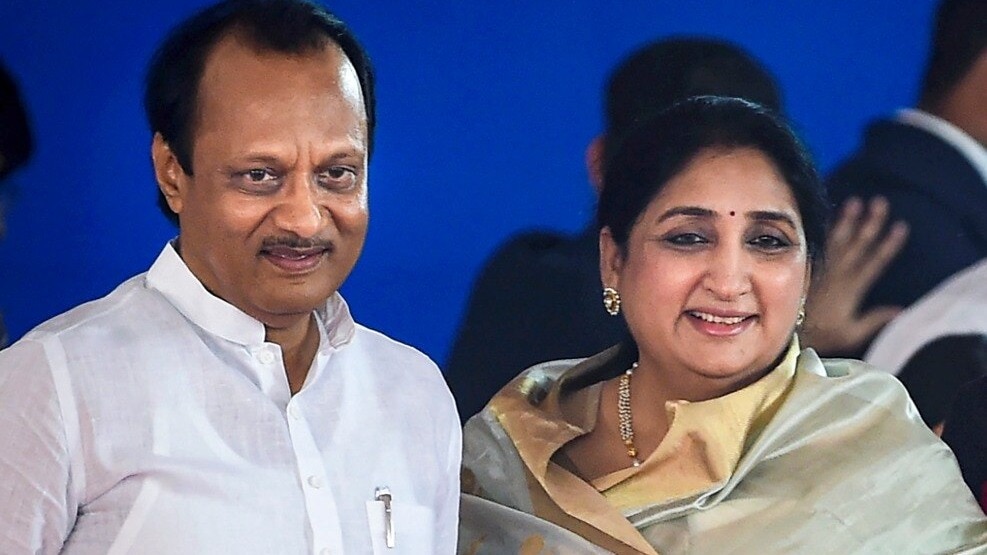
In a significant development in the Maharashtra State Co-operative Bank (MSCB) scam case, a special court in Mumbai, in its detailed order, has held that there was an “absence of dishonest or fraudulent intention” on the part of the accused, including NCP leader Ajit Pawar and his family members.
The court had earlier accepted the closure report filed by the Economic Offences Wing (EOW) of the Mumbai Police, effectively giving a clean chit to former Maharashtra Deputy Chief Minister Ajit Pawar and others. The detailed order, made available recently, elaborates on the reasoning behind the decision, bringing substantial relief to the Pawar family.
In its findings, the court underscored that “mere irregularity or lapses cannot be converted into offences,” stressing that the essential ingredient of criminal intent, mens rea, was missing. It noted that there was no evidence of dishonest or fraudulent misappropriation of property entrusted to public servants, nor any material to suggest forgery or deliberate wrongdoing.
The case pertained to alleged financial irregularities involving loans disbursed by the MSCB to sugar factories, which were later auctioned or taken over by entities allegedly linked to Pawar and his associates. The complainants had claimed losses exceeding Rs 25,000 crore. However, the court, after examining individual transactions, found that due procedures were followed, particularly under the SARFAESI Act, during the auction of assets such as the Kannad Sugar Factory.
Rejecting allegations of conspiracy, the court observed that there was no “prior meeting of minds” among the accused to commit any illegal act. It highlighted that loan approvals followed established procedures, with files being processed and placed before the loan committee in accordance with banking norms. No document on record indicated that these procedures were bypassed with intent to deceive.
On the issue of alleged undervaluation in the sale of assets, the court clarified that market value is not the sole determinant under the SARFAESI framework. It noted that reserve prices were fixed based on due valuation processes and that factors such as prolonged closure of factories and pending litigations justified lower valuations in certain cases.


Age limit for maternity benefit unconstitutional: SC shields women adopting child older than 3 months

Ahead of President Droupadi Murmu's visit to Mathura on March 19, authorities are deploying forest teams and langur statues to prevent mischievous Vrindavan monkeys from snatching her spectacles during temple tours and the Govardhan parikrama.

The strike on a drug rehabilitation hospital in Kabul, which left nearly 300 injured, comes amid a sharp escalation in the conflict between Pakistan and Afghanistan.

The man loaded the magazine, cocked the pistol, briefly looked at the camera, and then shot himself in the left side of his chest.

Delhi HC grants interim relief to Himayani Puri, orders removal of posts linking her to Epstein, seeks replies from platforms and defendants within two weeks

The Indian Navy has deployed task forces to escort merchant vessels and oil tankers from the North Arabian Sea to Indian ports, stepping up maritime security to safeguard energy supplies amid rising tensions in the Strait of Hormuz.

Yesterday, Shivalik, the other LPG tanker, arrived in Gujarat's Mundra Port with over 46,000 metric tons of liquefied petroleum gas. The vessel is expected to meet nearly one day of India's total LPG import requirement.

According to health officials, the man had been suffering from severe pain for nearly 36 hours before his family brought him to a private hospital. The surgery to remove the bottle lasted for 1 hour and 10 minutes.


According to local sources, he has been trying for nearly 12 years to free his land from alleged encroachment by a steel manufacturing company. Following information about the episode, the local Tehsildar, SDM, and police officials rushed to the spot.

As per the Bill, those involved in unlawful conversions on the pretext of marriage will be punished with imprisonment of seven years and shall also be liable for a fine of Rs 1 lakh. Violations in respect of a minor, a person of unsound mind, a woman or a person belonging to the Scheduled Caste and Scheduled Tribe will be punished with imprisonment of seven years and a fine of Rs 5 lakh.

A video showing Bhojpuri singer Dhananjay Sharma lifting a female dancer and throwing her into the crowd during a live show has sparked outrage online. Sharma later claimed the dancer misbehaved with him.

Authorities say he coordinated with handlers in India, Pakistan, and abroad, aiming to overthrow democratic governance and establish Sharia law under an ISIS-style caliphate.