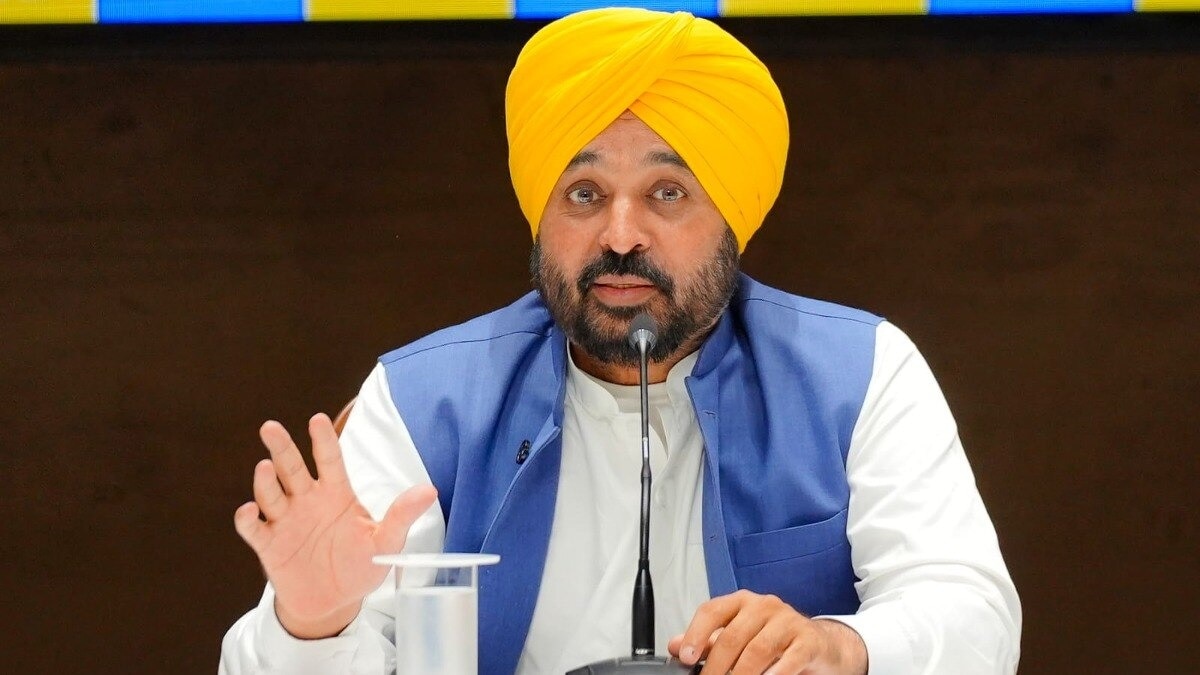
Punjab's U-turn after backlash, withdraws Rs 80 fee for FIR downloads
India Today
The earlier decision had triggered widespread concern, with critics pointing out that FIRs are public documents and must remain freely accessible.
The Bhagwant Mann government in Punjab has rolled back its decision to charge Rs 80 for downloading FIR copies from the Saanjh portal, following the backlash from legal activists and opposition parties.
A government notification issued on March 25 clarified that no fee will be charged for accessing any FIR online. It also stated that applicants visiting Saanjh Kendras to obtain FIR copies will not be required to pay any fee.
The government changed course hours after a petition was filed in the Punjab and Haryana High Court, which challenged the legality of the fee. The plea, filed by advocates Abhishek Malhotra and Vasu Ranjan Shandilya, argued that charging for downloading an FIR was contrary to established legal provisions and court rulings.
"Charging Rs 80 for downloading an FIR copy and 100 rupees for a DDR copy in Punjab is not just a fee but also a barrier to justice," said the petition. The petitioners contended that imposing a charge could create barriers for economically weaker sections seeking justice, thereby undermining fundamental rights.
The earlier decision had triggered widespread concern, with critics pointing out that FIRs are public documents and must remain freely accessible.
Legal experts emphasised that both statutory provisions and past Supreme Court observations mandate that complainants are entitled to a free copy of the FIR, adding that broader public access should not be restricted through fees.


India's First Ocean Thermal Energy Conversion (OTEC) powered desalination plant in Lakshadweep, a project that is not just about converting ocean water into drinking water, but about energy independence, strategic security, and technological self-reliance.

Featuring Sunak's wife, Akshata Murty too, the episode blends light moments with reflections on identity and public life, drawing attention online.

In an official statement issued by her college, the institution has claimed that the woman was long under treatment for a mental health condition and that she had attempted suicide in the past.

The AAP slammed the government over the transgender amendment bill, calling it a setback for the community. The party vowed to continue fighting for equal rights, dignity, and inclusion.

A woman was critically injured after jumping onto the metro track at Noida's Sector 16 metro station. Police rushed to the spot.

The matter pertains to a petition filed by one Nikhil Kumar Punia, who was born into an upper-caste Hindu family but supposedly converted to Buddhism later. He, along with another General Category candidate, has sought minority reservation benefits for admission to a Buddhist medical college on grounds of their purported conversion.

Energy disruption due to the war in the Middle East has exposed India's dependence on imported gas. It has prompted a policy shift mandating a switch from LPG to piped natural gas (PNG) where available. With supply constraints looming, the government is fast-tracking pipelines and pushing a nationwide transition to strengthen energy security.

We can't be a dalal nation, S Jaishankar says at all-party meet when asked about Pak mediating US-Iran talks

Enough energy security, more ships on the way, government assured at all-party meet

Delhi Chief Minister Rekha Gupta highlighted several costly additions to the former CM's residence, including around 50 air conditioners, 70 fans, a Rs 18 lakh coffee machine, and a centralised climate control system.


Delhi Police busted an illegal LPG racket in Sangam Vihar, seizing 183 cylinders and arresting four delivery agents accused of diverting and storing supplies meant for customers.

Amazon's price history analysed by India Today over the past 90 days, shows a steady rise in household items. A similar pattern is visible in aviation: airfares have climbed following the February 28 US-Israel strikes on Iran.