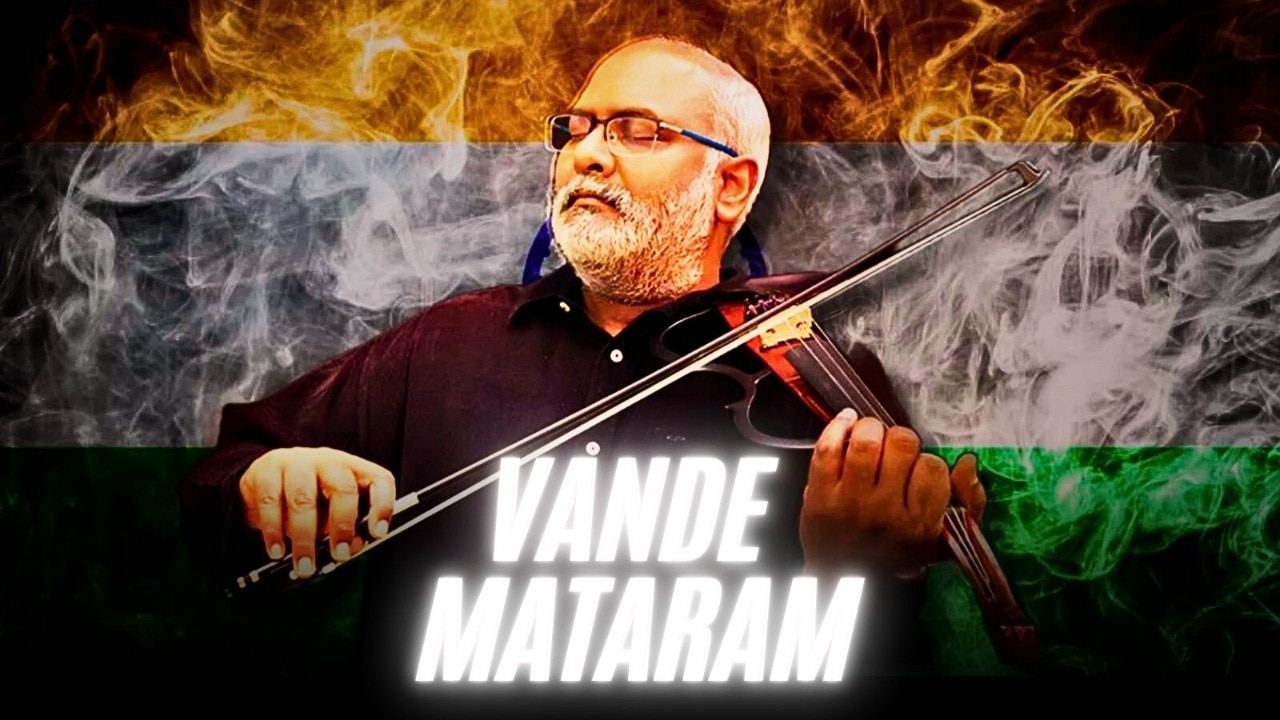
MM Keeravani's Vande Mataram prioritises ceremonial scale over emotional movement
India Today
Unveiled at the Republic Day parade amid grand visuals and mass choreography, Vande Mataram received a new musical treatment by Oscar-winning composer M. M. Keeravani.
Every Indian grows up with Vande Mataram long before understanding what it means. It is learnt in school corridors, sung every Independence and Republic Day, and absorbed almost without effort. Over time, the song stops feeling like a composition at all. It becomes memory, habit, and inheritance.
That is why any new rendition never arrives on a blank page. It enters a crowded emotional space, shaped by memory and expectation, and is heard not only as a patriotic symbol, but as an emotional experience.
This Republic Day, that space was revisited on a grand scale. At the parade in New Delhi, Vande Mataram, composed by M. M. Keeravani, became the centrepiece of a vast cultural presentation. thousands of dancers, carefully arranged formations, colour, symmetry, and visual storytelling came together to reflect the idea of unity in diversity.
With nearly 2,500 performers and the symbolic weight of the song’s 150-year legacy, the presentation carried the air of an event meant to be remembered. Adding further weight to the moment was Keeravani’s stature as an Oscar-winning composer, which naturally raised expectations.
Visually, it worked. The spectacle felt worthy of the occasion. But once the scale and choreography are set aside, a quieter question remains: how does this version of Vande Mataram hold up when heard simply as music?
Away from the parade, Keeravani’s composition reveals itself as a consciously ceremonial piece. This is a rendition designed not to unfold gradually, but to present itself fully from the start. The emotional tone is established early and held steadily. The focus is on energy, order, and collective presence rather than inward feeling.


The song Sarse Ninna Seraga Sarse from the Kannada film, KD - The Devil, has sparked backlash over its lyrics. Known as Sarke Chunar in Hindi, the song has led to legal complaints, government scrutiny and a removal from YouTube.

On the 10th anniversary of Kapoor & Sons, Sidharth Malhotra shared his emotional response to the script. The actor also reflected on his character and how the story still resonates with audiences.

Comedian Vir Das will bring his 'Hey Stranger' stand-up tour to London's Royal Albert Hall on April 1, joining a select group of Indian performers who have graced the historic venue.

Filmmaker Karan Johar marked his mother Hiroo Johar's 83rd birthday by posting a heartfelt note on Instagram. He reflected on their close bond and expressed gratitude for her strength and presence in his life.

The screening of Vijay's Jana Nayagan has been postponed again after CBFC revising committee members did not attend. The film's release remains uncertain amid ongoing certification delays.

Ranveer Singh's Dhurandhar: The Revenge has been certified A by the Central Board of Film Certification after edits. The film is set to premiere on March 18 and will have a wider release on March 19 during the Eid weekend.

Ram Gopal Varma has doubled down on his praise for Dhurandhar 2 after watching the film, calling it the birth of a "new cinematic order." He even urged filmmakers like Steven Spielberg and Christopher Nolan to catch it first day, first show.

Pawan Kalyan makes a much-anticipated return to Telugu cinema, with Ustaad Bhagat Singh releasing on Ugadi. The film faces a direct box office clash with Ranveer Singh's Dhurandhar: The Revenge, setting the stage for a major cinematic showdown.

The Badri-Kedar Temple Committee has introduced a new rule requiring non-Hindu visitors to submit an affidavit affirming belief in Hinduism to offer prayers at Badrinath and Kedarnath. The directive applies to all non-Hindu devotees, including actor Sara Ali Khan, a frequent visitor to Kedarnath.

Actor Alia Bhatt marked her 33rd birthday with a social media post, giving fans a look at private moments from her celebrations in Hong Kong with husband Ranbir Kapoor and their daughter Raha.

Radhikka Madan recalled working with Irrfan in Angrezi Medium. She said he helped her feel confident and treated her as an equal on set.

The first footage of Tom Holland in Spider-Man: Brand New Day has been released. Directed by Destin Daniel Cretton, the film will hit theatres on July 31.

Hansika Motwani visited the Golden Temple in Amritsar, sharing photos and a cryptic message reflecting optimism and resilience. She recently got divorced from businessman Sohael Khaturiya.