Milk producers express dissatisfaction over ₹1 additional incentive per litre
The Hindu
Milk producers criticize Salem Aavin's ₹1 incentive, demanding higher procurement prices to match private dairies and boost production.
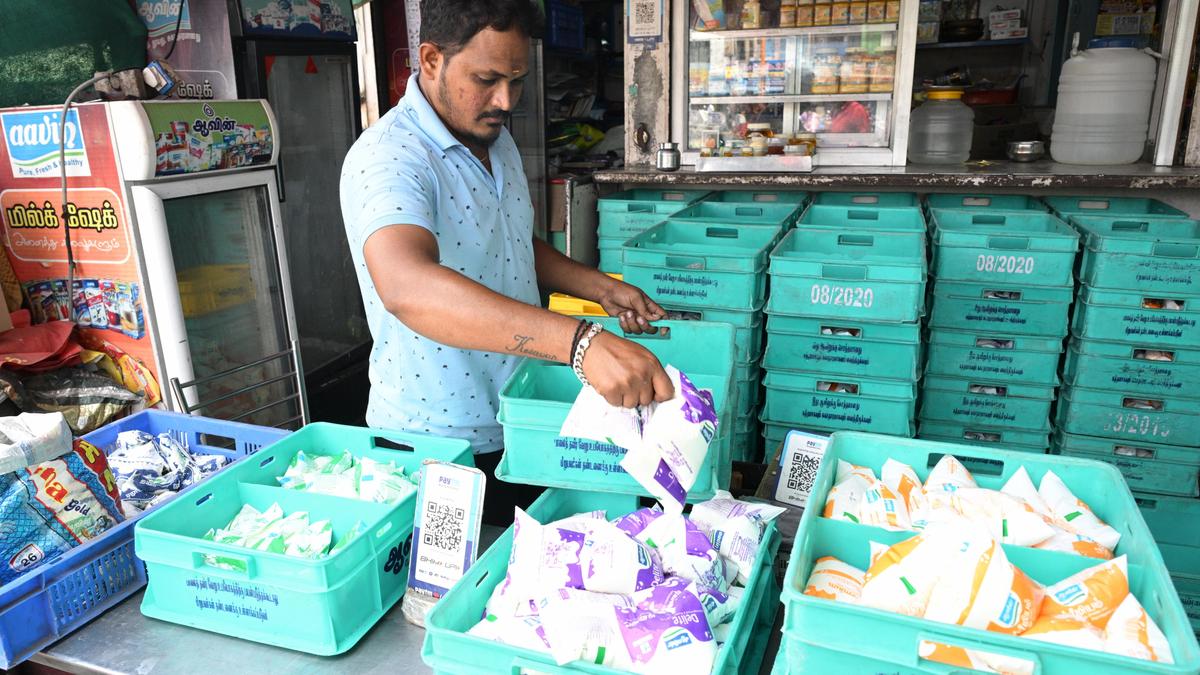
Milk producers, who have expressed dissatisfaction over Salem Aavin’s announcement of an additional incentive of ₹1 for a litre of milk, have demanded measures to increase its procuring capacity.
Last week, Salem General Manager Kumareswaran announced that there were 780 primary milk producers’ cooperative societies and 5.75 lakh litres of milk were procured from milk producers every day under the Salem Aavin. The summer months impacted milk production and to compensate this loss of the milk producers in the rural areas, to increase milk production and to ensure milk procurement from societies without any reduction, Salem Aavin would give ₹1 additional incentive for one litre of milk for two months (February and March). Already, the producers received ₹3 a litre incentive, he said.
Expressing dissatisfaction, milk producers demanded that milk procurement price should be increased to be equal to private dairies and procurement should also be increased.
Tamil Nadu Milk Producer’s Welfare Association (TNMPWA) general secretary M.G. Rajendran said that on February 21, a private dairy company announced ₹2 additional incentive and two more private dairies announced a ₹1.20 additional incentive for one litre of milk. After that, Salem Aavin announced it would give ₹1 additionally. Only Salem Aavin had announced the incentive in the State though milk production would be affected across the State during summer.
The milk producers had demanded hiking the procurement price to ₹46 from the present ₹38. The procurement by Aavin dropped to 30 lakh litres a day and private dairies procured around two crore litres. Aavin was not sourcing butter from private dairies, and from other States for ₹540 to ₹580 per kg. Instead, if Aavin hiked the procurement price, Aavin would be attractive to the producers and it would be able to make butter and milk powder, Mr. Rajendran added.
In the last six years, ₹6 (₹3 procurement price and ₹3 as incentive) was increased per litre of milk. Milk production cost had gone up by 40% and labour cost increased 100% in six years. Of the ₹38 provided to milk producers for milk with 4.3% fat and 8.2% Solids-Non-Fat (SNF), ₹1.25 was deducted for administration expenses for societies. Around 30% of cattle only provided milk with 4.3% fat and 8.2% SNF in the State. So milk procurement price should be common for all.


AIADMK district unit secretaries will meet in Chennai on March 4, chaired by general secretary Edappadi K. Palaniswami.

DCM D.K. Shivakumar emphasises promoting peace to end conflicts in West Asia and protect Indian workers abroad.

Farmers in Kanniyakumari demand urgent repairs for deteriorating irrigation canals to ensure water supply for agriculture.

Vizag officials urge residents to safeguard declining house sparrow populations, highlighting their vital role in agriculture and the environment.

Thirumavalavan calls for India's condemnation of the U.S.-Israel operation that killed Iranian leader Khamenei during a Chennai protest.

Major General Arun C.G. appointed as Additional Director General of NCC for Kerala and Lakshadweep, showcasing extensive military experience.

Demonstration in Mysuru protests the closure of 1,666 government schools under the controversial KPS Magnet Scheme.

CJI Surya Kant lays foundation for A.P. Judicial Academy and High Court guest house in Amaravati, enhancing judicial infrastructure.

IMD forecasts above-normal temperatures and increased heatwave days for Telangana from March to May, raising health and resource concerns.

Every pair of these bins is teamed up with a bench to promote a form of pedestrianisation on this road; while the thinking is praiseworthy, the execution betrays obvious lack of thinking in some areas

Police in Puttaparthi host a cycle rally to promote women's empowerment ahead of International Women’s Day.

District Collector launches 'Pain-free Nilgiris' initiative to enhance palliative care and improve quality of life in the district.

Yadgir authorities enhance support for SSLC students by providing 24/7 study resources at Arivu Kendras ahead of exams.