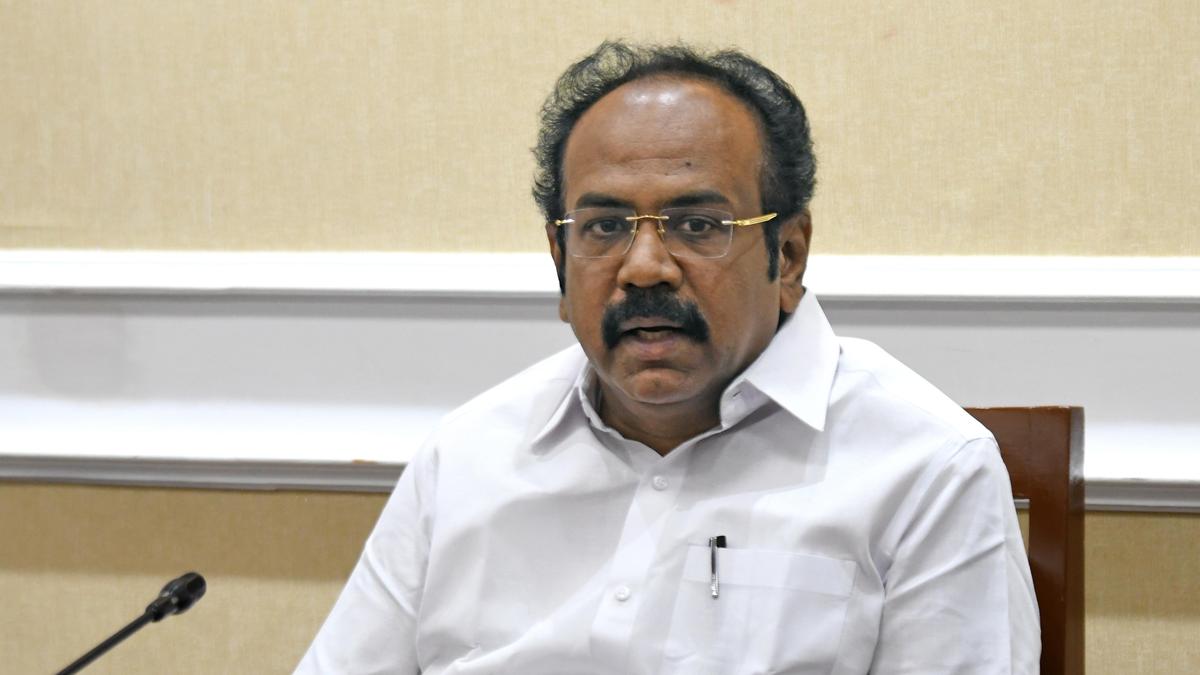
It’s ironic welfare schemes implemented in T.N. are portrayed as fiscally irresponsible: Thangam Thennarasu
The Hindu
Thangam Thennarasu defends Tamil Nadu's welfare schemes amidst election debates, emphasizing inclusive growth and economic empowerment through cash transfers.
With the Assembly election set for April 23, the debate on welfare spending, public debt, and fiscal priorities has moved to the centre of political discourse. In an interview to The Hindu, senior DMK leader and Finance Minister Thangam Thennarasu explains the rationale behind the welfare model and addresses criticism over cash transfer schemes. Edited excerpts:
Critics have dubbed as politically motivated the DMK government’s recent act of transferring a lump sum to the bank accounts of beneficiaries of welfare schemes ahead of the election. They are also pointing to the increased debt burden. What’s your response?
Welfare spending in itself is not a negative. If the benefits of economic growth are not broad-based, the fruits of development will inevitably be cornered by a small section of society. Our approach in Tamil Nadu has always been to ensure that growth is inclusive and its benefits reach every household. Cash transfer schemes, at one point of time, were widely regarded as one of the most effective policy interventions. Economists and development experts across the world have recognised that such a direct transfer reduces leakages, provides autonomy to beneficiaries in deciding how best to utilise the support, and stimulates local and rural economies through increased consumption. The Union government came up with the PM-KISAN scheme. There are 15 States that are implementing cash transfer schemes for women. It is somewhat ironic that when such policies are implemented in Tamil Nadu, they are suddenly portrayed as fiscally irresponsible or politically motivated. Over the last five years, this government has spent more than ₹4 lakh crore on welfare programmes and social support measures.
So what has been the economic return or social impact of major welfare programmes introduced in the last five years?
The monthly entitlement given to women under the Kalaignar Magalir Urimai Thogai scheme has strengthened their financial independence and improved household financial stability. The Pudhumai Penn scheme has led to a significant improvement in college enrolment among girl students of government schools. If you look at Vidiyal Payanam Thittam, there is a clear increase in the number of bus trips made by women passengers, reflecting improved mobility and greater access to employment and educational opportunities. According to a 2023 study, households have been able to save around ₹888 a month, on an average, owing to the reduced transport cost.
Can Tamil Nadu continue such a welfare model without pushing future generations into deeper debt?


Two suspects arrested in Hyderabad for the murder of AR constable Paruvula Sudheer Kumar after a violent altercation.

IBM News:Why Businesses Must Rethink AI Strategy Now

Arunachal Pradesh government reshuffles 27 senior police officers to enhance police administration and improve law and order.

Supreme Court directs NGO to present mercury concerns from Bhopal gas tragedy waste to Madhya Pradesh High Court for review.

ED raids illegal call centres in West Bengal amid concerns over political funding linked to upcoming elections.

Tensions rise in UDF as poster protests emerge in Kasaragod ahead of candidate announcement for Kerala Assembly polls.

A study highlights the need for enhanced cancer coverage and early diagnosis under Ayushman Bharat for better patient outcomes.

Congress backs former CPI(M) leader G. Sudhakaran as an independent candidate in Ambalappuzha for the Kerala Assembly polls.

India must electrify kitchens to reduce cooking costs, enhance efficiency, and ensure energy sovereignty while managing grid demands.

Nvidia GTC, as the conference is known, has become CEO Huang’s preferred event to show off Nvidia’s AI advances

IMD forecasts light to moderate rain in Hyderabad on March 16, with possible thundershowers and gusty winds in the evening.

Apple’s MacBook Neo is the most repairable laptop the company has released since 2014, according to an analysis released Friday by iFixit.

Parliament Budget Session: Follow The Hindu's LIVE updates on March 16, 2026.