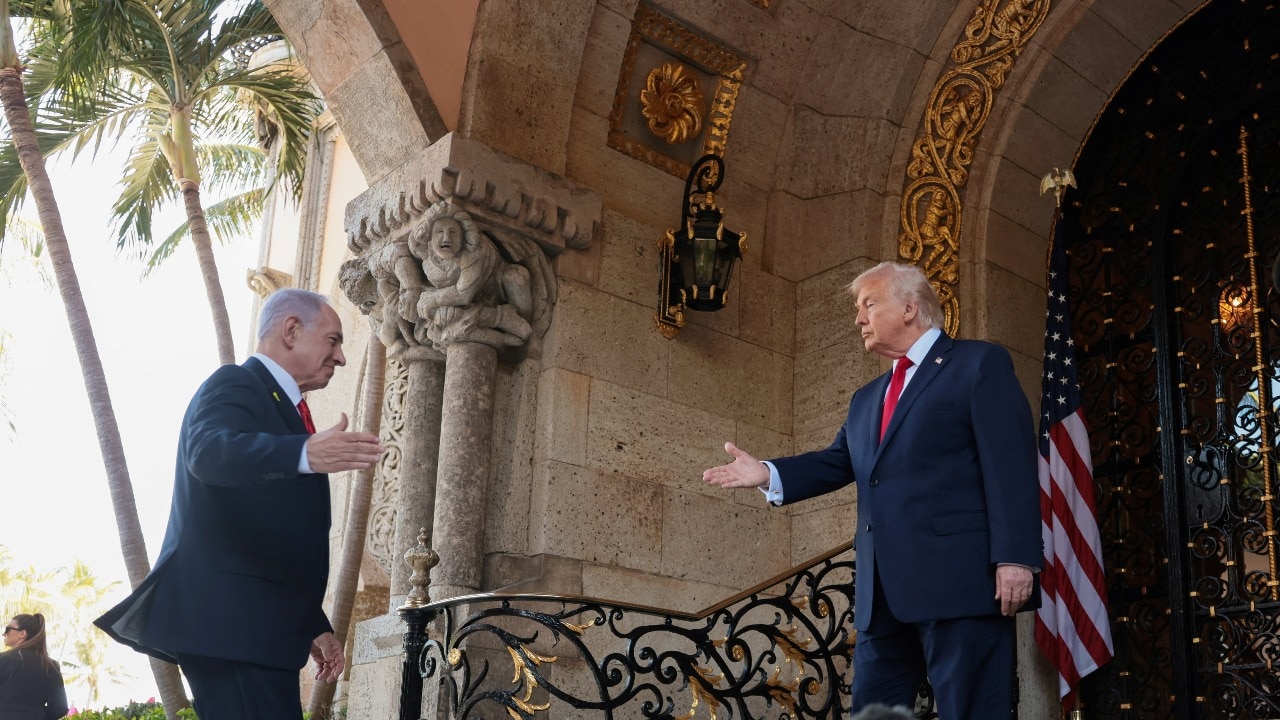
Israel, US and Iran: The tail that wagged the superpower
India Today
How Benjamin Netanyahu handed Donald Trump a war and a bill he may never stop paying
On the morning of March 18, 2026, Israel struck the South Pars natural gas field in the Persian Gulf, the world's largest, without telling the United States it was going to do so. Donald Trump, the man whose military is also fighting the war, found out when everyone else did.
Trump went to Truth Social. Israel had, he wrote, “violently lashed out” out of “anger for what has taken place in the Middle East,” and "the United States knew nothing about this particular attack.” Within hours, a US defence official told NBC News that was not true: Washington and Tel Aviv had coordinated on the strike, as they have on strategically significant targets throughout the campaign.
Either the President of the United States was blindsided by his own ally, or he was covering for them. Both explanations are extraordinary. Both are consistent with everything that has happened since February 28th.This is where we are, three weeks into America's largest military operation in the Middle East in two decades. An ally strikes the world's largest gas field. The president says he didn't know. His own officials say he did. Gulf states that trusted American security guarantees are watching their refineries burn. And the man at the centre of all of it, the man who pushed, lobbied, and manoeuvred until the bombs finally fell, is not in Washington. He is in Jerusalem, fighting for his own political survival, watching his poll numbers, and reportedly counting on regime change in Tehran to finish the job.
Welcome to the most consequential outsourcing deal of the modern era.
The story of how this war began is, at its core, the story of a phone call. On February 23rd, Netanyahu rang Trump with a piece of intelligence: Iran's supreme leader and his top advisers were all convening at a single location in Tehran that Saturday morning. They could all be killed in one strike. It was, Netanyahu told the President of the United States, a now-or-never moment. Trump took the deal.
Netanyahu had visited the White House a record-breaking six times in the prior year. In call after call, he had been methodically shifting Trump's gaze toward Iran's nuclear ambitions. When Omani mediators were reportedly on the verge of announcing a potential diplomatic breakthrough in Geneva, Netanyahu worked to derail those talks. Then came the Saturday morning airstrike.


Canada had previously accused India of interference and transnational repression, including threats and alleged killings. RCMP Commissioner Mike Duheme now says current probes no longer support that conclusion.

A man from Florida has clarified that he is not Jeffrey Epstein after a video went viral last week in which viewers claimed he resembled the late sex offender.


Australian PM Anthony Albanese and Home Affairs Minister Tony Burke were attending an event marking the end of Ramadan at Sydney's Lakemba mosque when some worshippers loudly protested against their presence.

At a crucial Senate hearing, US intelligence contradictions and careful wordplay expose deep divisions, raising serious doubts over the White House's justification for the Iran war

A French sailor accidentally compromised the location of the aircraft carrier Charles de Gaulle by logging his workout on the fitness app Strava. The app's geolocation feature allowed real-time tracking of the carrier and its fleet.

Kim Jong Un appeared with his teenage daughter in military drills, riding a tank and overseeing exercises, fuelling speculation she could be his successor despite doubts over North Korea's male-dominated leadership.

A video shared by Tehran Times claims to show the moment a US F-35 fighter jet was hit during a combat mission over Iranian airspace. The clip shows the aircraft appearing to take damage, with explosions, smoke trails, and the jet veering off course mid-air.

Trump claimed he knew nothing about Israel's strike on Iran's biggest gas field. His own officials said he approved it. Someone is lying and the entire world is paying the price.

The latest parliamentary polls have delivered yet another near-perfect score for North Korea's Kim Jong Un, and the internet, unsurprisingly, has a lot to say.

Amid the war in Iran, the US aircraft carrier Gerald R Ford is retreating to a port in Greece for repairs. The ship was plagued by clogged toilets, and a fire that burnt through the vessel's laundry system and sleeping quarters. While the first has been blamed on the crew, the other could also be their handiwork of soldiers trying to skip war duty.

Since the start of the US-Israeli war on Iran, Tehran has disrupted maritime transit through the strait for vessels it says are linked to its war adversaries and their allies.

An American woman celebrated her 96th birthday with a fun and laid-back get-ready-with-me video, showing her bold personality and party spirit, leaving the internet smiling and applauding her energy.